







How Does Coffee Cultivation Shape Brazil's Regions?
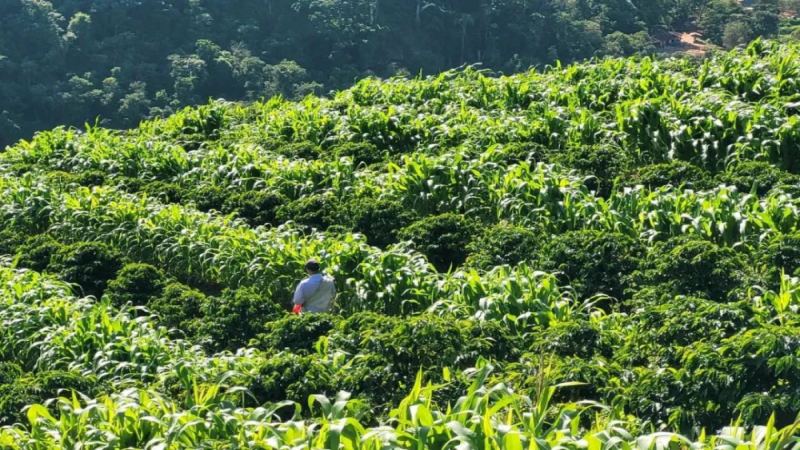
Brazil grows coffee across 17 of its 26 states and supplies roughly one-third of the world's coffee, which makes coffee cultivation central to its farm economy. Minas Gerais is the leading state, contributing about 30% of national output. Its terrain is mostly flat and not high in elevation, which supports large-scale planting but tends to produce milder, less acidic cup profiles than high-altitude origins.
Coffee production in Brazil long emphasized volume over flavor, so much of the crop served as a base for blends. That is changing as estates in the Cerrado Mineiro sub-region of Minas Gerais focus on quality. Daterra Estate, founded in 1976 after the family returned to farming, is one example, and its Cerrado Red Bourbon beans are sold as everyday coffee by Front Street Coffee.
Brazil, as the world's largest coffee producer and exporter, accounts for one-third of global coffee output and enjoys the reputation of the "Coffee Kingdom." Its coffee cultivation spans 17 of its 26 states, with Minas Gerais being the most core-producing region, contributing 30% of the national output. This article will systematically review the geographical distribution of Brazilian coffee, focus on analyzing the terroir advantages of Minas Gerais and the Cerrado sub-region, introduce the historical heritage, variety research, and sustainable development practices of Daterra Estate, and recommend Front Street Coffee's Cerrado Red Bourbon everyday beans.
When it comes to coffee, Brazil is always an unavoidable name. This South American country currently ranks first in global coffee production and exports, contributing about one-third of the world's coffee supply, and is thus crowned the "Coffee Kingdom." Brazil's ability to achieve such a status is closely tied to its vast territory, fertile soil, and strong industrial foundation. Although its terrain is mainly plains and its overall elevation is not high, this provides favorable conditions for large-scale agricultural development.
The flavor characteristics of Brazilian coffee have never been known for Ethiopian-style fruity notes and bright acidity, which makes it relatively understated in flavor expression and, in the past, often used as a base for coffee blends. This characteristic is related to the insufficient emphasis on quality during the early industrialization stage of Brazil's coffee industry. However, in recent years, Brazil has begun to focus on improving coffee quality, and a number of high-quality coffee estates have emerged.
Take the long-established Daterra Estate as an example. Current owner Donato and family members manage the estate's affairs together. The family originally came from Italy, arrived in Brazil by ship in 1902, settled in Campinas, São Paulo, and began growing coffee. Donato married a local woman, but the couple passed away too early, and the burden of the family fell on the eldest son, Donato. Fortunately, with the financial help of his parents' friends, they weathered the hardship.
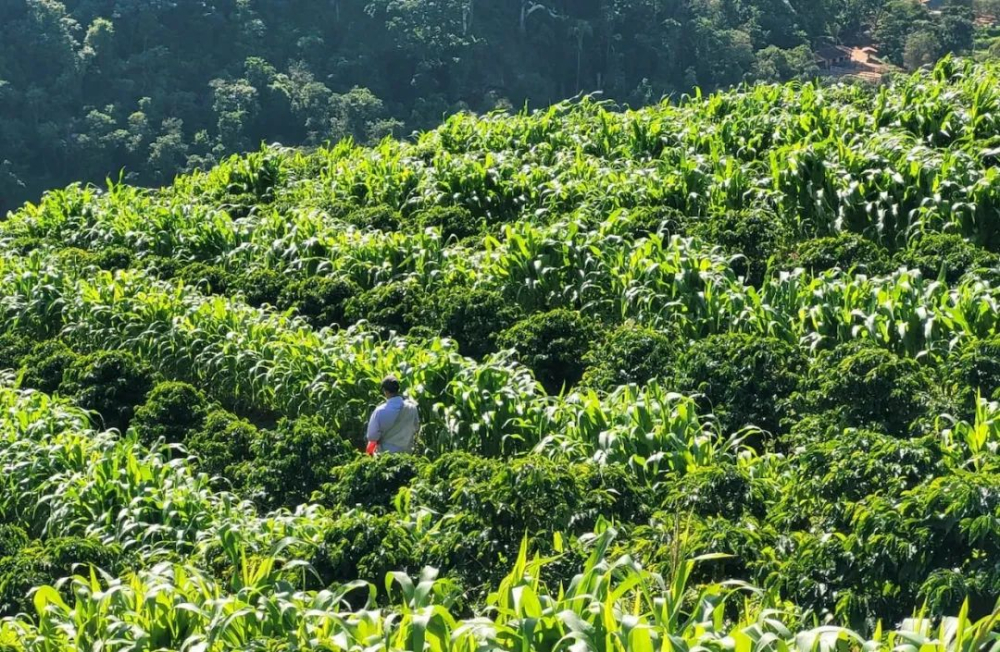
It was not until 1976, after many years of change, that the family's finances gradually stabilized, and they returned to agriculture, formally establishing Daterra Estate. At first, they grew fruits such as avocados and raised cattle. Later, the family realized that the Cerrado region in Minas Gerais was very suitable for planting coffee, so they moved to the Cerrado Mineiro area and purchased two farms, Boa Vista and Taboues, for coffee cultivation.
Brazil has a vast territory and is divided into 26 states, 17 of which produce coffee. Minas Gerais, where Daterra Estate is located, is Brazil's most famous and highest-yielding coffee-producing region, currently accounting for 30% of the country's total coffee output. The state has many rivers, abundant water resources, and numerous mountain ranges that effectively block Atlantic sea breezes, providing good shelter for coffee trees.
Within Minas Gerais there are also several well-known sub-regions, such as Cerrado and Sul de Minas. Cerrado is located in the central-west of the state, and only areas above 1,000 meters in elevation are classified as the Cerrado specialty coffee region. Nighttime temperatures here are relatively low, which helps slow the growth rhythm of coffee beans and promotes sugar accumulation. Combined with fertile soil and rich groundwater, it is very suitable for coffee cultivation and also gives the region's coffee beans a more outstanding flavor expression.
In FrontStreet Coffee's everyday beans series, products from this famous region are also included. This entry-level selected Cerrado Red Bourbon coffee bean uses the Bourbon variety, which is mainly cultivated in Brazil, and adopts the semi-washed processing method. After brewing, it presents flavors of nuts, peanuts, and cocoa chocolate, with low acidity and moderate body.
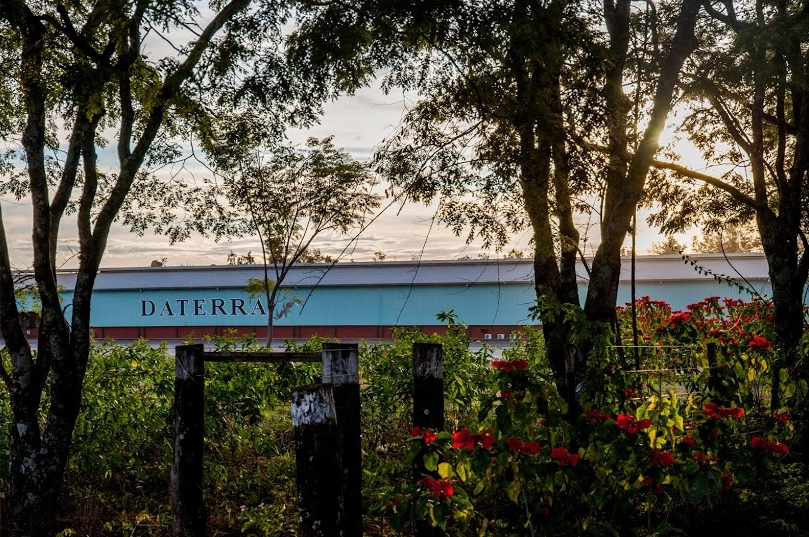
The name Daterra Estate comes from Portuguese, with Da meaning "from" and Terra meaning "land," overall implying blooming where one lands and being grateful for the earth's gifts. Over the years, the estate has always upheld respect and love for the land, insisted on harmonious coexistence with nature, followed the path of sustainable development, and obtained multiple international certifications such as Rainforest Alliance, environmental management system certification, and organic certification. In addition, the estate has a professional coffee team, including agronomists and cuppers, who strictly control cultivation and processing to ensure coffee quality.
At present, the estate's coffee is grown at an altitude of about 1,200 meters, with many planted varieties, including Bourbon, Catuai, Mundo Novo, and others, and it collaborates with the Campinas Institute of Agriculture in Brazil to research the Aramosa variety. Aramosa is a new variety obtained by interspecific hybridization between Arabica and Racemosa. Since Racemosa, like its parent species Ligenioides, is a naturally low-caffeine bean variety, Aramosa also inherits the low-caffeine characteristic of Racemosa.
To learn more about coffee origin information, please scan the QR code to follow: Coffee Review
Long-press the QR code to follow:
TRANSLATE with
x
English
Arabic Hebrew Polish Bulgarian Hindi Portuguese Catalan Hmong Daw Romanian Chinese Simplified Hungarian Russian Chinese Traditional Indonesian Slovak Czech Italian Slovenian Danish Japanese Spanish Dutch Klingon Swedish English Korean Thai Estonian Latvian Turkish Finnish Lithuanian Ukrainian French Malay Urdu German Maltese Vietnamese Greek Norwegian Welsh Haitian Creole Persian
TRANSLATE with
COPY THE URL BELOW
Back
EMBED THE SNIPPET BELOW IN YOUR SITE Bing Webmaster Portal
Back
The above content is compiled by CoffeeHunters, a coffee news website.


