








How Does Arabica Coffee Compare With Robusta in the Cup and on the Farm?
Arabica and Robusta are the two commercial species that dominate the coffee market, and they differ in flavor, disease resistance, growing altitude, yield and bean appearance. Arabica, called the small-seeded species, produces the smallest fruit of the three commercial groups, while Robusta accounts for roughly a quarter of global production despite its long unpopularity among specialty coffee buyers.
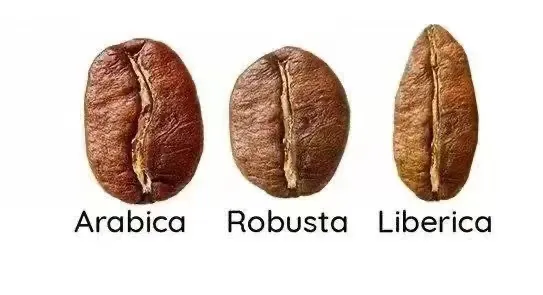
More than 130 species exist in the Coffea genus, but only Arabica, Robusta and Liberica carry real commercial value. Growers pick between them based on their own needs. The center line of the bean is one practical visual marker that helps separate the two species at a glance, alongside differences in shape and size.
In the first two editions of Front Street Coffee's Bean Identification Guide, we've already learned to distinguish some Arabica sub-varieties, as well as the visual differences between natural and washed processing. This time, version 3.0 will cover the two most core commercial species in the Coffea genus—Arabica and Robusta. They each have their own characteristics in flavor, disease resistance, growing altitude, yield, and bean appearance, especially the differences in the center line, which can help us tell them apart at a glance. This article will compare these two species in detail from multiple dimensions, and also explain why Robusta has long been unpopular in the specialty coffee circle, yet still accounts for a quarter of global production.


3.0! 3.0! The Bean Identification Guide 3.0 is officially here!!! In the previous two editions, Front Street Coffee introduced you to methods for identifying some Arabica sub-varieties, and also discussed how natural and washed processing can cause differences in the appearance of coffee beans. After mastering this, quite a few friends came to Front Street Coffee to "verify" whether the bean information we recommended was accurate.
Today, Front Street Coffee continues to release version 3.0 of the Bean Identification Guide, and we welcome everyone to keep coming to "find faults." This time, what we're going to teach you to distinguish is the two major categories, Arabica and Robusta. What differences do they each have in appearance, and how can we recognize them at a glance! (For past content, you can review "How to Identify Coffee Bean Varieties at a Glance" and "Teach You to Tell at a Glance Whether Beans Are Natural or Washed.")
Arabica and Robusta
Although there are more than 130 species under the Coffea genus, only three major categories truly have commercial value: Arabica, Robusta, and Liberica. However, the coffee beans currently circulating on the market are basically mainly Arabica and Robusta, because the advantages of these two varieties "cover a wider range"! Growers will choose different varieties according to their own needs. Next, Front Street Coffee will talk about what different strengths Arabica and Robusta each possess.
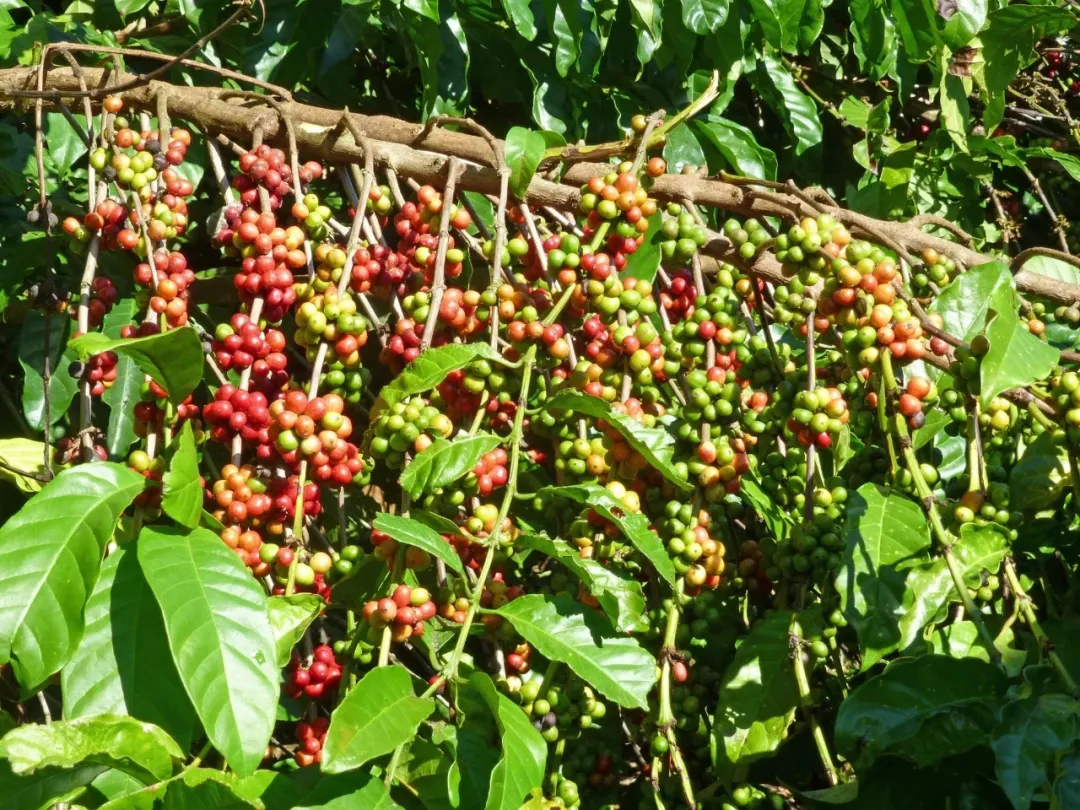
The fruit of Arabica is the smallest among the three major categories, so it is also called "small-seeded species." Its greatest advantage lies in its outstanding flavor performance: the aroma is more distinct, and the layers are richer.
Along with its outstanding aroma comes an equally prominent shortcoming: low yield, poor disease resistance, and extremely strict requirements for the growing environment. Once the growing altitude is below a certain level, Arabica struggles to survive normally. For this reason, Arabica coffee usually commands a higher price. But after all, flavor is the bottom line, so even today, Arabica still accounts for as much as 70% of total global coffee production.
Robusta's bean size is in the middle among the three major categories, so it is called a medium-seeded species. Compared with Arabica, Robusta's flavor performance is not particularly outstanding. But its vitality is extremely strong! Not only is its yield very high, its disease resistance is also quite excellent, and its caffeine content is twice that of Arabica.
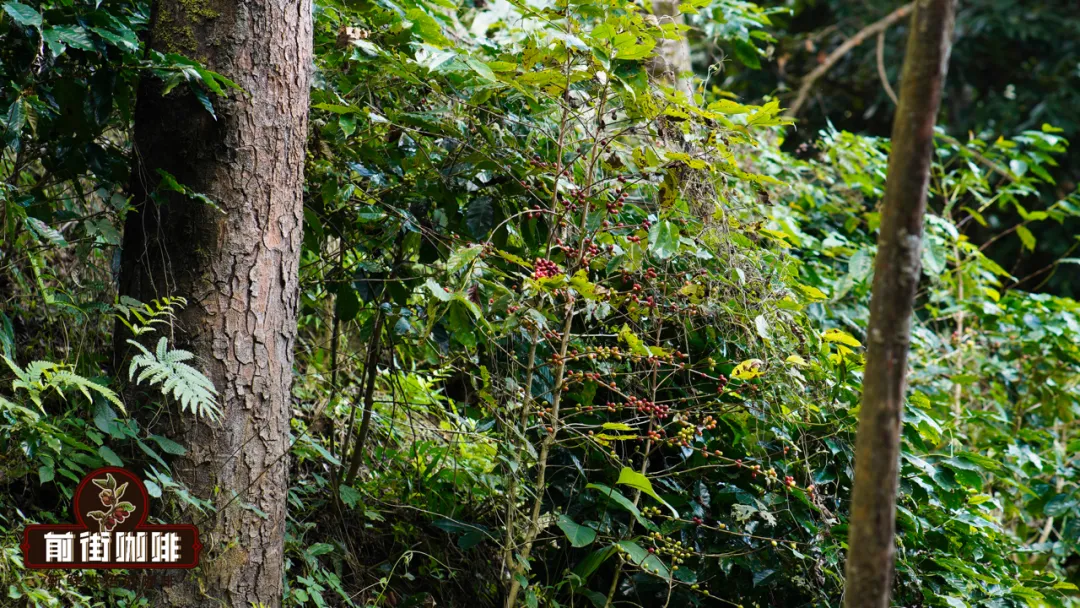
Therefore, Robusta is not as delicate as Arabica, and can "grow wildly" even in low-altitude areas. So when we see certain coffee plants still producing large amounts of fruit in a low-altitude environment, we can make a preliminary guess about their variety.
It is precisely for this reason that many production regions are able to develop coffee cultivation in low-altitude areas. However, because the growing altitude is generally low, Robusta's flavor is mainly characterized by strong bitterness, along with some notes of wood and barley tea.
These flavors, which cannot be considered excellent, together with the advantages of high yield and low price, have made Robusta the main raw material for instant coffee products. Also for these reasons, Robusta has gradually become synonymous with "inferior quality" in the coffee circle.
As of now, Robusta accounts for about 25% of global coffee production! Apart from being used as an instant coffee raw material, a small portion of these beans is also used as the base bean in blends or as specialty coffee beans.
So, how do you distinguish Arabica from Robusta?
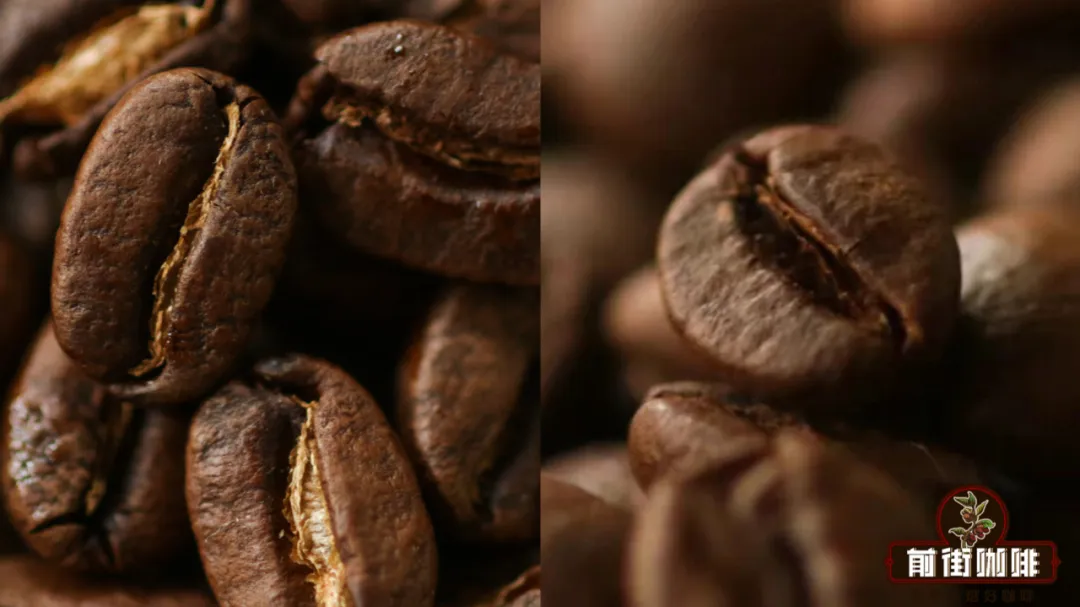
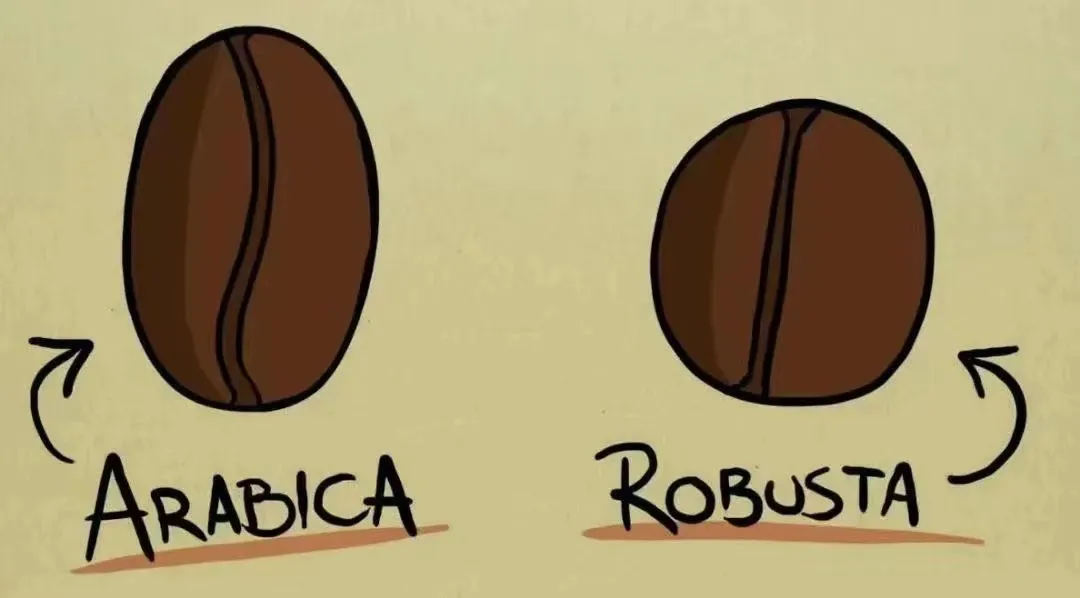
Actually, the method is very simple. Just like distinguishing natural from washed, genetic differences are also reflected in appearance. Below are pictures of Arabica and Robusta beans respectively. You can observe them and see exactly what differences there are~
Many friends may have already noticed the shape of the beans, but shape cannot serve as a decisive basis for judgment, because many Arabica varieties also have a round body shape. The real key difference lies in the bean's center line. The vast majority of Arabica center lines are crooked and not straight at all! While Robusta's center line is a straight line.
This is the basis we use for identification.
However, it should be noted that some coffee beans, due to developmental or genetic reasons (Arabica and Robusta hybrids), do not show obvious center line characteristics. For example, in a pile of Arabica beans, there may be a few whose center lines are straight. (Just as when distinguishing natural and washed beans, in a handful of natural beans there will also be a few whose center lines have obvious silver skin.)
Therefore, when observing, it is best not to stare only at individual beans, but to observe a whole tray or a handful of beans at the same time. Only then will the result be more accurate.
- END -
The above content is compiled by CoffeeHunters, a coffee news website.


