







How Long Can Cold Brew Coffee Be Stored?
Freshly dripped ice drip coffee should not be drunk right away. It tastes flat and thin until it is sealed and refrigerated for more than eight hours, after which it develops a rich, silky mouthfeel and a wine-like aroma. It keeps refrigerated for three to five days, but the fermented taste grows stronger after three days, so three days is set as the optimal drinking period.
This stock coffee guide covers maturation, the process that transforms the flavor during storage, along with brewing parameters and ratios. For anyone weighing coffee beans for hand brew against ice drip, the key difference is patience: the drink needs time in the refrigerator before its character shows.
Why can't you drink ice drip coffee immediately after it's made? What exactly is the difference between it and cold brew? This article provides a detailed explanation of ice drip coffee's shelf life, flavor maturation principles, brewing parameters, and ratios. Freshly dripped ice drip coffee has a flat flavor and needs to be sealed and refrigerated for more than 8 hours to mature before it can present a rich, silky mouthfeel and its signature wine-like aroma. It can be stored refrigerated for 3 to 5 days, but after more than three days the fermented taste becomes noticeably stronger, so Front Street sets the optimal drinking period at 3 days. The article also includes the ratio parameters for making ice drip, helping you fully master this coffee that requires patient waiting.
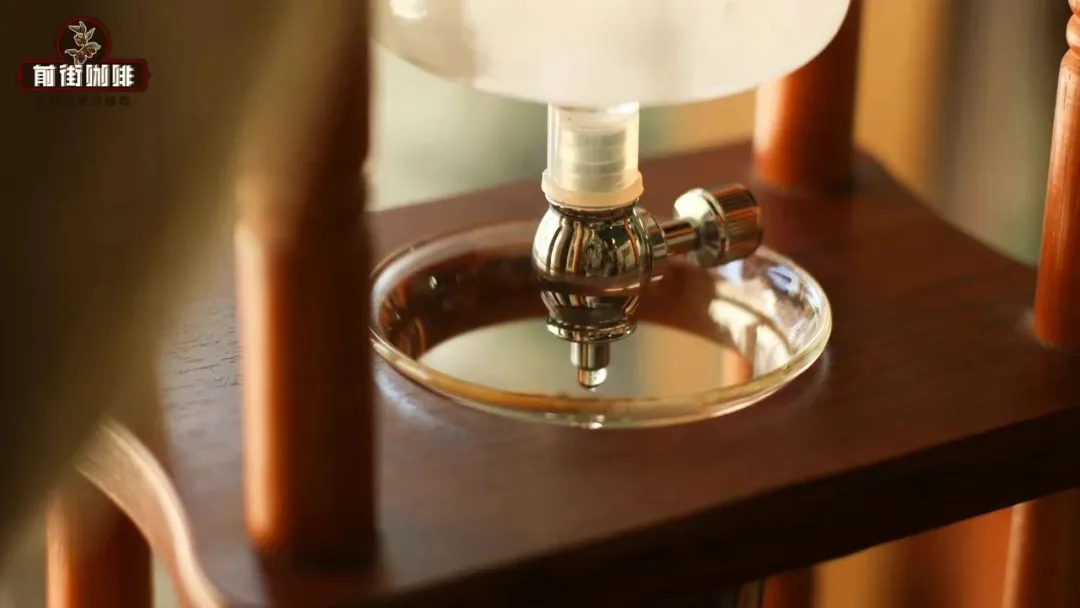
There is a scene at Front Street that plays out almost every day: the ice drip has just finished dripping and is about to be put in the refrigerator to chill, and it always gets caught by sharp-eyed customers. Looking at the pot of "freshly made" ice drip coffee in Front Street's hands, friends who are especially particular about ingredient freshness often blurt out: "Give me a cup!"
However, such requests are usually politely declined by Front Street. The reason is simple—freshly made ice drip coffee is not suitable for immediate drinking.
Why can't freshly made ice drip coffee be drunk?
Saying it "can't be drunk" is indeed a bit exaggerated; a more accurate way to put it is that it is not recommended to drink it immediately. Anyone who has tried this should know the feeling well: freshly dripped ice drip coffee tastes bland and thin, and drinking it is just like having a cup of ordinary coffee with no highlights. It may even perform worse than most conventionally brewed coffee because its temperature is close to room temperature.
For this reason, businesses usually do not sell freshly made ice drip directly, but first seal it and put it in the refrigerator, waiting 8 hours or a whole night before offering it for sale. Tasted at this point, the ice drip coffee seems completely transformed—the flavor is more distinct, the mouthfeel is more outstanding, and it gains a clear layer of wine-like aroma.

So the question is: why does ice drip coffee change so dramatically after refrigeration?
The answer lies in the fact that during storage, ice drip coffee undergoes a process of "maturation." This is somewhat similar to the wet aging of meat—after the ice drip is made, the coffee itself continues to ferment. If it is then placed in the refrigerator, microbial activity slows down in the low-temperature environment, the fermentation rate is controlled, and the overall process becomes manageable.
After about 8 hours, as fermentation deepens, the quality of the ice drip coffee improves noticeably. The mouthfeel is no longer muddy, but instead becomes clean, rich, and smooth, and the flavor layers become richer as well. At the same time, fermentation also gives it a unique wine-like aroma, which is the "ice drip taste" that everyone talks about.
At this point, it is not hard to understand why Front Street's blackboard says that ice drip needs to be reserved two days in advance—the dripping process itself takes a long time, and the resting and maturation requires another waiting period, which adds up to exactly two days for stocking. (Of course, this is so customers can choose their own beans for making it. Generally, stores keep ice drip on hand; it just depends on the mood which beans are used that day~)
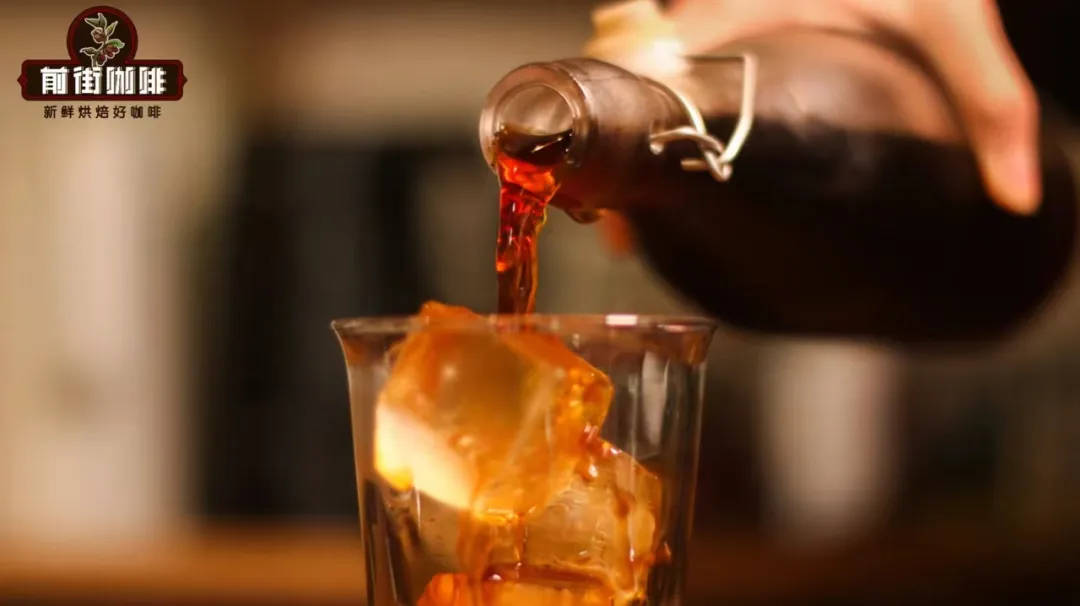
But as Front Street said earlier, from the moment the ice drip is finished, fermentation has already begun, and this is an irreversible process. The longer it sits, the deeper the fermentation, and the stronger the fermented flavor we taste. However, flavor is not better the stronger it is. Many times, we find something pleasant to smell or drink because the aroma concentration is just right; once the concentration is too high, it can become an unpleasant taste.
Not only that, but when stored too long and fermented excessively, the coffee will spoil and develop off-flavors. At that point it must be poured out to avoid affecting the body after drinking. Exactly how long it can be kept depends on the ambient temperature where the ice drip coffee is stored.
If ice drip coffee is left at room temperature, it may spoil in as little as 6 hours. If sealed and refrigerated, it can be stored for 3 to 5 days. Sealing and low temperature can block the invasion of external bacteria while inhibiting the reproduction rate of microbial colonies, thereby greatly extending the storage time (provided the lid is not opened frequently).
From this it can be seen that ice drip coffee has a drinking deadline and needs to be adjusted flexibly according to actual storage conditions. Although five days refrigerated is a relatively safe time range (beyond 5 days, spoilage flavors such as sourness are very likely to appear), after more than three days of storage the fermentation concentration of the coffee rises significantly, and many friends do not like an overly strong wine-like aroma.
Therefore, considering both flavor experience and health and safety, the ice drip coffee produced by Front Street usually sets the optimal drinking period at 3 days; beyond three days it will be poured out or consumed internally~~
The above content is compiled by CoffeeHunters, a coffee news website.


