







How Fires and Drought Hit Brazil Coffee Production
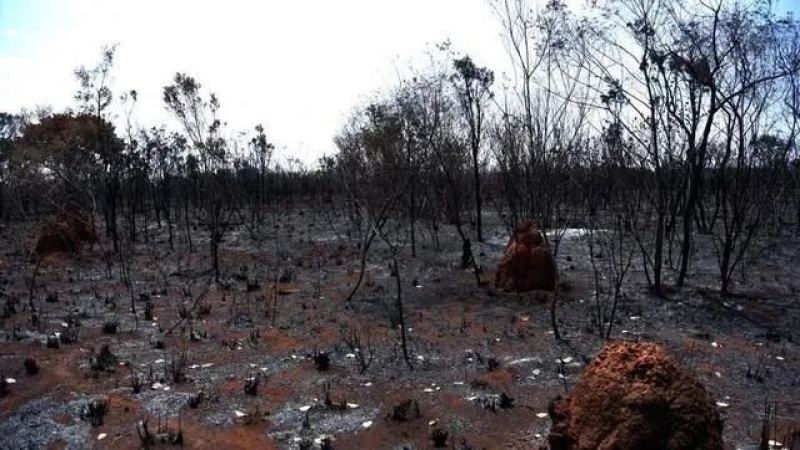
Brazil's 2024/25 coffee production forecast has been cut by 4 million bags, a 6.8% reduction, after severe fires and a historic drought. The Brazilian Confederation of Agriculture and Livestock estimates agribusiness losses of at least 14.7 billion reais from June to August, with São Paulo state hardest hit at about 2.8 billion reais. Coffee tree growth has been affected across producing regions.
More than 180,000 fires were recorded nationwide by mid-September, more than double the same period in 2023 and over half of all South American fires. Roughly 5 million square kilometers have been affected, and private agricultural property losses total 2.8 million hectares across pasture, sugarcane, and coffee estates. Conab warns production could fall further if weather does not improve, keeping prices high.
Brazil has recently suffered severe fires and a historic drought, with agribusiness losses reaching as high as 14.7 billion reais, and coffee-producing regions have also been affected. According to estimates by the Brazilian Confederation of Agriculture and Livestock, the fires from June to August caused huge economic losses, with São Paulo state hit the hardest. At the same time, Brazil is experiencing an extreme drought, with more than a thousand cities going for months without significant rainfall, many rivers shrinking, and coffee tree growth severely affected. The official agency Conab has already lowered its forecast for 2024/25 coffee production, expecting a reduction of 4 million bags, a decrease of 6.8%. If weather conditions do not improve before the end of the year, production may decline further, and coffee prices will remain high.
According to Brazilian media reports, the Brazilian Confederation of Agriculture and Livestock (CNA) recently released an estimate showing that from June to August, due to frequent fires, Brazil's agribusiness suffered economic losses of at least 14.7 billion reais.
Data shows that the hardest-hit region during this period was São Paulo state, with agricultural losses of about 2.8 billion reais; followed by Mato Grosso, with losses of 2.3 billion reais; Pará, with losses of 2 billion reais; and Mato Grosso do Sul, with losses of about 1.4 billion reais.
In addition, data from Brazil's National Center for Monitoring and Early Warning of Natural Disasters shows that as of mid-September, more than 180,000 fires had been recorded nationwide in Brazil, more than double the number in the same period of 2023 and accounting for 50.6% of all fires in South America.
Currently, about 5 million square kilometers in Brazil have been affected by fires, equivalent to 60% of the country's land area. Among this, the total area of affected private agricultural property reached 2.8 million hectares, covering pastures, confined rural properties, sugarcane and coffee estates, and other types. Moreover, the fires are still spreading, with another 13 municipalities in São Paulo state reporting fire incidents. Reports from the civil defense department indicate that the fires have burned large numbers of plantations, pastures, and some permanent protection areas, but a comprehensive count of the specific affected area has not yet been completed.
At the same time, Brazil is facing a historic drought, which has further worsened the fire situation. The causes of this drought include both natural factors such as El Niño and human activities such as deforestation and open-air burning. Drought means a lack of rainfall. Data shows that as of September 22, more than a thousand cities in Brazil had experienced severe drought in 2024, with no significant rainfall for three consecutive months or longer. These cities account for half of Brazil's total number of cities.
Brazil's National Center for Monitoring and Early Warning of Natural Disasters pointed out through analysis of satellite data that 1,188 cities had gone 90 consecutive days without significant rainfall, about 600 cities had gone more than 130 consecutive days without significant precipitation, and some cities even set a record of 173 days without rainfall. At present, the cities with the most severe drought are mainly concentrated in Goiás, Minas Gerais, and Mato Grosso.
The drought has also caused many rivers in Brazil to shrink sharply. The water levels of some tributaries of the Amazon River have dropped to their lowest point of the year, falling by about 18 centimeters per day, with large areas of riverbed exposed, shipping on some inland rivers obstructed, and surrounding lakes severely dried up, with lake surfaces greatly reduced. As temperatures continue to rise and rainfall remains scarce, these conditions are expected to worsen further, intensifying water shortages and causing serious impacts on local ecosystems.
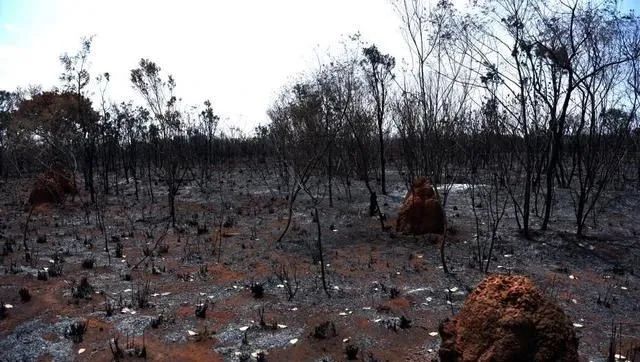
At the same time, Brazil remains in a state of sustained high temperatures. According to forecasts by the meteorological agency Climatempo, the dry and hot weather in southeastern and central-western Brazil will intensify further, and many cities may face high temperature and low humidity warnings. Temperatures in some areas will be 3°C to 5°C above average, with maximum temperatures possibly reaching 39°C.
Due to factors such as drought and low humidity, the Civil Defense Bureau of São Paulo state recently issued a statewide high fire risk alert through CGE (Emergency Management Center). Many experts believe this situation will continue until the end of the year and will be difficult to alleviate in the short term.
For Brazil's important coffee industry, the current situation is very severe. In previous fires, many coffee estates were affected, coffee trees were burned, and the impact was quite serious. It is currently the flowering period of the new coffee season, but drought and water shortages have caused some coffee trees to dry up and turn yellow, which will seriously affect coffee flowering and fruiting, as well as coffee production in the 2025 new season. Therefore, Brazil's official agency Conab has already lowered its forecast for 2024/25 coffee production, expecting a reduction of 4 million bags (60 kg/bag), a decrease of 6.8%. But if the situation does not improve before the end of the year, production will continue to decline, while coffee prices will also remain high.
To learn more about coffee origin information, please scan the QR code to follow: Coffee Review
Long-press the QR code to follow:
TRANSLATE with
x
English
Arabic Hebrew Polish Bulgarian Hindi Portuguese Catalan Hmong Daw Romanian Chinese Simplified Hungarian Russian Chinese Traditional Indonesian Slovak Czech Italian Slovenian Danish Japanese Spanish Dutch Klingon Swedish English Korean Thai Estonian Latvian Turkish Finnish Lithuanian Ukrainian French Malay Urdu German Maltese Vietnamese Greek Norwegian Welsh Haitian Creole Persian
TRANSLATE with
COPY THE URL BELOW
Back
EMBED THE SNIPPET BELOW IN YOUR SITE Bing Webmaster Portal
Back
The above content is compiled by CoffeeHunters, a coffee news website.


