







How Do Honduran Coffee Farms Shape Central American Coffee?
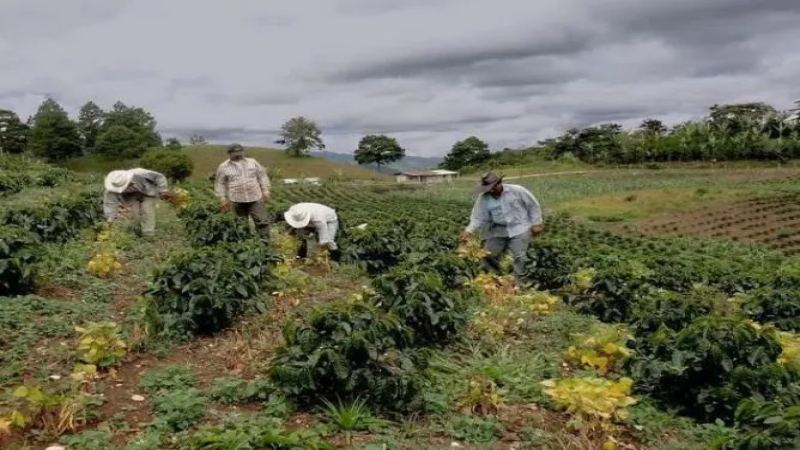
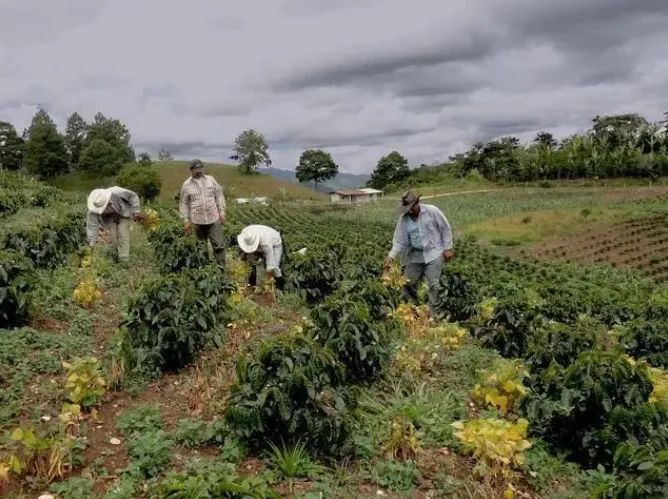
Honduras has become the largest coffee producer in Central America, and its output now stands out alongside Costa Rica and Panama. Most of the country's roughly 280,000 hectares of coffee sits between 900 and 1,500 meters, where mountains, valleys and plateaus create distinct growing conditions. Smallholder coffee farms under 3.5 hectares supply about 60 percent of national production.
The Caballero family, growing coffee locally since the 20th century, has around 120 years of experience and helped push Honduran specialty coffee forward. The Montecillos region shows bright acidity and fruity sweetness. Estates such as La Salsa, El Laurel and El Naranjo illustrate how the country's terrain and climate translate into varied cup profiles.
Honduras, with its complex terrain and diverse climate, has risen to become the largest coffee producer in Central America while continuously refining its quality. This article will guide you through an overview of Honduran coffee, its main growing regions, and how the most iconic Caballero family has driven the development of specialty coffee. We will also delve into the terroir characteristics of the Montecillos region, analyzing its bright acidity and fruity sweetness, along with origin recommendations from Front Street Coffee.
Central America boasts rich terrain and varied climates, with high forest coverage, widespread mountains, and a volcanic belt stretching over 1,300 kilometers—conditions that together have cemented the region's important position in the global coffee market. However, when people talk about Central American coffee, the first countries that come to mind are often Costa Rica and Panama.
In recent years, though, Honduras has emerged as the largest coffee producer in Central America, not only maintaining high production but also steadily improving coffee quality. Honduras's landscape is quite complex, woven from mountain ranges, valleys, plateaus, and coastal areas: the north is dominated by mountains, the central region is mostly lava plateaus, and the south-central area consists of river valleys, which are also the main agricultural zones, with the national average elevation ranging between 900 and 1,500 meters.
Currently, Honduras has about 280,000 hectares of coffee cultivation, with the industry dominated by smallholder farmers, who contribute 60% of the country's production. Their coffee farms are mostly less than 3.5 hectares, but among them are outstanding farms and estates such as La Salsa, El Laurel, and El Naranjo. To trace those with a long history, one cannot fail to mention the Caballero family.
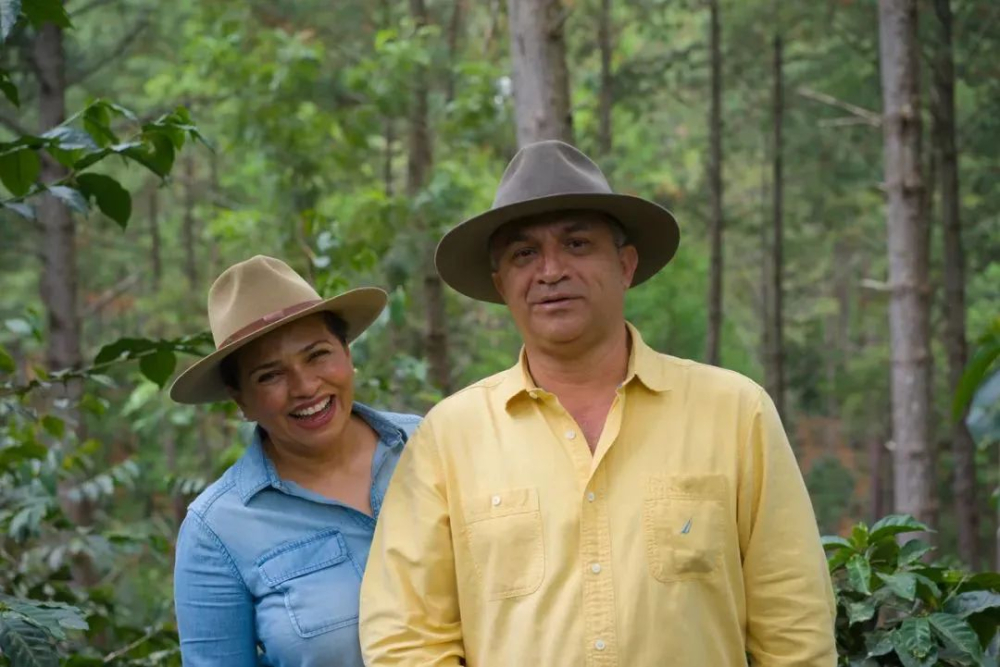
The Caballero family is one of the most prestigious families in the Honduran coffee world. Coffee cultivation in Honduras began in the 18th century and has a history of over 200 years, while the Caballero family started growing coffee locally in the 20th century, accumulating about 120 years of experience—it can be said that the family's development has also witnessed the evolution of Honduras's coffee industry. The third-generation descendant Fabio Antonio Caballero Martinez is hailed as a pioneer of specialty coffee cultivation in Honduras, and the estates are currently managed by the fourth-generation descendant Marysabel Caballero and her husband.
Honduras's coffee regions are divided by the Honduran Coffee Institute (IHCAFE) into six major areas: Copan, Opalaca, Montecillos, Comayagua, Agalta Tropical, and El Paraiso.
The Montecillos region spans parts of La Paz, Comayagua, Santa Bárbara, and Intibucá departments. The Caballero family currently owns about 200 hectares of farmland, distributed across 17 farms or estates including El Puente and La Macaria, mainly concentrated within the La Paz department.
The La Paz department is located in southwestern Honduras, bordering El Salvador, with terrain dominated by mountains, numerous rivers, and abundant natural resources; annual rainfall ranges between 1,300 and 2,300 millimeters, and coffee is mostly grown at elevations of 1,200 to 1,700 meters. The coffee produced here is characterized by a base of rich fruit and sweetness, accompanied by notes of lemon and flowers. Lemon and fruit aromas are its signature features, with peach and orange flavors particularly prominent; the acidity is lively and bright, the mouthfeel is velvety smooth, and the finish is long—which is why several estates here frequently appear on the Honduras Cup of Excellence (COE) lists.
The Caballero family deeply understands the importance of sustainable development and has therefore invested heavily in improving the soil of its estates: applying organic fertilizers, reducing the use of chemicals such as herbicides and pesticides, adopting shade-grown cultivation, and filtering discharged water to protect local forests and water sources. The family also has a dedicated processing plant, with a professional team strictly controlling quality at each farm and processing facility to produce high-quality coffee. The estates under its banner cultivate numerous varieties, including Catuai, Geisha, and Java. Because of this, multiple farms and estates under the Caballero family have repeatedly achieved excellent results in the Honduras Cup of Excellence (COE) competition, making them truly a winning team.
To learn more about coffee origin information, scan the QR code to follow: Coffee Review
Long-press the QR code to follow:
TRANSLATE with
x
English
Arabic Hebrew Polish Bulgarian Hindi Portuguese Catalan Hmong Daw Romanian Chinese Simplified Hungarian Russian Chinese Traditional Indonesian Slovak Czech Italian Slovenian Danish Japanese Spanish Dutch Klingon Swedish English Korean Thai Estonian Latvian Turkish Finnish Lithuanian Ukrainian French Malay Urdu German Maltese Vietnamese Greek Norwegian Welsh Haitian Creole Persian
TRANSLATE with
COPY THE URL BELOW
Back
EMBED THE SNIPPET BELOW IN YOUR SITE Bing Webmaster Portal
Back
The above content is compiled by CoffeeHunters, a coffee news website.


