







How Does Bean Size Shape Kilimanjaro Coffee Quality?
Tanzania grows coffee on high-altitude mountains, volcanic soil and abundant water, and its coffee is often called the coffee gentleman. Mount Kilimanjaro anchors one of the country's nine producing regions. Tanzania grades its coffee by the size of coffee bean, so screen size directly affects how a lot is classified and sold.
East Africa's plateau terrain, mostly above 1,000 meters, and the Rift Valley's volcanoes and lakes give the region a cool, humid growing environment shared by Ethiopia, Kenya, Tanzania and Rwanda. Tanzanian coffee, including Kilimanjaro Typica washed beans, tends to show soft citrus, berry, honey and nut notes in the cup.
Tanzania is located in East Africa and boasts high-altitude mountains, volcanic soil, and abundant water sources. It is one of the important coffee-producing countries in East Africa and is known as the "coffee gentleman." This article will start from Tanzania's geographical and climatic conditions, sort out its nine major coffee-producing regions, review the development and changes of the coffee industry from the colonial period to after independence, and focus on introducing the planting advantages of the producing areas around Mount Kilimanjaro. At the same time, the article will also explain Tanzania's coffee grading method based on bean size, and, in combination with Front Street Coffee's Kilimanjaro Typica washed beans, present its soft flavor interwoven with citrus, berries, honey, and nuts.
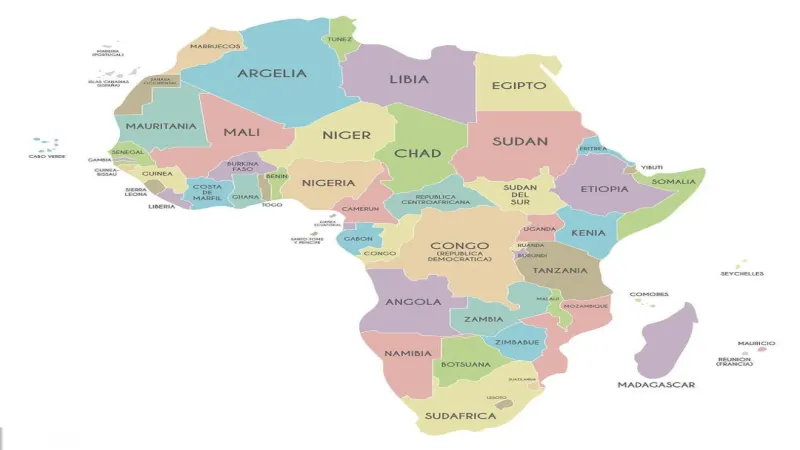
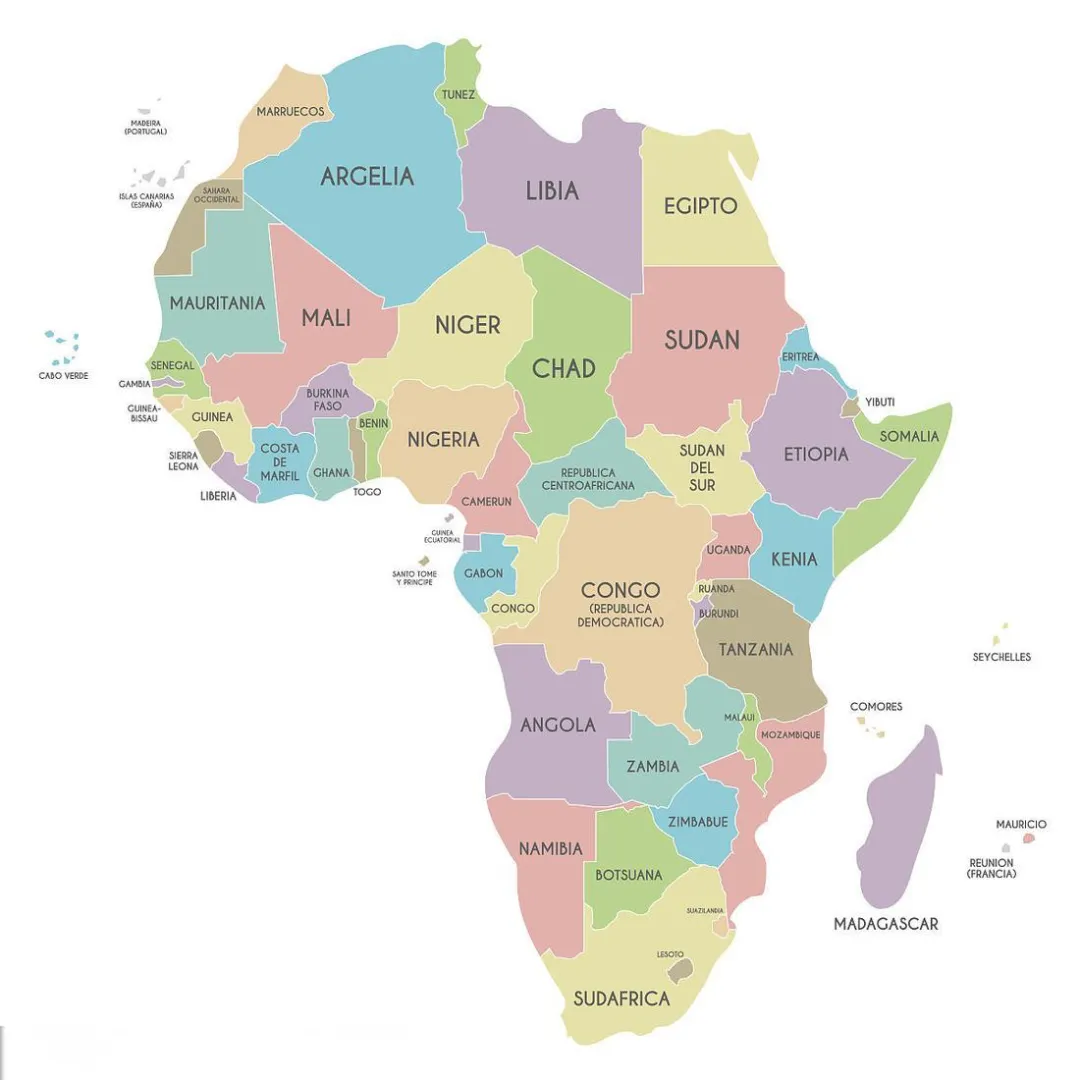
Africa is the world's second-largest continent by area, and its terrain is dominated by plateaus. Plateau areas account for more than 60% of the continent, so it is called the "Plateau Continent." In geographical divisions, Africa is usually divided into North Africa, Central Africa, Southern Africa, and West Africa, while coffee cultivation is highly concentrated in East Africa.
East Africa's landforms are also mainly plateaus, with most areas above 1,000 meters in elevation, making it the highest terrain zone in all of Africa. The East African Rift Valley runs through this region from north to south, with numerous volcanoes, lava plateaus, and lakes distributed along the way. The local climate is mainly tropical savanna, while the high mountain areas are cool and humid, providing an ideal growing environment for coffee and other crops. Because of this, many countries in East Africa are engaged in coffee cultivation, including Ethiopia, Kenya, Tanzania, and Rwanda. Among them, Tanzania is titled the "coffee gentleman" because of its unique flavor performance.
Tanzania is located in East Africa, with terrain that is high in the northwest and low in the southeast. The southeast is a coastal zone, while the western inland area is mainly plateau. The East African Rift Valley splits into eastern and western branches from Lake Malawi and runs through the north and south, and along the rift zone lies Africa's highest peak—Mount Kilimanjaro.
Because it is close to the equator, Tanzania's eastern coast and low-altitude areas have a tropical savanna climate, while the western plateau shows tropical mountain climate characteristics, with an annual average temperature between 21°C and 26°C. Overall rainfall across the country is relatively low, with annual precipitation in most areas less than 1,000 mm, but Tanzania's water resources are quite abundant. It not only has many rivers but also a large number of lakes, and Africa's three major lakes are all located on Tanzania's borders. The combination of high-altitude mountains, volcanic soil, and abundant water sources gives Tanzania the natural conditions to produce high-quality coffee.
Tanzania is currently divided into nine coffee-producing regions, among which the better known include Kilimanjaro, Arusha, Ruvuma, Mbeya, Tarime, and Kigoma. These producing areas are roughly distributed around Tanzania.
In the 19th century, Tanzania was a German colony, and coffee was introduced for cultivation by the Germans. Coffee was first planted in the Bukoba area in northern Tanzania, but due to conflicts with local residents, planting progress remained limited. After that, coffee began to expand to other areas, although it was still mainly in the north.
After Tanzania gained independence, the government began to promote the development of the coffee industry and implemented a series of reform measures. However, the invasion of coffee leaf rust caused production to decline sharply, and the coffee industry shifted to southern and eastern regions.
Among the many coffee-producing regions, Kilimanjaro, Arusha, and Oldeani are all distributed around Mount Kilimanjaro. Mount Kilimanjaro is located in northeastern Tanzania and is the highest peak on the African continent. It consists of three extinct volcanoes, Kibo, Mawenzi, and Shira, and its summit is covered with snow year-round. The coffee-growing belt is distributed within an altitude range of 1,050 to 2,500 meters. Sufficiently high altitude, volcanic soil, and pure snowmelt water sources make this one of the most suitable areas for growing coffee.
To the south of Mount Kilimanjaro is the Kilimanjaro coffee-producing region, where the regional capital Moshi is also located. This is Tanzania's largest coffee trading and processing center, responsible for the processing and export functions of coffee in the region.
Tanzania's coffee grading method is the same as Kenya's, both using the size of coffee beans as the basis for grading. During the screening process, green coffee beans need to pass through screens with holes of fixed sizes. The larger the screen number, the larger the green coffee beans.
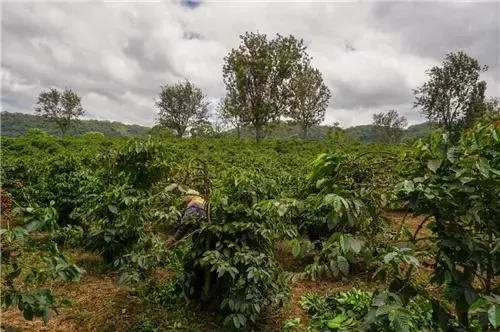
At Front Street Coffee, you can also find coffee beans from Tanzania's well-known Kilimanjaro producing region. This bean uses the Typica variety and adopts the washed processing method. After brewing, it presents a gentle acidity, with flavors of citrus, berries, honey, and nuts. The mouthfeel is soft, tending toward a tea-like quality, and the overall performance is balanced. Front Street Coffee believes that although Tanzania is located in Africa and borders countries such as Kenya and Rwanda, Tanzania coffee's acidity is not as bright as that of its neighboring countries, but rather softer, while also having a heavier body and richer aroma. It is more balanced overall, showing Tanzania's unique character.
To learn more about coffee-producing regions, please directly scan the QR code to follow: Coffee Review
Long-press the QR code to follow:
The above content is compiled by CoffeeHunters, a coffee news website.


