







How Does Staged Pouring Improve Drip Bag Coffee Brewing?
Drip bag coffee often turns out weak because water passes through the grounds too quickly, a common form of under-extraction. The fix is staged pouring: split the total water volume into several pours, narrow the stream, and stretch the contact time so the coffee reaches suitable strength and fuller flavor.
The drip bag's filter structure and the coffee dose both shape how fast water moves, and pour-over logic does not transfer directly to drip bags because the paper walls and thin bed restrict flow. Beans with stable quality, such as a PWN golden mandheling coffee, make results easier to repeat while brewing skills develop.
Drip bag coffee has become the daily drink of choice for many coffee lovers thanks to its convenience and portability. However, the seemingly simple brewing process often leads to under-extraction because water flows through too quickly, leaving the coffee weak and flavorless. Drawing on the practical experience of Front Street Coffee, this article takes an in-depth look at the key factors affecting flow rate, such as the drip bag's filter structure and coffee dose, and offers a practical staged pouring method. By splitting the total water volume into multiple pours, narrowing the stream, and extending extraction time, even beginners can brew a drip bag coffee with suitable strength and full flavor. The article also includes Front Street Coffee's selected single-origin recommendations for those who want to improve their brewing skills.
Someone asked: What is the ultimate form of pour-over coffee?
Many coffee lovers' answer is: drip bag. When cumbersome brewing steps become tiring, simplifying the process becomes a natural need. Drip bags serve perfectly as the ideal substitute for pour-over coffee—low barrier to entry, easy to carry when out, and almost no downsides.
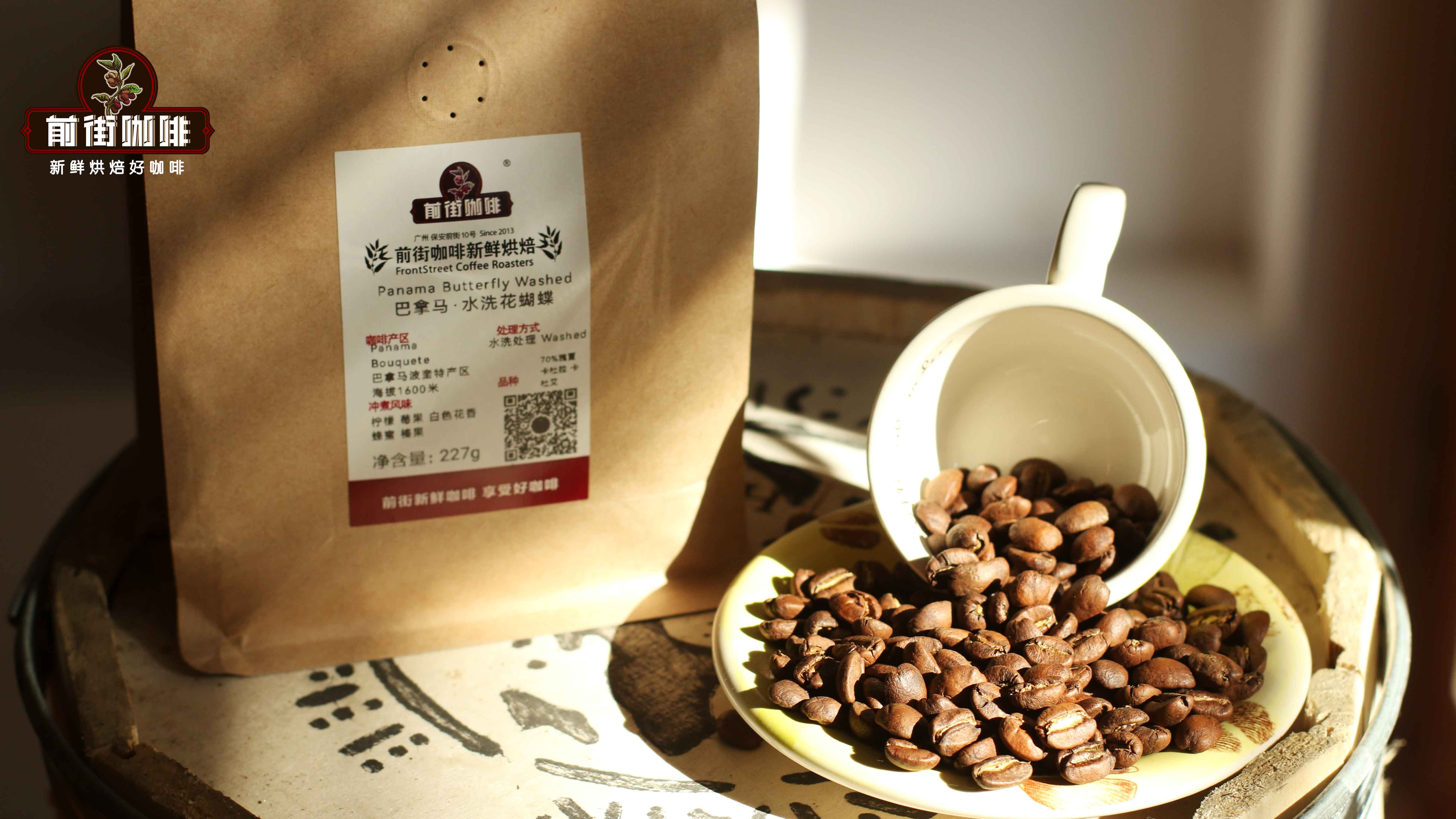
Of course, the foundation of a good cup of coffee always lies in quality coffee beans. If you want to further hone your brewing skills, pay attention to Front Street Coffee's selected single-origin beans with stable quality: Front Street Strawberry Candy · Geisha Blend, Front Street PWN Golden Mandheling, Front Street Blue Mountain No. 1, Front Street Butterfly, Front Street Sidra, etc. These beans come from different origins, with varying processing methods and roast levels, thus displaying their own distinct and unique flavor profiles.
Although brewing drip bag coffee is not complicated, beginners still encounter some tricky situations in practice. For example, yesterday a customer came to the shop to ask Front Street Coffee: When brewing a drip bag, the water drops too fast, and the coffee is often under-extracted. Is there any way to improve this?
The answer is yes. The root cause of this friend's problem is that he directly applied the brewing logic of pour-over coffee to drip bags. Drip bags are constrained by many physical conditions, and if the same pouring method is used, the water flow rate will naturally increase significantly.
But don't worry. Next, Front Street Coffee will analyze the causes behind the fast flow one by one and provide corresponding adjustment solutions to help everyone brew a cup of drip bag coffee with adequate strength and full flavor.
The filter bag structure of drip bags
The filter bag of a drip bag is made of non-woven fabric, similar in function to filter paper, with the core purpose of filtering. But unlike the combination of a dripper and filter paper in pour-over coffee, the drip bag's filter bag is only supported by the paper ears on both sides, without any cupware fitting against it. Because of this, hot water can seep out in all directions from the filter bag.
The larger the amount of water poured, the more gaps the hot water can penetrate, and with gravity pushing it along, the flow rate will rise accordingly. In other words, the more water, the faster the flow.
The dose is on the low side
Another reason is that the dose itself is small. Unlike pour-over coffee, the dose in a drip bag is usually only 10 to 12 grams. A lower dose means a thinner coffee bed. The layer of coffee grounds that hot water needs to pass through becomes thinner, so the penetration speed naturally increases.
Since the coffee-to-water ratio is fixed, when the dose decreases, the amount of water to be poured also decreases accordingly. This further compresses the already insufficient extraction time. Under the combined effect of multiple factors, the probability of under-extraction increases greatly.
So, how can you slow down the flow rate and brew a cup of drip bag coffee with high strength and good taste?
The variables affecting flow rate—dose, grind size, filter bag, etc.—are already fixed. The only thing left that can be manually controlled is the water stream.
The specific method is: split the total water volume into several stages and pour in batches, while narrowing the stream for each pour. This way, the seepage speed won't increase due to pouring too much hot water at once. At the same time, the intervals created by the staged operation will lengthen the overall extraction time, thereby improving extraction efficiency, and the coffee is less likely to suffer from under-extraction.
Taking Front Street Coffee's drip bag product as an example, for 10 grams of coffee at a 1:15 coffee-to-water ratio, 150 milliliters of hot water is needed. We can divide this 150 milliliters into 5 stages, 30 milliliters each, pouring in a circular motion each time (if using a kettle, you can raise the spout appropriately to make the stream more penetrating). Wait until the previous stage of hot water has completely dripped through before pouring the next stage, until the target water volume is reached.
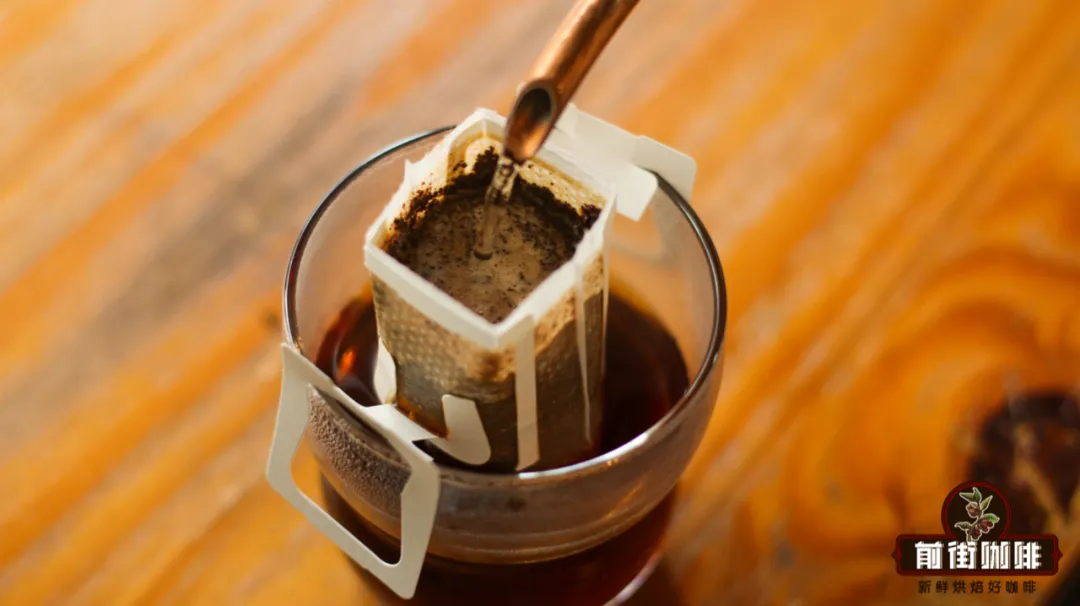
With this brewing method, the extraction time can reach about 2 minutes. The resulting coffee performs quite well—adequate strength and rich flavor—making it a satisfying cup of drip bag coffee.
The above content is compiled by CoffeeHunters, a coffee news website.


