







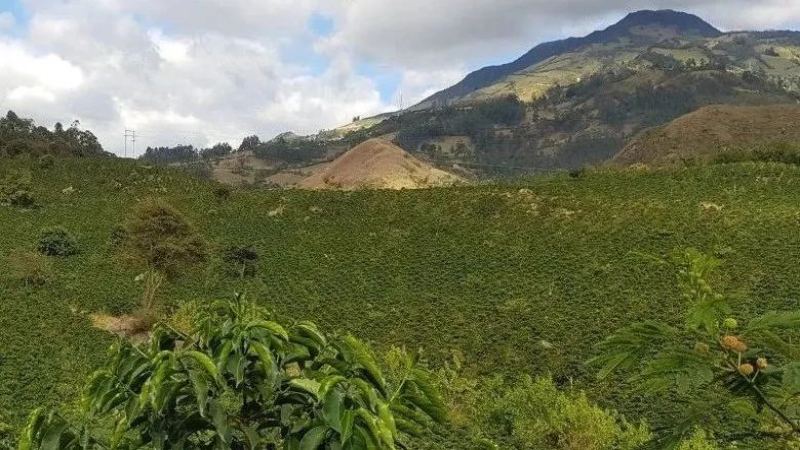
How Do Coffee Farms Shape Nariño's Coffee?
Colombia's Nariño department sits in the western Andes, where three cordilleras and scattered volcanoes create microclimates that give the coffee a complex, floral profile. Smallholder coffee farms dominate the landscape because steep mountain terrain rules out the large plantations common in southern Brazil. El Obraje Estate in Tangua, southern Nariño, managed by Pablo Andres Guerrero, began as a wheat and grain operation before shifting to coffee.
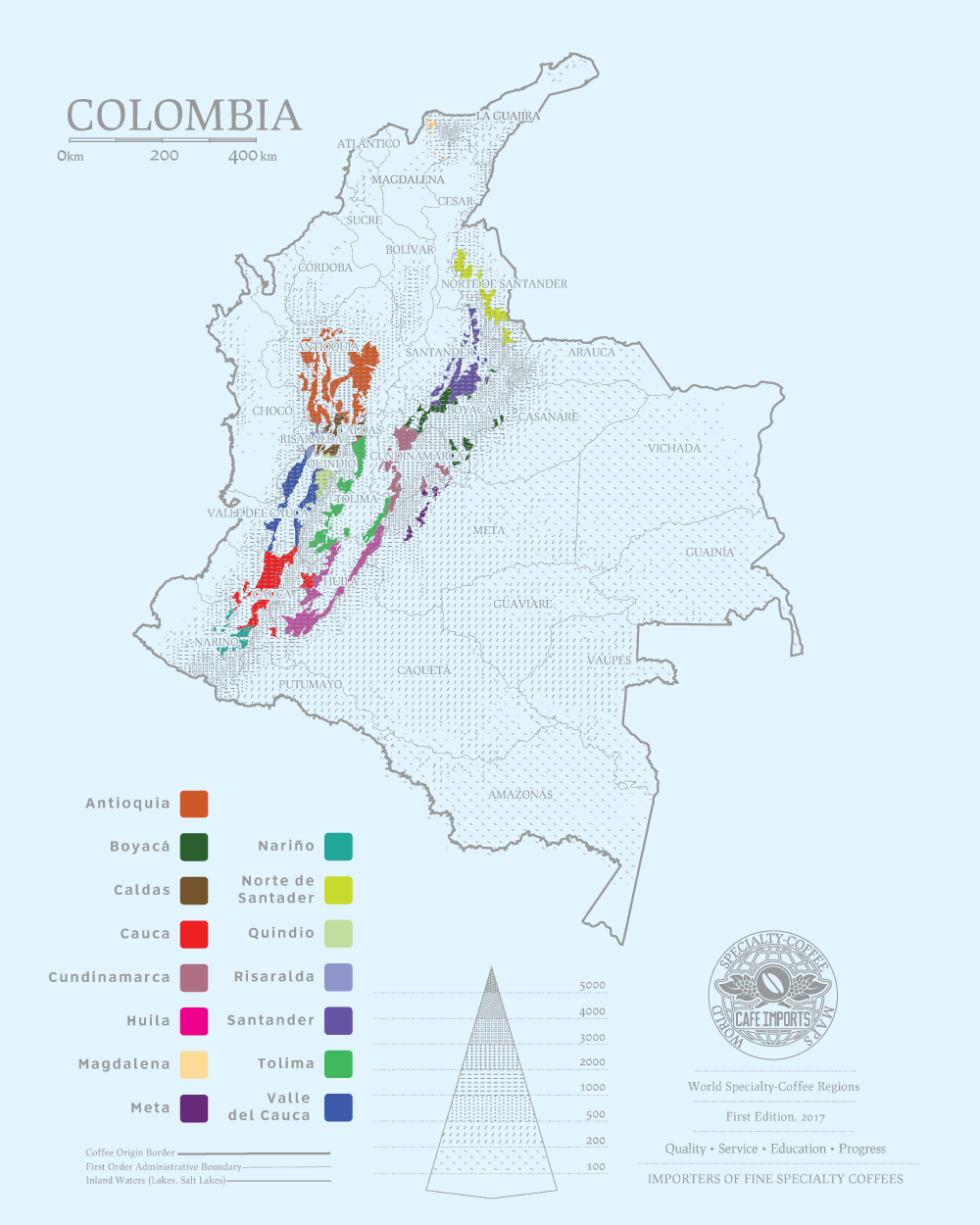
Colombia counts fifteen coffee regions, with Cauca, Santander, Antioquia, Nariño, Tolima and Huila among the core ones. Coffee cultivation in the western Andes, at elevations above 3,000 meters, produces flavor expressions tied to each area. South America supplies more than half of the world's coffee each year, and Brazil and Colombia rank first and third in production, though their growing models differ sharply.
South America holds a pivotal position in the global coffee supply, and within it, Colombia—thanks to the unique geography and climate of the Andes mountain range—has nurtured several coffee regions with distinctly different styles. The Nariño department, as a rising star, is known for its complex flavors and floral aromas, while El Obraje Estate is the pioneer and benchmark of this region. This article will guide you through the distribution characteristics of Colombia's coffee regions, focusing on the terroir advantages of Nariño, and revisit El Obraje Estate's transformation from grain farming to COE champion. We will also mention the Huila region representative in Front Street Coffee's daily drinking bean series for everyday tasting reference.
The South American continent occupies a pivotal position in the global coffee landscape, contributing more than half of the world's total coffee production each year. Brazil and Colombia rank first and third in global coffee production respectively, but their cultivation models differ significantly: southern Brazil's hilly terrain is relatively gentle, suitable for developing large-scale farms; while Colombia is dominated by mountainous terrain, so smallholder coffee farms prevail.
Colombia's coffee cultivation is mainly concentrated in the western Andes mountain range. The Andes here divide into three cordilleras—eastern, central, and western—with an average elevation exceeding 3,000 meters, and numerous volcanoes are scattered throughout. High altitude and complex terrain together create rich and diverse microclimates, which run through multiple coffee regions and impart unique flavor expressions to the coffee.
For this reason, Colombia has a total of 15 coffee regions, among which the more core ones include Cauca, Santander, Antioquia, Nariño, Tolima, and Huila.
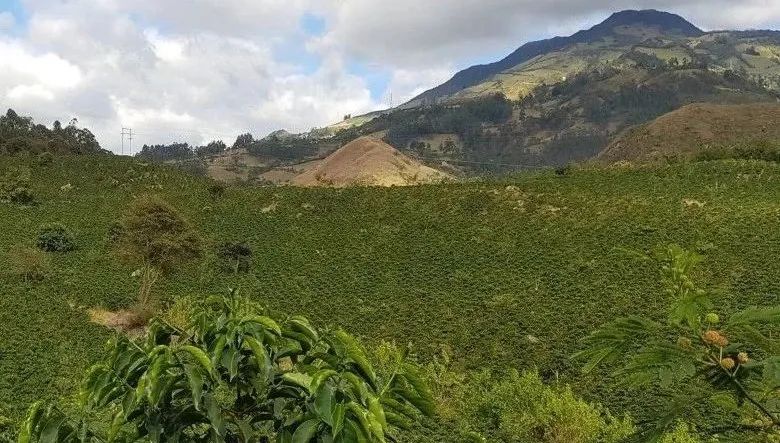
Among these regions, many well-known estates have emerged, such as El Diviso in the Huila region, La Roca in the Tolima region, and La Esperanza in the Cauca region. When it comes to the estate with the longest coffee-growing history, one must mention El Obraje Estate.
El Obraje Estate is owned by the Guerrero family and is currently managed by Pablo Andres Guerrero. The estate is located in the town of Tangua in southern Nariño department and was originally known for growing wheat and other grains. Later, when the government began importing grains, the estate shifted to other crops such as fruits, but development was equally unsatisfactory. It was not until 1999, when the government vigorously promoted coffee cultivation, that El Obraje Estate officially entered the coffee industry in early 2000. At that time, Nariño was not a traditional coffee-growing region, and El Obraje Estate could be considered a pioneer of this region.
Among Colombia's many coffee regions, Huila is the most well-known. This region is home to Colombia's highest volcano—Huila Volcano—and is located in the valley between the eastern and central cordilleras. The canyon terrain provides protection, and the climate is mild, making it an ideal coffee-growing zone. In Front Street Coffee's daily drinking bean series, there are also coffee beans from Colombia's famous Huila region, using the Caturra variety and the washed processing method. After brewing, they present flavors of dark chocolate, nuts, and caramel, with a pronounced sweet aftertaste and overall balance, carrying a soft fruity acidity when cooled.
In recent years, other Colombian regions have gradually emerged, and the Nariño region where El Obraje Estate is located is one of them. This region, also known as Nariño, is located on Colombia's southwestern coast, adjacent to Ecuador, with multiple rivers and lakes within its territory and two volcanoes—Cumbal and Galeras—located nearby. The town of Tangua, where El Obraje Estate is located, sits at the foot of Galeras, and volcanic ash provides abundant nutrients to the soil. Combined with its proximity to the equator, significant temperature differences between day and night, and moderate rainfall, superior conditions are created for growing high-quality coffee. Therefore, coffee from the Nariño region is known for its complex flavor layers and prominent floral aromas.
However, in its early days of coffee cultivation, El Obraje Estate focused only on yield, and it was not until 2010 that it began shifting toward quality improvement, gradually introducing varieties such as Geisha and progressively building its own processing plant. Today, El Obraje Estate has become a benchmark for high-quality coffee cultivation in the Nariño area. At present, the estate mainly grows Geisha and Caturra, and has set aside a separate plot as an experimental zone for cultivating new varieties such as Sidra.
Thereafter, the estate began participating in local Colombian competitions and won awards repeatedly. It took part in the Cup of Excellence (COE) competition in 2020, and in 2021 won the COE championship with its washed Geisha. The estate has also opened its own coffee shop, Obraje Café Especial, and established partnerships with cooperatives in the Nariño region to provide assistance to other coffee growers, aiming to help them export coffee and supply high-quality coffee to domestic and international markets.
To learn more about coffee origin information, please scan the QR code to follow: Coffee Review
Long-press the QR code to follow:
TRANSLATE with
x
English
Arabic Hebrew Polish Bulgarian Hindi Portuguese Catalan Hmong Daw Romanian Chinese Simplified Hungarian Russian Chinese Traditional Indonesian Slovak Czech Italian Slovenian Danish Japanese Spanish Dutch Klingon Swedish English Korean Thai Estonian Latvian Turkish Finnish Lithuanian Ukrainian French Malay Urdu German Maltese Vietnamese Greek Norwegian Welsh Haitian Creole Persian
TRANSLATE with
COPY THE URL BELOW
Back
EMBED THE SNIPPET BELOW IN YOUR SITE Bing Webmaster Portal
Back
The above content is compiled by CoffeeHunters, a coffee news website.


