







Does an Orange Peel Dripper Actually Work for Coffee?
A fresh orange can be turned into a working dripper, though the first attempt failed. Small holes caused clogging and an over-extracted, bitter cup. After enlarging the holes and coarsening the grind, the second brew produced citrus aroma, blueberry sweetness and a black tea-like finish. The experiment used a Guatemala New Oriente Geisha, chosen for its balanced flavor.
The method starts with coffee picking, or rather fruit selection: a large, fresh orange works better. Half the peel holds only about 12 grams of coffee, so the brew used a 1:15 ratio, EK43s grind setting 10, 90 degrees Celsius water and a four-pour method. Larger, evenly spaced holes help water drain and prevent clogging.
Scooping out a fresh orange to make a dripper for brewing coffee—this trick that once went viral online has recently gotten a new twist. With curiosity, Front Street got hands-on, from picking the orange, scooping out the flesh, poking holes, to brewing, and did a side-by-side test with two different coffee beans. The first attempt failed badly because the holes were too small, causing severe clogging and an over-extracted, bitter cup; the second time, after enlarging the holes and coarsening the grind, they finally got a good cup with citrus aroma, blueberry sweetness, and a black tea-like finish. This article fully documents the steps, parameters, and pitfalls of this experiment, and summarizes three key details to keep in mind when using an orange peel as a dripper, for coffee lovers who enjoy DIY.
To gather material, Front Street sometimes taps into the power of big data. While browsing online a while ago, they discovered an "orange peel dripper" that suddenly went viral two years ago and has now made a comeback, with even more玩法 and花样. All I can say is, fashion trends really do go in cycles!
How does an orange transform into a dripper?
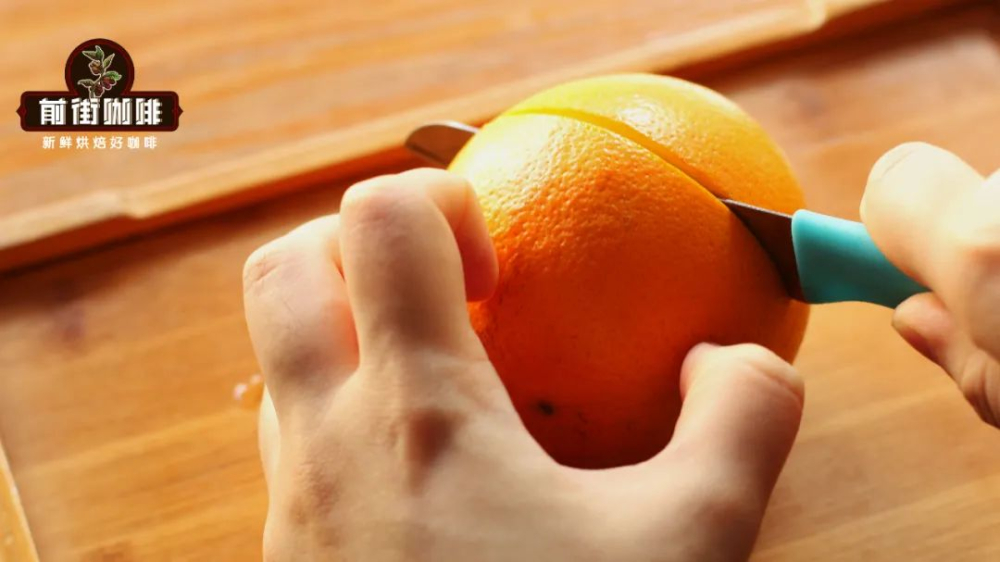
Step one: pick a dripper that looks good—no, a fresh orange, the bigger the better. After washing, cut it in half from the middle, then take a spoon and carefully scoop out all the flesh, scraping it as clean as possible. (Why does Front Street scoop it so clean? Of course, because we can't waste the flesh~)
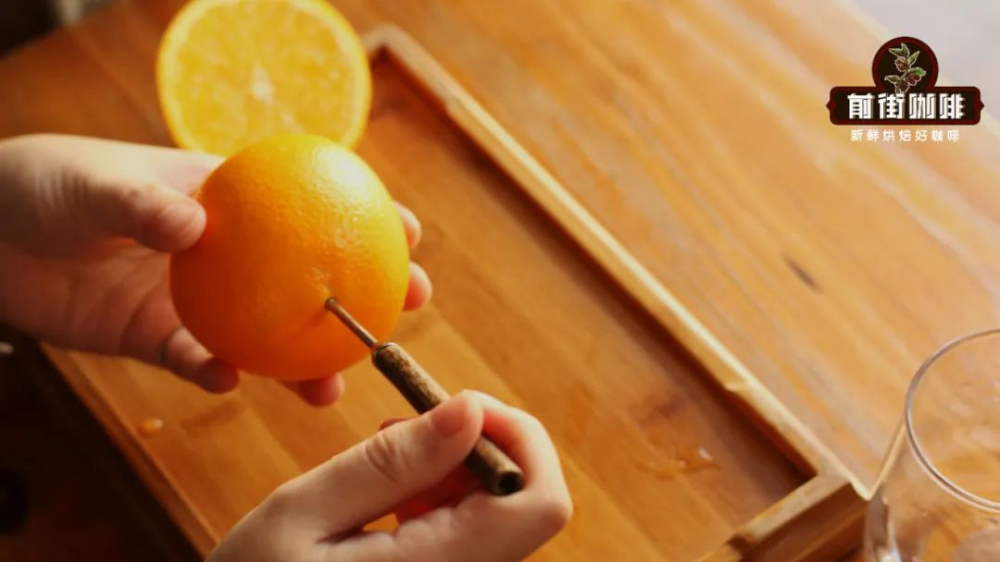
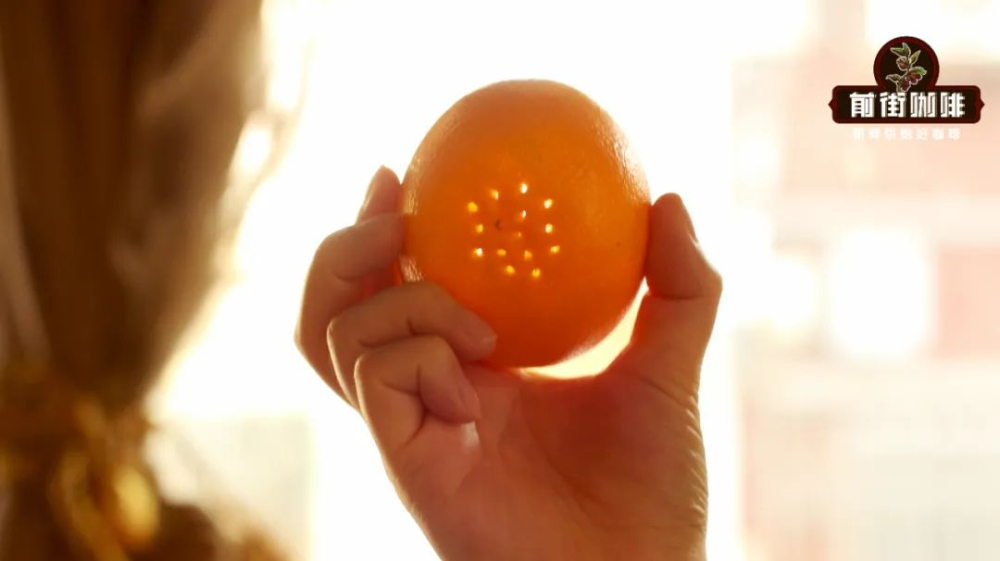
Step two: take a handy pointed pick, start poking holes at the bottom of the orange peel, then place a circular filter paper inside.
A reminder here: use a slightly thicker tool so the holes are bigger, which avoids clogging at the end and water not draining. This time, Front Street used the latte art needle kept in the shop and poked about 15 evenly spaced, light-transmitting holes.
Step three: choose a coffee bean you like. Considering this "dripper" itself carries orange aroma, and since it was Front Street's first try, to be safe, they first chose a Guatemala New Oriente Geisha known for its balanced flavor for the test.
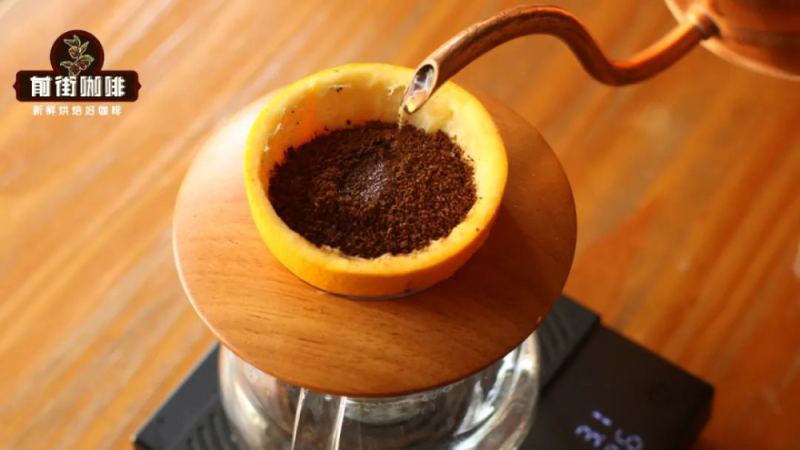
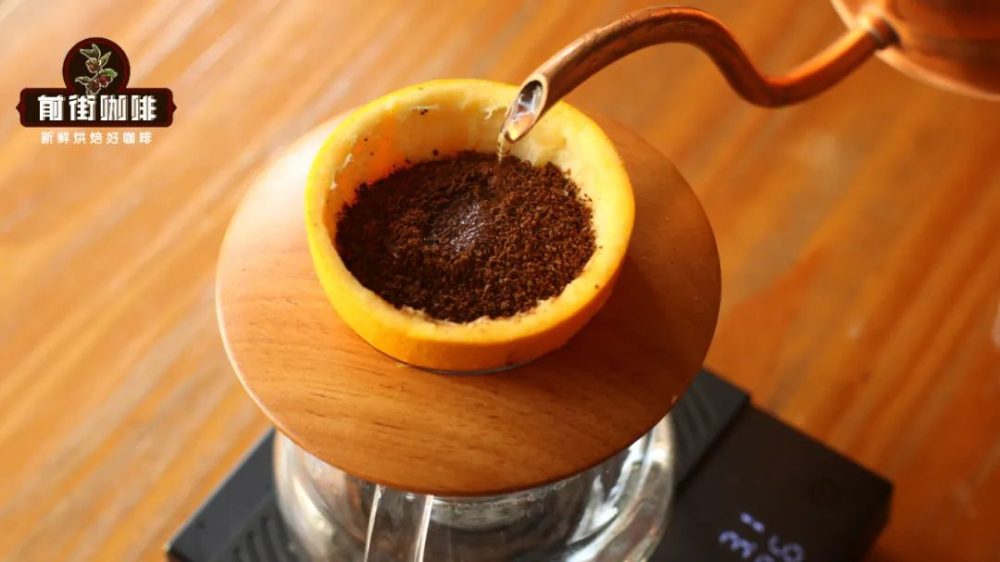
Step four: start brewing. Because the orange is on the small side, half of it can't hold much coffee grounds, so Front Street only used 12 grams of coffee. Other parameters stayed the same: 1:15 coffee-to-water ratio, EK43s grind setting 10, water temperature 90°C, with a four-pour method.
First, pour 30 grams of hot water for a 30-second bloom; during degassing, you can smell fresh citrus aroma wafting out. After 30 seconds, pour the second stage of 50 grams with a slightly stronger vertical stream while lifting the entire bed, finishing in about 45 seconds, then wait for the coffee to drain.
When the liquid level is almost at the bottom, start pouring the third stage of 50 grams, and so on, until all 180 grams of total water is poured.
As brewing entered the final stage, it was obvious that the orange peel dripper's flow rate was getting slower and slower, and Front Street grew more and more anxious, only finishing the target water volume at 3 minutes. As expected, it eventually clogged, with the upper water level staying level with the orange's edge, not even seeping down at all. The entire brewing process took a full 5 minutes and 12 seconds, and over-extraction was almost unavoidable.
The brewed New Oriente Geisha wasn't exactly tasty either. Although there was fresh orange aroma on the entry, the coffee liquid had soaked too long in the inner pith, bringing out a very obvious astringency that almost masked the flavors. Although some bright fruit acidity emerged as it cooled, the strong bitterness far overpowered it.
No big deal, Front Street still had the other half of the orange. This time, learning from the lesson, they first enlarged the drainage space at the bottom (directly cut a circular hole about 3 cm in diameter with a knife), then coarsened the grind and switched to a bean with more prominent aroma. One detail to note here: after enlarging the hole, the circular filter paper must stay adhered to the inner wall of the orange, to prevent coffee grounds from leaking out.
Coffee bean: Costa Rica · Baja Dose: 12 grams Ratio: 1:15 Grind: EK43s setting 10.5 Water temperature: 90°C
Pouring technique: four-stage
After the adjustments, the liquid level did drop a bit faster, but the orange peel's inner pith easily trapped fine particles, so during the final pour, it still couldn't escape clogging, and the entire drip process still exceeded 3 minutes.
Fortunately, the Baja brewed with the orange peel dripper performed well. Before even tasting, you could smell a rich citrus aroma; on the palate, there was the clean sweetness of blueberry, dried fruit, and grape juice, along with a rounded black tea sensation, and a hint of floral in the aftertaste. The overall mouthfeel not only lacked the negative bitterness of the previous cup, but with the orange peel's enhancement, the coffee's layers were much richer.
To sum up Front Street's experience this time, there are three details worth noting when using an orange peel as a dripper: First, try to pick a larger fruit and use a small dose (10–13 grams of coffee), as this capacity better facilitates subsequent circular pouring; Second, if you don't want to endure a long wait and an over-extracted, bitter cup, poke the bottom holes as large as possible; Third, remember not to use too expensive beans, so if it fails, you won't feel too bad.
Alright, Front Street is going to eat the orange flesh now~
- END -
The above content is compiled by CoffeeHunters, a coffee news website.


