







Why are protests hurting Indonesian robusta coffee exports?
Protests broke out in Jakarta and other Indonesian cities on August 22 over a proposed amendment to the Regional Election Law. Police said 301 suspects were arrested after demonstrators breached the parliament fence. In Sumatra, the unrest disrupts union activity and logistics, and exports there have already fallen more than 50 percent year-on-year.
The trigger traces back to a May Supreme Court ruling that changed how the minimum age for regional head candidates is calculated to 30 at swearing-in. With Indonesian robusta coffee under pressure from high global prices and Red Sea shipping delays, coffee industry insiders expect a prolonged slump. Authorities deployed 3,719 joint security personnel on August 23.
Large-scale protests erupted in multiple regions of Indonesia against the amendment to the Regional Election Law, and the situation in front of the Jakarta parliament building briefly spiraled out of control, with more than 300 people arrested. This political turmoil comes at a time when Indonesia's coffee industry is facing severe challenges—exports from the Sumatra production region plunged by more than 50% year-on-year, compounded by high global Robusta prices and the impact of the Red Sea crisis, keeping the Indonesian coffee market in a prolonged slump. The protests have disrupted union participation and logistics, and industry insiders generally hold a pessimistic outlook on the coffee industry's prospects. This article will sort out the sequence of events and their deep impact on the coffee industry.
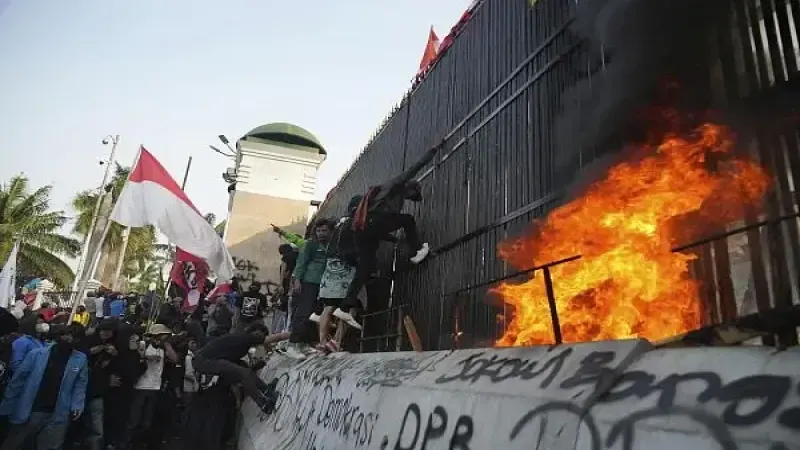
According to media reports, on August 22, large-scale demonstrations broke out in Jakarta and multiple cities in Indonesia. That day, some protesters clashed physically with police, and demonstrators broke through the fence of the Indonesian parliament building, causing the situation on-site to briefly spiral out of control. Police subsequently deployed tear gas to disperse the crowd, and the dispersed troublemakers burned police cars and damaged public facilities in nearby areas. According to police reports, a total of 301 suspects accused of participating in rioting during the demonstrations were arrested.
On August 23, another group of protesters supporting the Constitutional Court's ruling gathered again outside the office of the Indonesian General Elections Commission (KPU) in Central Jakarta, including students and ordinary citizens, to express their demands.
Faced with this situation, the Indonesian police deployed 3,719 joint security personnel from the police, military, and special regional government and related agencies, aiming to ensure that the protest held in front of the Indonesian parliament building proceeded safely and orderly. At the same time, authorities took strict security measures to prevent crowds from breaking into the parliament building or blocking roads, and prepared firefighting equipment to respond to possible arson.
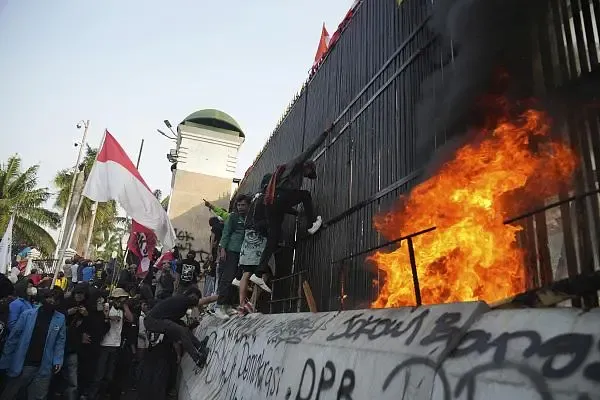
It is understood that the trigger for this large-scale protest was opposition to the amendment to the Regional Election Law. The origin of the matter can be traced back to May of this year, when Indonesia's Supreme Court (MA) adjusted its ruling on the minimum age requirement for regional head candidates, changing the age calculation point so that candidates only need to be 30 years old when sworn into office after being elected. After the amendment was introduced, Indonesia's Labor Party and the Gelora Party believed it infringed on constitutional rights and immediately filed a lawsuit.
Subsequently, Indonesia's Constitutional Court (MK) approved the lawsuit, but Indonesia's parliamentary legislative body attempted to circumvent the Constitutional Court's ruling through a new amendment, which triggered strong public dissatisfaction, and protests then spread nationwide. In the end, parliament canceled the plan to pass the amendment and announced that it would comply with the Constitutional Court's ruling.
Other reports pointed out that the intention behind the amendment to the Regional Election Law was to pave the way for the son of President Joko Widodo to participate in elections, aiming to strengthen his family dynasty's political influence over Indonesia. This further ignited public dissatisfaction and triggered large-scale protests. Under this impact, Indonesia's stock market and the rupiah fluctuated on the 22nd, with the Jakarta Composite Index closing down 0.87%.
In fact, in recent years, prices in Indonesia have continued to rise, while people's salaries have increased only modestly, significantly raising the cost of living. Multiple industries have been hit, and public dissatisfaction has continued to accumulate. At present, the goals of this demonstration have been achieved, but people still worry that the authorities may renege, so the actions are still continuing.
At the same time, coffee farmers in several regions of Indonesia have also recently expressed dissatisfaction with the government. Rising prices have driven up planting costs, and since the beginning of this year, many areas of Indonesia have been hit by natural disasters, reducing coffee production accordingly.
Although the Indonesian government had earlier listed the coffee industry as a priority industry for development and increased funding and subsidies, the results have been minimal. According to official Indonesian data, in June 2024, Sumatra, the country's largest coffee production region, exported a total of 120,868 bags of coffee (60 kg/bag), a decrease of 51.89% compared with the same period last year. In addition, coffee exports in the first three months of the 2024/25 year (April to June) also fell by 51.56% year-on-year. While production has declined, global Robusta coffee prices remain high, but due to the impact of the Red Sea crisis, many countries have reduced coffee bean purchases in Asia, causing the Indonesian coffee market to fall into a slump.
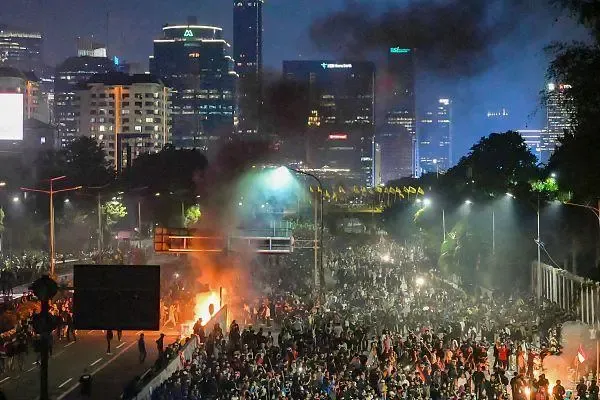
Currently, because conflicts continue in many places and many labor unions are participating in demonstrations, processing and export links may face delays, which is quite unfavorable to the development of the coffee industry. Coupled with political chaos, many coffee industry insiders believe that the outlook for the coffee industry is unclear.
To learn more information about coffee origins, please scan the QR code to follow: Coffee Review
Long-press the QR code to follow:
The above content is compiled by CoffeeHunters, a coffee news website.


