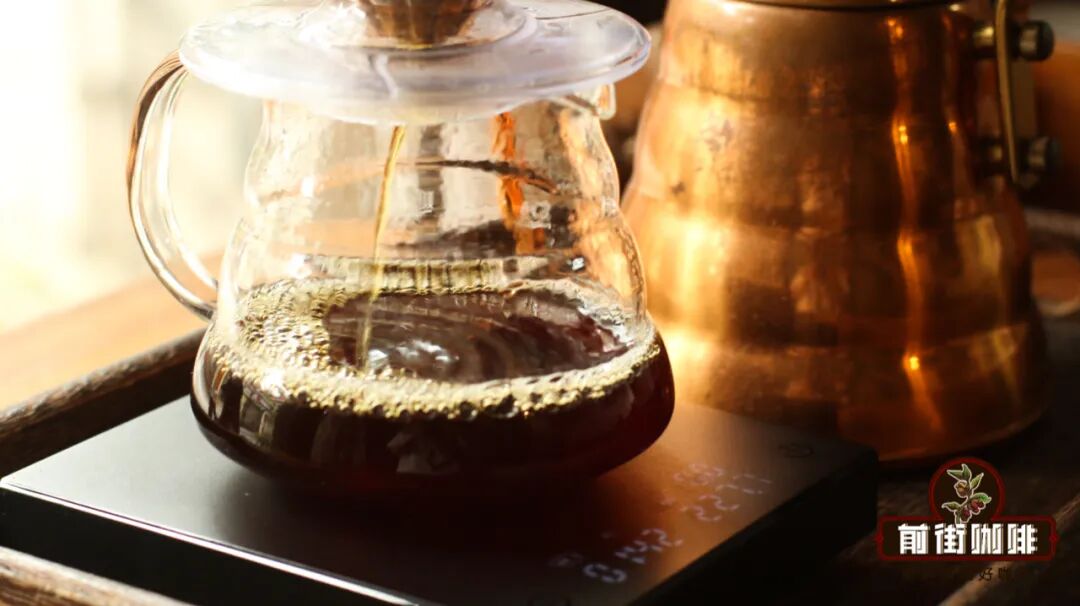
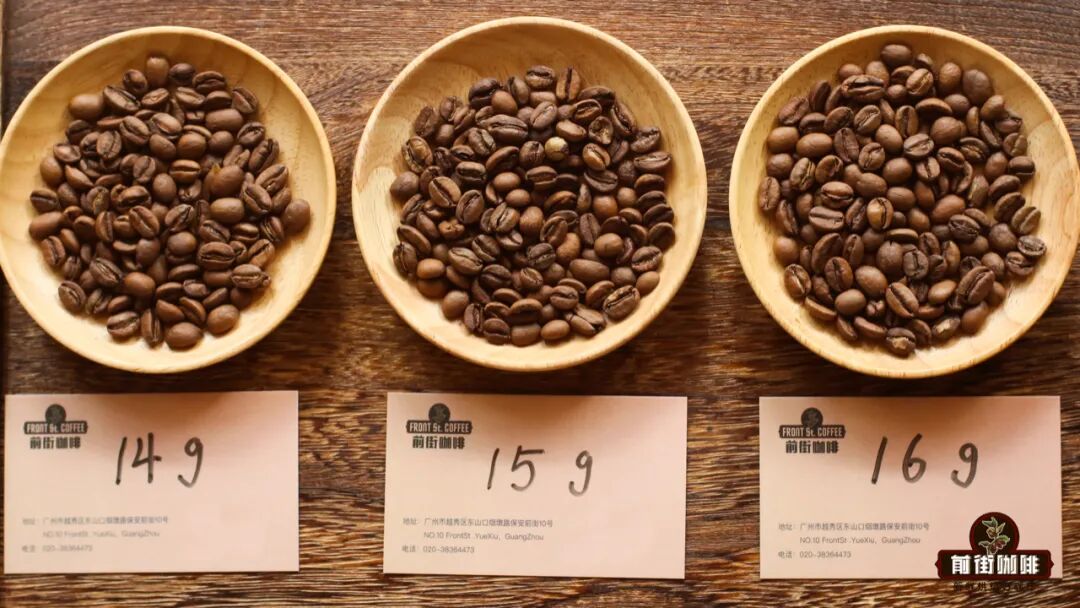
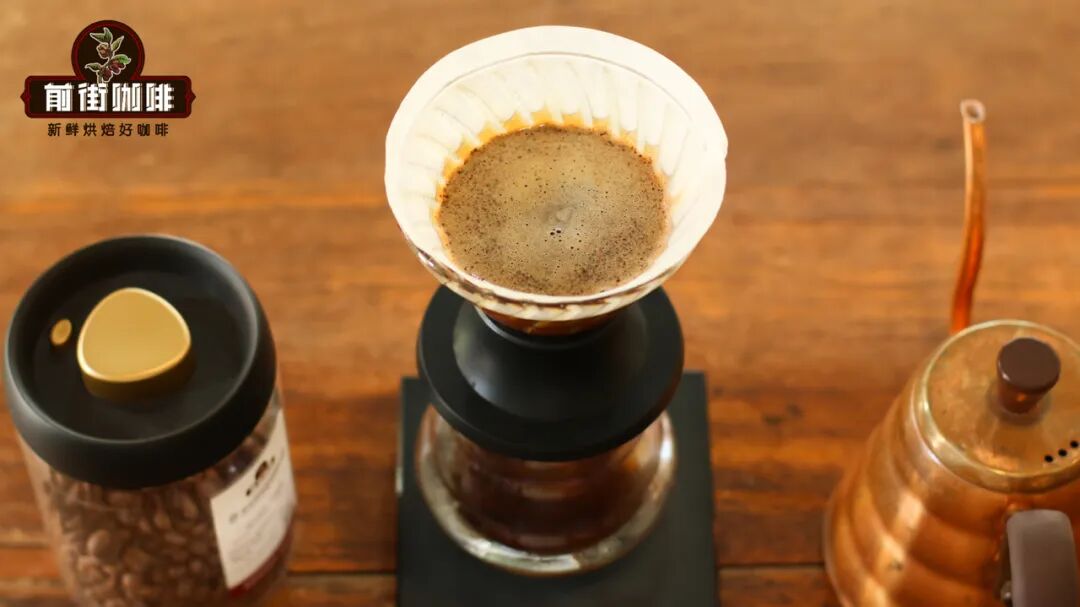
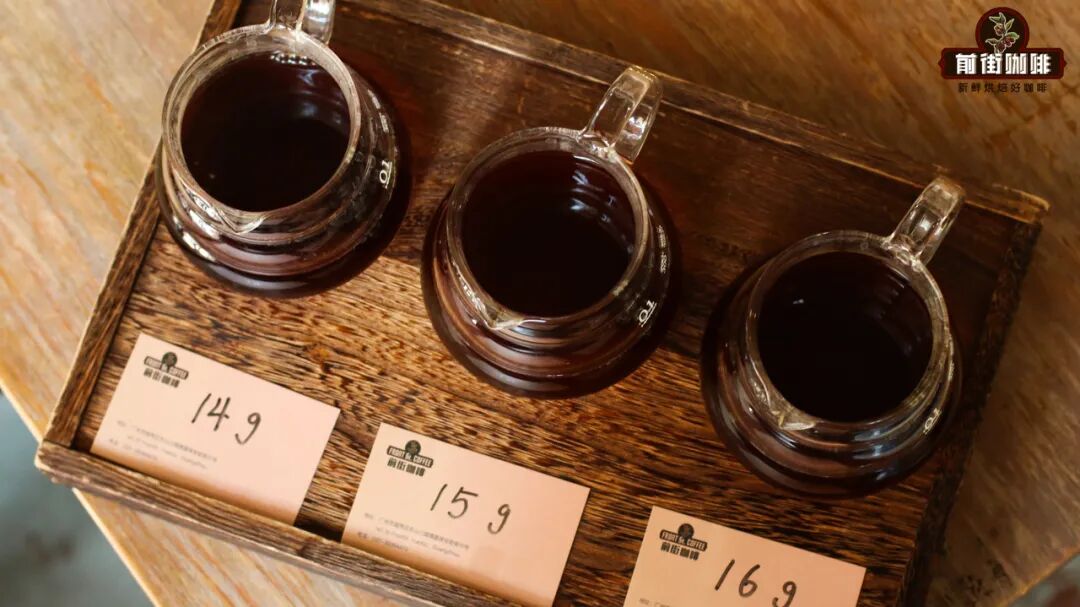
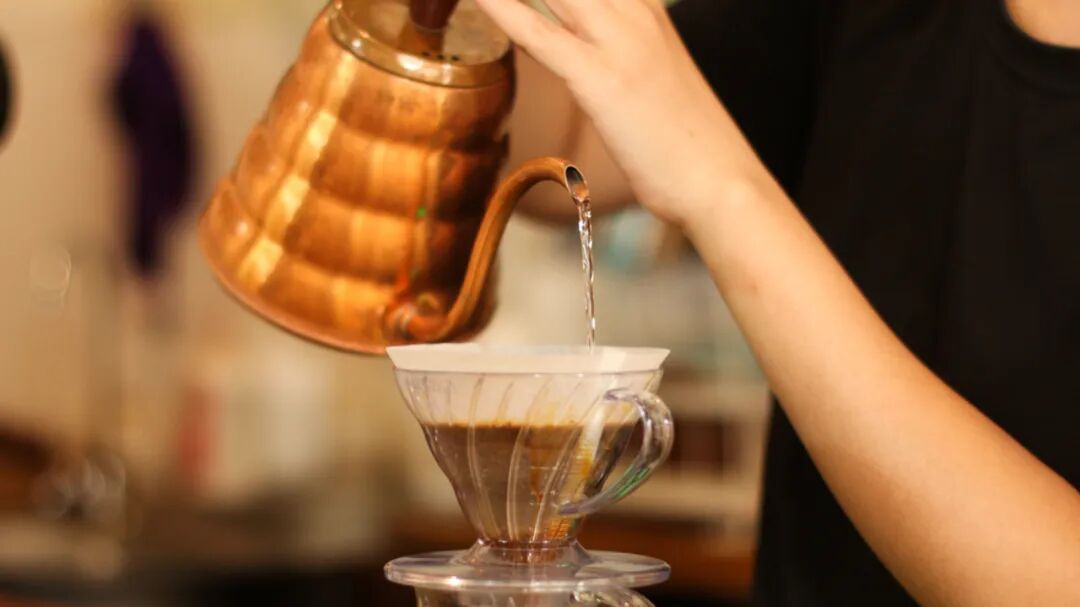
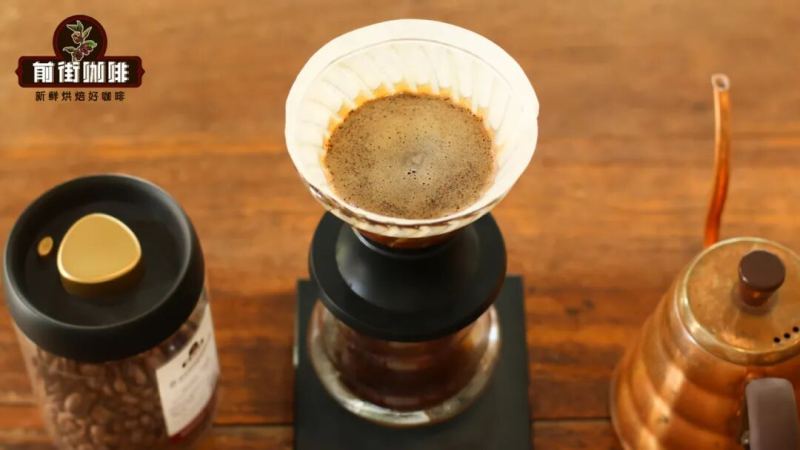
For coffee brewing, the coffee-to-water ratio is one of the important factors that needs to be considered first. But becauseit doesn't need to be adjusted based on the roast level of the coffee beans like water temperature and grind size do, sowe often fix a ratio to brew coffees of all roast levels.For example, Front Street Coffee often recommends that beginners use a conservative ratio like 1:15 or 1:16 to brew coffee. Over time, when we get used to brewing a certain dose of coffee with a certain ratio for extraction, the water amount tends to become "fixed." Even if the dose changes, we still tend to habitually pour the same amount of water as before.For example, the dose Front Street Coffee often brews is 15g,and then uses a 1:15 coffee-to-water ratio, so the pouring water amount gets fixed at 225ml. But when one day the dose is not enough, or there is a little extra, becoming 14g or 16g, according to the 1:15 ratio, the brewing water amount should also increase or decrease accordingly. However, we may habitually pour 225ml of water. So what kind of result would this situation lead to?That's right! It will cause the flavor and texture of the brewed coffee to change to a certain degree.Even if there is only a 1g difference in dose, because the water amount stays fixed, the coffee-to-water ratio will change accordingly.The coffee-to-water ratio refers to the ratio of coffee grounds to water used,and the size of this parameter affects the extraction yield and concentration of the coffee.When no other parameters have changed, the larger the coffee-to-water ratio, the lower the extraction yield and the higher the concentration; conversely, the smaller the ratio, the higher the extraction yield and the lower the concentration.The extraction yield and concentration of coffee determine its flavor and texture, so when the coffee-to-water ratio changes, the flavor of the coffee will also change. As for exactly how big this change is, next Front Street Coffee will share with everyone through an experiment~In this experiment, Front Street Coffee will use the same amount of water, that is, a uniform 225ml of hot water, to brew 14g, 15g, and 16g of coffee beans respectively. Converted, their corresponding coffee-to-water ratios are approximately 1:16, 1:15, and 1:14. Then, through concentration measurement and tasting, we will compare exactly what differences in taste and concentration exist among them.In order to reduce human influence during brewing, this time Front Street Coffee will use the Switch smart dripper to make the coffee. Immersion extraction can not only reduce human influence, but also make the coffee extraction more uniform! The coffee beans used this time are Front Street Yirgacheffe Red Cherry from the Front Street bean list. The extraction parameters are as follows:Water amount 225ml, water temperature 100°C, time 9 minutes, grind size is Ek43 setting 10, 75% passing rate on a No. 20 sieve, fine granulated sugar grind, C40 24~26 clicks.Because the brewing process is relatively complicated, Front Street Coffee has also shared it in previous articles, so we will skip it directly here. Those who are interested can search for it themselves~For each pot of coffee, Front Street Coffee tasted it and measured the concentration immediately after brewing was completed. The final results are as follows:14g:Concentration 1.40%, extraction yield 20.83%; flavor performance is strawberry, citrus, floral, oolong tea. The overall aroma is relatively flat, and the body is on the low side.
15g:Concentration 1.47%, extraction yield 20.22%; flavor performance is citrus, strawberry, apricot, berry, white floral, oolong tea. The overall aroma is clear, the body is appropriate, and acidity, sweetness, and bitterness are balanced,
16g:Concentration 1.53%, extraction yield 19.55%; flavor performance is lemon, berry, white floral, oolong tea finish. The overall aroma and finish are relatively heavy, but the acidity is slightly higher.It can be seen that although the dose differs by only 1g, obvious changes appear in taste, flavor, and mouthfeel, and these changes can be clearly distinguished by people. As the dose increases more and more, the coffee-to-water ratio becomes smaller and smaller, the coffee's mouthfeel becomes heavier and heavier, and the flavor also begins to become more concentrated. This is the impact brought by changing the coffee-to-water ratio.So if everyone still wants the brewed coffee to have the same performance as before when increasing or decreasing the dose, then it is best to remind yourself during brewing that the amount of water poured should also be adjusted accordingly.(If you remember...)It should be noted that in the example given here by Front Street Coffee, the dose difference is only 1g, so it will not have too great an impact on extraction and taste. But if the dose difference is too large, for example, if it differs from the original dose by more than 5g, then in addition to the pouring water amount needing adjustment, the grind of the coffee grounds, the brewing method, and the dripper used may also be objects that need adjustment.Because the more coffee grounds used, the more water needs to be poured, and vice versa. And the amount of water will directly affect the brewing time, which will also affect the extraction yield and concentration, so everyone should note that when the dose differs too much from the original, other parameters may also be objects that need adjustment~ The above content is compiled by CoffeeHunters, a coffee news website.