








How Does Coffee Bean Processing Turn Cherry Skin Into Cascara?
Cascara is the dried skin of the coffee cherry, brewed as a tea. During coffee bean processing, everything except the bean is removed: skin, pulp, pectin and parchment. That outer skin was once spread as fertilizer around coffee trees. Salvadoran estate owner Aida Batlle noticed its sweet aroma after sun-drying and tried brewing it.
Production runs from peeling to sun-drying, manual removal of impurities and four to five days of drying with color monitored. The drink is almost purely sweet. A practical hot brew uses 94°C water, 20 g of cascara to 400 ml, a 1:20 ratio. Cascara also works cold brewed, and its caffeine is about one quarter that of coffee.
In addition to the bean inside the coffee cherry that can release thousands of aromatic compounds after roasting, the peeled skin can actually be brewed and drunk as well. It is called Cascara in Europe and America, and is often called coffee cherry tea in China. This article starts from the tissue structure of the skin, the removed substances in green bean processing, and the old uses of the skin as fertilizer or waste, then traces back to the story of Salvadoran estate owner Aida Batlle who accidentally discovered the sweet aroma after sun-drying and tried brewing it, explaining that Cascara means skin and husk in Spanish. It then introduces the production process of the skin from peeling, sun-drying, manual removal of impurities to 4~5 days of drying and color-change monitoring, analyzes the flavor characteristics of the skin tea that is almost only sweet, and gives a practical reference for Front Street Coffee using 94°C water temperature, 20g skin with 400ml water, and a 1:20 ratio for hot brewing, as well as key points such as cold brew and specialty drinks, and caffeine being only one quarter that of coffee.

The most core part of the coffee cherry is that coffee bean, which can generate thousands of aromatic compounds after roasting, so the brewed coffee is so rich in aroma and delicious in taste. However, many people may not know that the peeled coffee cherry skin can also be brewed. It has a very famous name in Europe and America—Cascara (Kaskala?)—while in China, we are more used to calling it coffee cherry tea.
What is coffee cherry tea?
Coffee cherry skin comes from the coffee cherry, and the coffee cherry is the fruit produced by the coffee tree. Because it turns deep red when ripe and looks like a cherry, it got the name coffee cherry.
Although it is not large in size, its internal structure is quite complex. In green coffee bean processing, besides fermenting the beans, all the wrappings other than the beans must be removed. The skin, pulp, pectin, and parchment all belong to the parts that need to be removed, and the skin is exactly the outermost layer of the fruit.
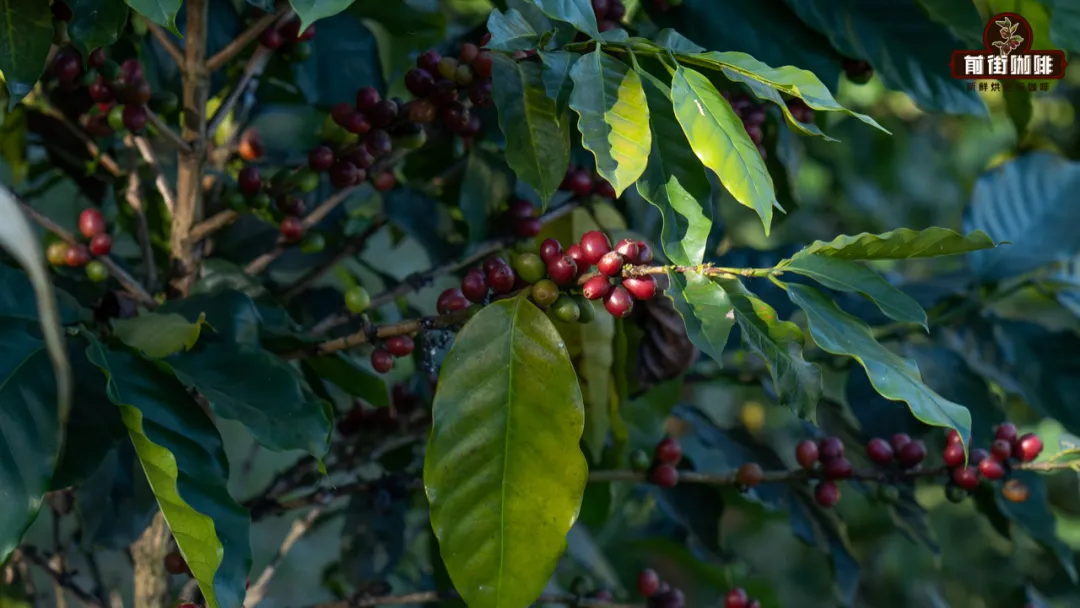
Usually, the coffee cherry skin peeled off during processing is taken by workers to be used as fertilizer. The skin is mixed with other materials, degraded into fertilizer, and then used for cultivating coffee trees, but this places certain requirements on the skin itself. If the skin is not fully dried, or if problems occur during processing (such as over-fermentation), the skin will develop higher acidity. Excessive high acidity can "spread" to the soil, raising soil acidity and instead bringing negative effects. This kind of skin cannot be used as fertilizer and can only be treated as waste. But no matter which path it takes, the value of the skin is very small.
Until one day, Aida Batlle, a coffee-growing estate owner in El Salvador, smelled the sweet fragrance emitted by sun-baked skin. That aroma was a very full sugarcane sweetness, and it also carried a somewhat steady rose-like scent. So he boldly tried brewing the skin. As a result, he found that the flavor brewed from the skin had none of coffee's bitterness, was very sweet, and was as refreshing and clean as tea.
Thus, coffee cherry tea was born. Aida Batlle named it Cascara; in Spanish, Cascara means skin and husk.
The emergence of cherry tea brought earth-shaking changes to the value of the skin, and more and more coffee farmers began to make and sell coffee cherry skin. Although the skin does not require the many tedious and complicated steps that tea leaves do, to make high-quality coffee cherry skin, control during the process is still very strict.
After the skin is peeled off the coffee beans by machine, it must be placed on drying beds to dry until completely dry. During the drying process, workers need to manually pick out various impurities such as parchment, green beans, stones, and twigs, because the depulper does not have a screening function and will only pile together everything peeled off the green beans. After all, the protagonist is the bean, not the skin, so manual selection is necessary to ensure the purity of the skin.
(Finished skin product)
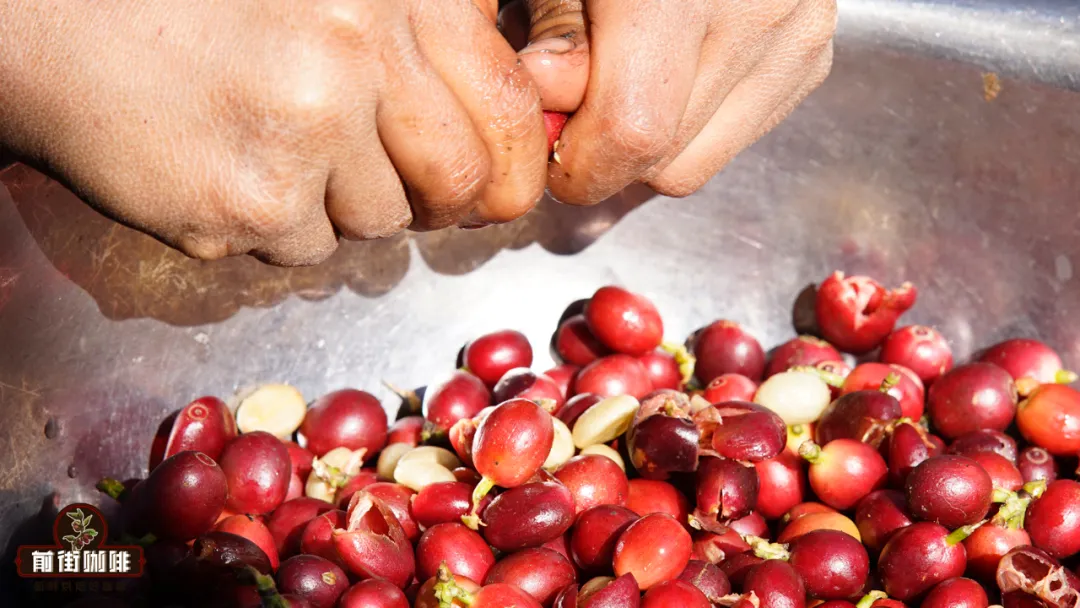
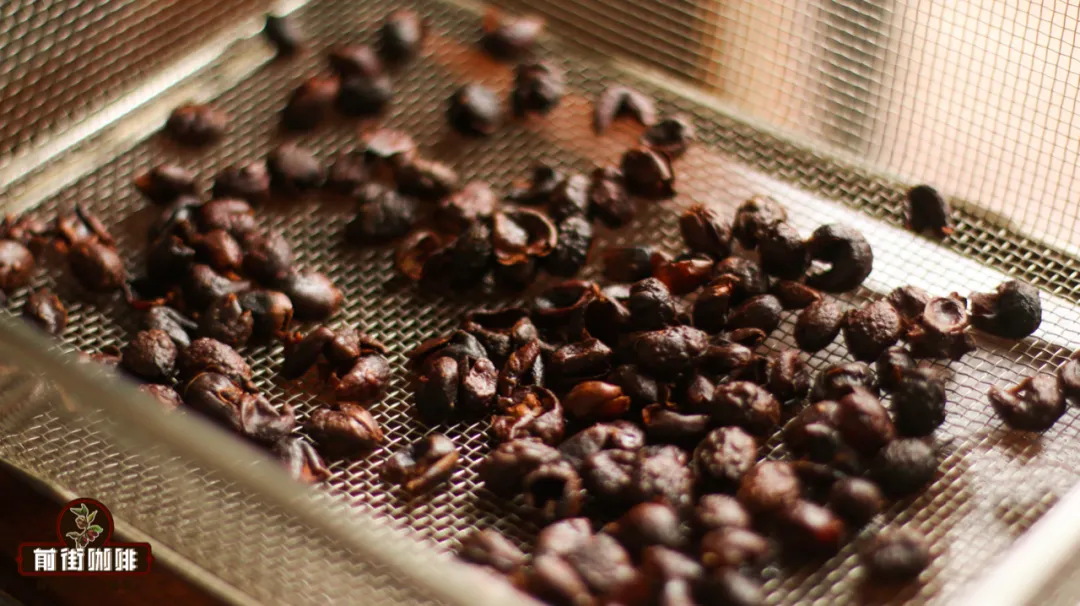
The entire drying process lasts about 4~5 days, depending on whether there is sufficient sunlight. During drying, ambient temperature and humidity are also very important, and this is equally true for coffee beans. When the temperature is too low and the humidity is too high, the skin is prone to spoilage. Under normal conditions, the deep red color of the skin will gradually turn deep purple as drying progresses. But if the skin spoils, it will turn brown and develop a strong sour smell through fermentation; this kind of skin is a failed product.
Therefore, supervision during drying is especially critical. In addition to impurities, workers also have to pick out the skin that has turned brown due to failed drying.
(Normal finished skin product)
What does coffee cherry tea taste like?
Different bean varieties carry different basic flavors due to genetic differences, and the same is true for the skin. The skin produced by the fruit of different varieties will also have certain differences in flavor, but they all share one thing in common, and that is sweetness.
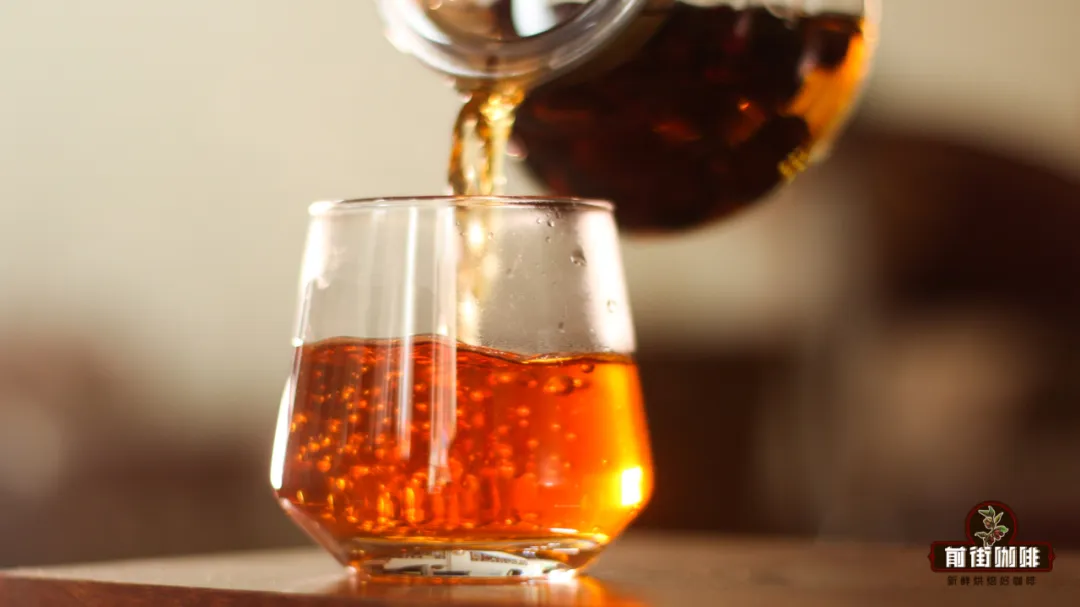
No matter which variety the skin comes from, after brewing it will have abundant sweetness. This sweetness can be clearly smelled from the skin even before brewing, because the skin itself contains very rich sugars. Although Front Street Coffee has its own estate, it has not yet reached the harvest period, so the impatient Front Street Coffee bought a portion of skin online to taste it.
The brewing method of cherry tea is no different from that of tea leaves. If you want to quickly get a cup of hot cherry tea, you can brew it with slightly hotter water, and adjust the amount of water according to your preferred strength. Here at Front Street Coffee, we use 94°C water temperature, 20g skin, and 400ml water, that is, a 1:20 ratio.
This is the skin of a Catimor, and the brewed cherry tea smells not only sweet, but also has a faint red date aroma. As mentioned earlier, it tastes almost entirely sweet, fully deserving the title of "little sweet water." But also because it is only sweet, the drinking experience is not very layered, making people feel as if something is missing.
Besides hot brewing, cherry tea can also be extracted with cold water for a long time at low temperature, just like cold brew tea or cold brew coffee. Cold-brewed cherry tea has a stronger sweetness, but it is still only sweet. So this is why many coffee shops, although they sell cherry tea, mix it with other ingredients to make specialty drinks, making the taste richer and the layers more diverse.
The caffeine in cherry tea is only one quarter that of coffee, so for friends who do not want to take in too much caffeine but still want to refresh themselves, cherry tea will be a good choice.
- END -
The above content is compiled by CoffeeHunters, a coffee news website.


