







What Most Expensive Coffee Machine Thinking Misses About Mixue Pricing
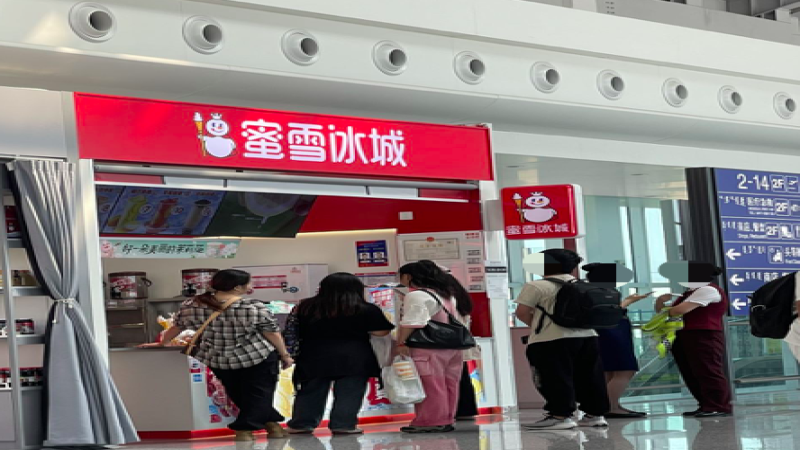
A Mixue Ice Cream & Tea outlet at an airport charges only one yuan more than city center stores, even though transport hub rents and delivery costs are normally far higher. The pricing drew attention because a nearby airport bowl of noodles cost 150 yuan, while consumers report similar near-uniform prices at scenic spots and overseas branches.
The gap comes down to brand positioning and a tightly controlled supply chain, not to any most expensive coffee machine or luxury equipment. Mixue keeps its revenue structure centered on volume and franchisee supply rather than location-based markups, which lets it hold prices steady at airports, rail stations, and tourist sites while still drawing steady queues.
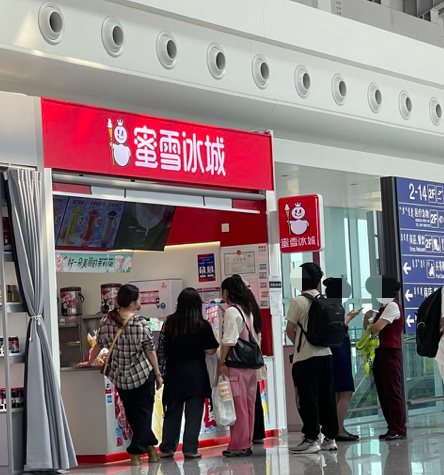
Recently, a netizen noticed while waiting at the airport that the Mixue Bingcheng store had a constant stream of people queuing to pick up their orders. Upon closer inspection of the menu, the drink prices were only one yuan higher than those at city center locations. At transportation hubs like airports and high-speed rail stations, food and beverage prices are usually much higher than in the city, and Mixue Bingcheng's pricing strategy has sparked widespread discussion. Many consumers have shared their experiences at scenic spots and even overseas stores, finding that Mixue Bingcheng maintains nearly uniform pricing. What kind of business logic lies behind this seemingly "unprofitable" approach? This article will analyze the real reasons why Mixue Bingcheng can maintain its affordable pricing strategy from the perspectives of brand positioning, supply chain system, and revenue structure.
▲
Click to follow | Daily specialty coffee culture magazine Coffee Workshop
Recently, a netizen noticed while waiting at the airport that amid the bustling terminal hall, a Mixue Bingcheng stood out. It wasn't that the store decoration was different from other locations, but rather that customers waiting to pick up their orders were constantly gathered at the entrance. In the netizen's words, "even the ants passing by would buy a cup."
This scene sparked the netizen's curiosity—he really wanted to know what made this Mixue Bingcheng so appealing that travelers would stop in their tracks. When he approached to check the menu, it suddenly became clear—all drinks at this location were priced only one yuan higher than at city center stores!
At transportation hubs like airports and high-speed rail stations, food and beverage prices are usually significantly higher than in the city. A bowl of noodles costing a dozen yuan in town immediately doubles in price once it enters an airport. The reason for this is twofold: on one hand, shop rents at transportation hubs are inherently high; on the other hand, material transportation costs to remote locations like airports are also greater. These factors combined drive up the prices of goods at transportation hub stores.
The netizen mentioned that compared to the 150 yuan bowl of noodles he bought at the airport, Mixue Bingcheng's airport store only added one yuan, which truly deserves to be called "conscientious." It's not hard to understand why passersby would stop to buy a cup.
After the post was published, Mixue Bingcheng fans from various places shared their experiences of being moved by the brand's conscientious pricing: "They only add one yuan even at outrageously expensive scenic spots, truly conscientious," "At the top of Mount Tai it's still original price," "Three-yuan ice cream at Chaka Salt Lake!!" "The Snow King in Jiuzhaigou stands out among the surrounding tea shops, Luckin, KFC, and McDonald's with its unique style, not raising prices by a single cent."
Not only is this true at popular domestic scenic spots and in less crowded cities, but consumers have also found that Mixue Bingcheng's prices overseas show little fluctuation as well. In Malaysia, Singapore, Bali, and other places, Mixue Bingcheng's pricing is almost identical to the domestic market.
Generally speaking, well-known chain brands adjust product prices and menus based on local price levels, store operating costs, and other factors to ensure store profitability. However, Mixue Bingcheng's approach differs from common perception—whether it's high-rent transportation hub stores or overseas locations with higher operating costs, it almost always uses a unified menu and uniform pricing, making one wonder: can this conscientious behavior really bring profits to the brand?
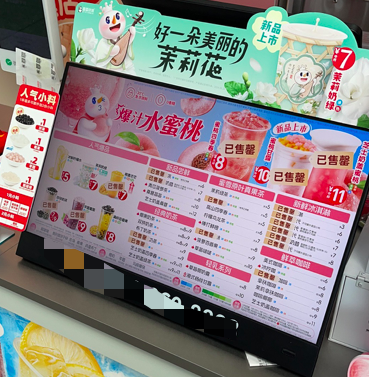
In response, some fans believe that Mixue Bingcheng has always followed a low-margin, high-volume strategy, and as long as sales are large enough, stores anywhere can make money. However, the actual situation is not as simple as the public imagines. Mixue Bingcheng is currently the world's fourth-largest food and beverage chain brand, with over 30,000 stores in total. For an affordable brand to achieve such results, it's by no means something that can be accomplished through low-margin, high-volume sales alone. It is understood that its prospectus shows over 95% of Mixue Bingcheng's revenue comes from selling products and services to franchisees. At the same time, the brand basically produces its own raw materials and has its own efficient supply chain, thereby greatly reducing operating costs.
For this reason, for Mixue Bingcheng, barely raising prices is actually its standard practice. Netizens need not be too surprised, nor worry that the Snow King isn't making money.
Image source: Internet
Disclaimer: Some images in this article are from the internet. For some content on the website such as images, we will respect the original author's copyright and indicate the source. However, due to the large volume, there may be individual images and texts that have not been credited in time. Please forgive us. If the original author has any disputes, they can contact the website for handling. Once verified, we will immediately correct it. Compiled and edited by "Coffee Workshop." Please indicate the source when reposting. If there is any infringement, please inform us for removal. Thank you~!
The above content is compiled by CoffeeHunters, a coffee news website.


