







How does bloom water affect extraction and bright acidity in coffee?
Bloom water is set at roughly twice the weight of the coffee grounds because dry grounds absorb about twice their own weight in hot water. That amount moistens the bed and releases carbon dioxide without wasting water that the main pour needs, and the liquid that drips through carries dissolved compounds that would otherwise shape the cup.
Tests with Panama Green Label Geisha compared brews with and without the bloom liquid, tracking concentration and flavor shifts. Grind size and pour rate change how much water the bed actually holds, so some always passes through. Keeping versus discarding that liquid changes the balance of acids and sweetness, which is where bright acidity in coffee is felt most clearly.
The blooming phase in pour-over coffee may seem simple, but it involves multiple considerations such as water volume settings, saturation and absorption by the coffee grounds, and extraction concentration. Why is the blooming water exactly twice the amount of coffee grounds? Should the dark liquid seeping from the coffee grounds be kept or discarded? Starting from the water absorption characteristics of coffee grounds, this article combines actual test data from Front Street Coffee using Panama Green Label Geisha to compare the changes in coffee concentration and flavor after adding versus removing the blooming liquid, deeply analyzing the actual impact of the blooming liquid on the overall quality of the cup, and helping enthusiasts understand this often-overlooked yet crucial brewing detail.
It is generally known that blooming in pour-over coffee is done to moisten the coffee grounds and release carbon dioxide that hinders extraction, thereby creating more ideal extraction conditions for subsequent pouring and allowing the flavor components in the coffee grounds to release more smoothly. This also means that the main extraction phase needs to retain sufficient hot water to perform extraction, so the amount of water used in the blooming phase should be limited—the less, the better.
Coincidentally, dry coffee grounds need to absorb hot water to reach saturation. According to experimental data, the amount of hot water that coffee grounds can absorb is approximately equal to twice their own weight. For this reason, the amount of hot water used for blooming is set at twice the amount of coffee grounds. This amount can complete the blooming and saturate the coffee bed without causing unnecessary waste due to too much water. However, this hot water is not completely absorbed by the coffee grounds. On one hand, the hot water is unevenly distributed and cannot reach every coffee particle; on the other hand, the size of the pouring stream and the coarseness of the grind directly affect the penetration rate of the hot water, indirectly changing the degree to which the coffee grounds absorb hot water. Therefore, after pouring the hot water, not all of it is absorbed—some always passes through the coffee bed and falls into the server.
So some people ask: since this portion of hot water is only used to moisten the coffee grounds and remove extraction obstacles, aren't its extraction conditions worse than the hot water poured afterward? Then wouldn't the concentration of the seeping coffee liquid also be lower? If it is poured away, wouldn't that prevent it from lowering the concentration of the whole cup? Should the coffee liquid seeping during blooming be removed?
I wonder if you have noticed that this practice is actually very similar to flow restriction. Flow restriction is used because the coffee liquid extracted in the final stage may carry a lot of miscellaneous flavors, so the final-stage liquid is cut off to prevent obvious negative flavors in the coffee. The reason for removing the blooming liquid is the concern that it dilutes the concentration of the whole cup. If these two operations are used on the same pot of coffee, it becomes the so-called "cutting off the head and tail."
Regarding flow restriction, Front Street Coffee has previously introduced it in detail. Interested friends can directly read "Must Pour-Over Coffee Be Flow-Restricted?" The gist of that article is that flow restriction can be done, but it cannot be used arbitrarily without restraint. However, as for "cutting off the head," that is, removing the coffee liquid seeping during blooming (hereinafter referred to as "blooming liquid"), Front Street Coffee can clearly say that this approach does not work! Why? Front Street Coffee will brew a pot of coffee to explain.
For this brewing, Front Street Coffee selected Panama Green Label Geisha beans because they are a medium-light roast with a moderate water absorption speed, so coffee liquid will inevitably seep out during blooming. Moreover, this bean has outstanding flavor, which helps us more intuitively compare the difference between removing the blooming liquid and retaining it. The extraction parameters are as follows: 15g coffee grounds; coffee-to-water ratio 1:15; grind size of 10 on the Ek43, fine granulated sugar coarseness, 80% passing through a No. 20 standard sieve; water temperature 92°C; dripper V60; brewing method still three-stage.
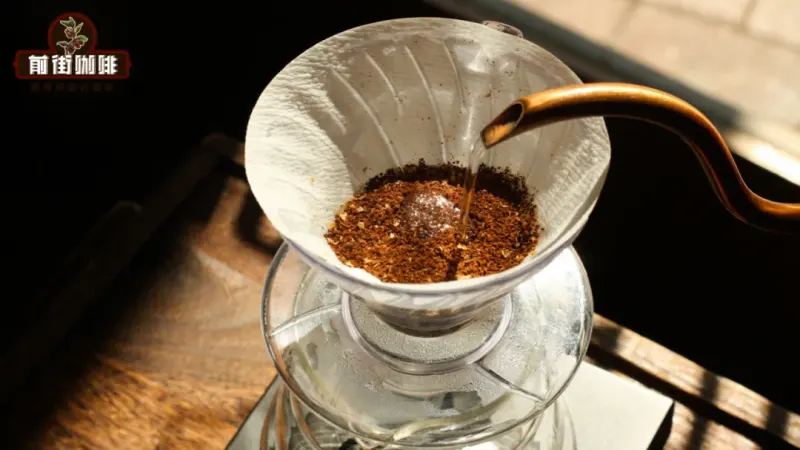
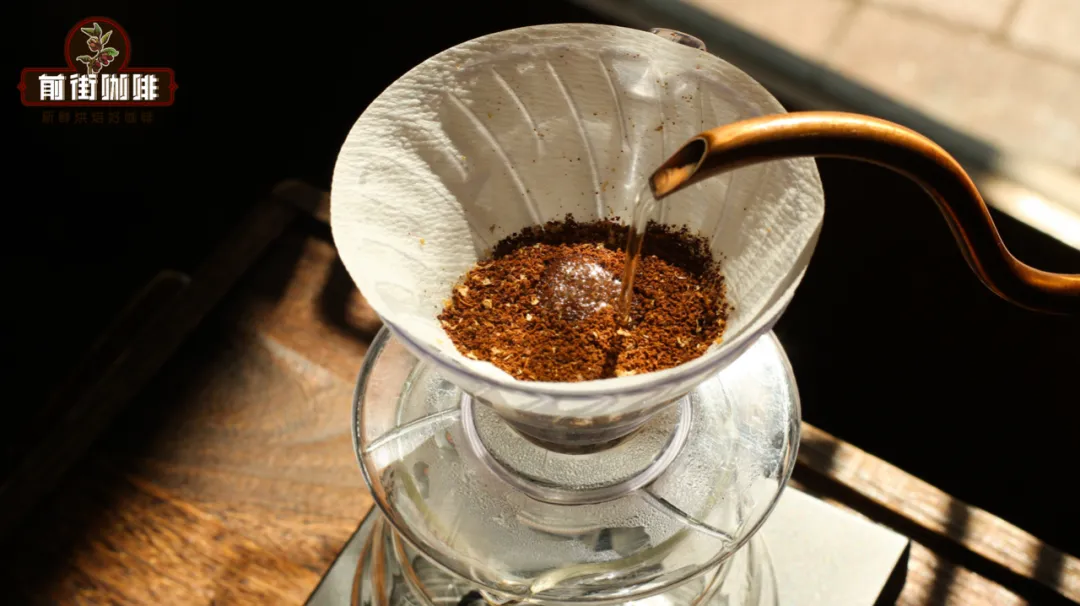
So let's start blooming first, using twice the amount of coffee grounds in water (30ml) to bloom for 30 seconds. Front Street Coffee completed pouring the 30ml of hot water at the 8th second, and by the 10th second, coffee liquid began to seep out.
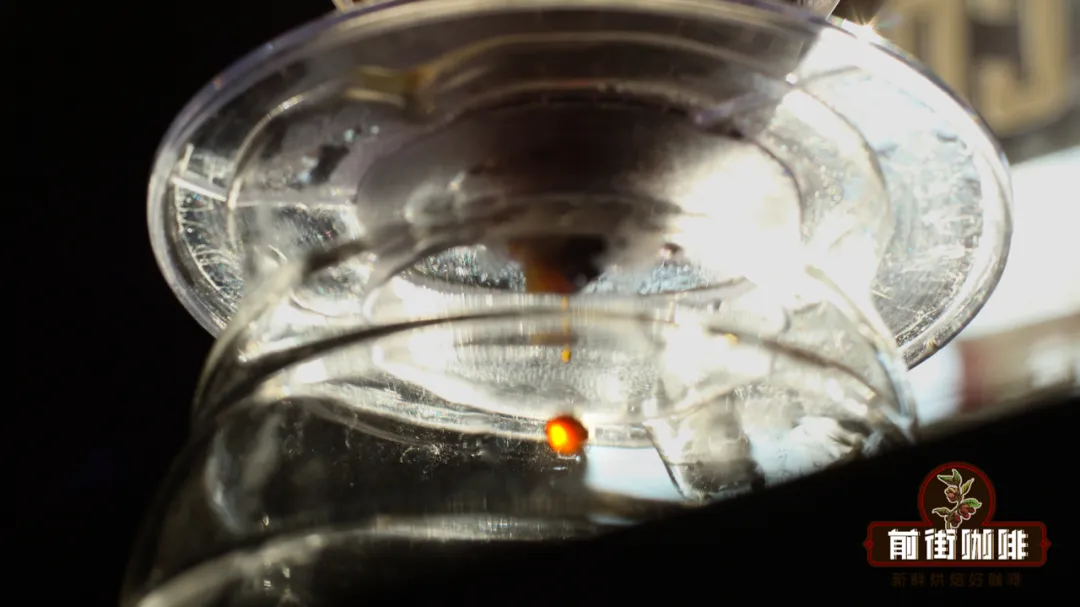
By the 24th second, the coffee liquid stopped seeping. At this point, pour the coffee liquid in the server into a small cup for later use.
Next, press the tare key for the weight and restart extraction (this makes calculation easier). In the second stage, pour 130ml of hot water in a large circle with a small stream. When the water level drops to almost the bottom, pour the remaining 65ml of hot water in a small circle with a large stream. After extraction is complete, we can begin the comparison.
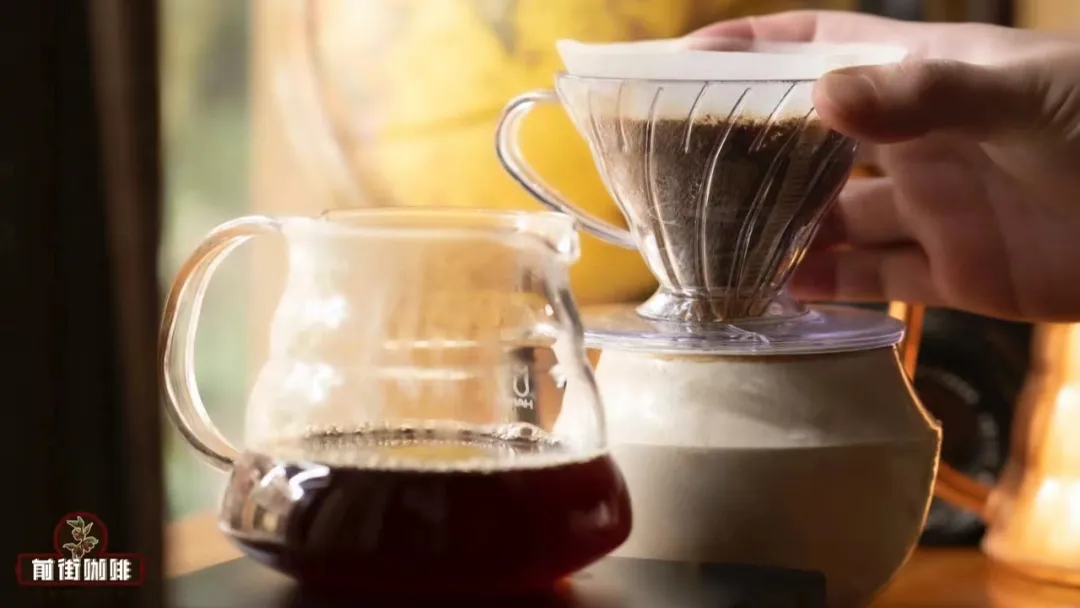
In fact, the answer can be seen directly from the image below, because the color of the blooming coffee liquid is very dark, indicating that its concentration is very high. But for a more rigorous verification, not a single test that should be done can be skipped.
After measuring with a coffee concentration meter, the concentration value of the pot of coffee without the blooming liquid added was 1.25%. In terms of flavor, it showed a light jasmine aroma, high sweetness of honeydew, a slight berry acidity, and a long aftertaste.
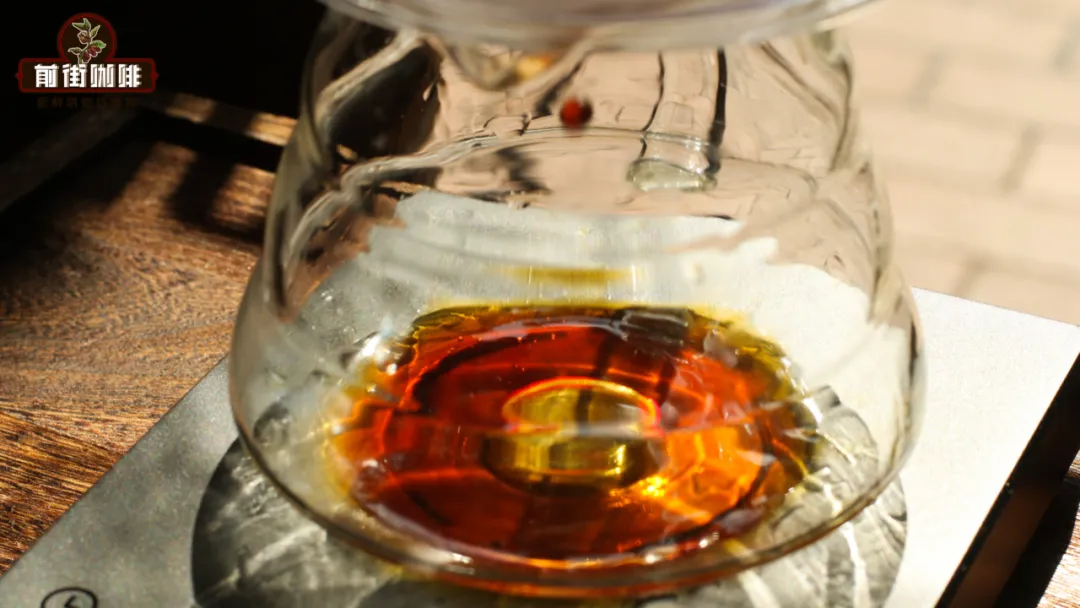
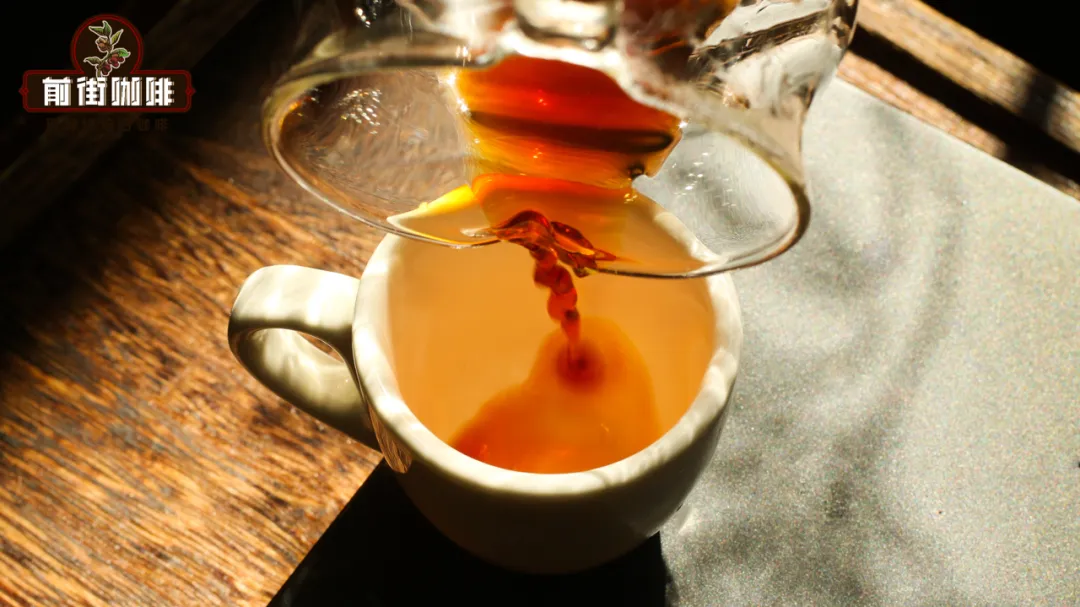
Then pour this blooming liquid (15ml) into this pot of coffee and stir evenly.
Measuring again, the concentration obtained was 1.38%. In terms of flavor performance, after re-integration, the Green Label Geisha showed brighter citrus fruit acidity, higher overall sweetness, more prominent flavor, and a fuller mouthfeel.
Overall, the following conclusion can be drawn: the coffee liquid seeping during blooming is equally important. The flavor substances in coffee are limited and gradually decrease as extraction progresses. Although the hot water in the blooming stage is inferior in extraction conditions to the hot water poured during the formal extraction, at this time the flavor substances in the coffee grounds are at their most abundant and full. So even if the initial extraction environment is not ideal, the hot water can still dissolve a large amount of flavor substances, and this small amount of coffee liquid therefore has an extremely high concentration (high flavor substance content per unit).
If this extremely high-concentration coffee liquid is discarded, not only will a rich flavor experience be lost, but the body and thickness of the mouthfeel will also decrease. So it is better not to try this practice that brings more loss than gain.
- END -
The above content is compiled by CoffeeHunters, a coffee news website.


