







Why does the Somalia flight ban matter to coffee countries in East Africa?
Somalia's civil aviation authority suspended all Ethiopian Airlines flights on August 23 after the airline refused to remove references to Somaliland from its website within a set deadline. The dispute traces back to a memorandum of understanding between Ethiopia and Somaliland on port use, which strained relations between Somalia and Ethiopia. Eritrea has also suspended Ethiopian flights.
Ethiopia depends heavily on neighboring ports to export agricultural goods, and coffee is one of its main exports among coffee countries in the region. The Port of Djibouti is already affected by the Red Sea crisis, and routes through Somalia and Eritrea are now closed. With Turkish-mediated peace talks stalled, the outlook for Ethiopian coffee exports remains uncertain.
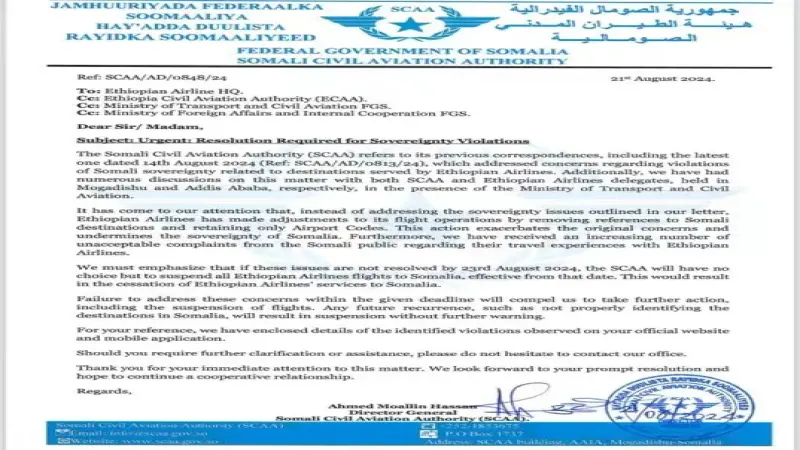
Somalia's civil aviation authority demanded that Ethiopian Airlines make corrections within a set deadline on the grounds that the words "Somaliland" appeared on its official website. After being refused, it suspended all Ethiopian flights on August 23. The root of this matter lies in the memorandum of understanding signed between Ethiopia and Somaliland on port use, which has led to continued tensions between Somalia and Ethiopia. At the same time, Eritrea has also suspended Ethiopian flights, and the peace talks mediated by Turkey have stalled. Ethiopia's exports of agricultural products such as coffee are highly dependent on neighboring countries' ports. Now that the Port of Djibouti is affected by the Red Sea crisis, and Ethiopia cannot use routes through Somalia and Eritrea, the outlook is worrying.
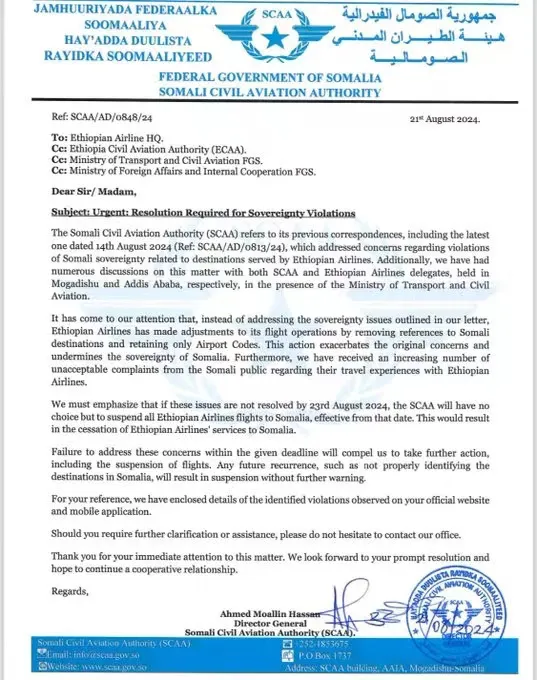
According to reports, Somalia's Federal Government Civil Aviation Authority (SCAA) sent a notice to Ethiopian Airlines on August 21, demanding that it resolve the so-called "infringement of Somalia's sovereignty" before August 23. Somalia warned that if the issue was not addressed, it would immediately cancel the airline's permit to operate within Somalia.
According to the report, the SCAA made the above demand to Ethiopian Airlines on August 21, specifically asking Ethiopian Airlines to remove information related to "Somaliland" from its official website. The Somali authorities believe that the appearance of the term "Somaliland" constitutes an infringement of Somalia's national sovereignty, and therefore limited Ethiopian Airlines to complete the correction before August 23, otherwise all of the company's flights to and from Somalia would be suspended and it would be banned from flying over Somali airspace.
By August 23, Ethiopian Airlines responded, hoping that Somalia's civil aviation authority could grant more time to modify the website, and said that the August 23 deadline was too rushed.
However, the SCAA subsequently rejected this request, pointing out that the modification was not very difficult and could be completed within the given time. Somalia therefore decided to suspend all Ethiopian Airlines flights.
It is reported that relations between Ethiopia and Somalia have long been strained. Earlier this year, Ethiopia's prime minister signed a memorandum of understanding with the local government of Somaliland in northern Somalia, with the aim of obtaining the right to use the Port of Berbera in Somaliland, while also having to recognize Somaliland as an independent country. It is precisely this memorandum of understanding that has further worsened bilateral relations between Ethiopia and Somalia.
There have been previous reports that Eritrea, another neighboring country of Ethiopia, also announced the suspension of all Ethiopian Airlines flights. Sources have revealed that Eritrea has established close ties with Somalia, so outsiders speculate that Eritrea's suspension of Ethiopian flights is related to factors involving Somalia.
On August 14, Turkey organized peace talks between Ethiopia and Somalia. According to information at the time, the talks made some progress, but a final agreement would have to wait until the third round of talks in early September.
But by August 19, Somalia's president had signed a military agreement with Egypt, and at a subsequent press conference accused Ethiopia, saying that the second round of talks failed because Ethiopia had never respected Somalia's sovereignty and territorial integrity. Somalia's president also said that until Ethiopia withdraws the memorandum of understanding with Somaliland, there is no room for dialogue between the two sides.
As of now, Ethiopia has not yet responded to the Somali government's statement, and Turkey has not confirmed whether the third round of talks will be canceled. In addition, the agreement between Ethiopia and Somaliland has not yet been fully finalized, so Ethiopia has still not obtained the right to use the port. Moreover, worsened relations with two neighboring countries, Eritrea and Somalia, are very unfavorable for Ethiopia's product exports.
At present, Ethiopia's situation is quite turbulent, with frequent conflicts between government forces and regional armed groups, and the risk of civil war exists at any time. At the same time, the reforms promoted by the Ethiopian government have led to a sharp depreciation of the national currency, the birr, triggering strong dissatisfaction among local people.

For this reason, many of Ethiopia's industries are highly dependent on exports, especially agricultural products such as coffee. However, affected by the Red Sea crisis, imports and exports through the Port of Djibouti have been severely blocked. And with Ethiopia's relations with its other two neighboring countries deteriorating, it cannot use their ports for exports either.
Some coffee industry insiders have pointed out that the outlook for Ethiopia's coffee industry is not optimistic. Although the lower exchange rate is beneficial to exports, rising prices of necessities such as fertilizer and fuel have pushed up cultivation costs, and the prices of commodities such as coffee have also risen accordingly, while export difficulties are hard to resolve in the short term. Rising coffee prices, combined with factors such as longer export and transportation cycles, may significantly weaken buyers' willingness to purchase, which is unfavorable to industry development.
To learn more about coffee origin news and information, please scan the QR code to follow: Kaping
Long-press the QR code to follow:
The above content is compiled by CoffeeHunters, a coffee news website.


