








What Is Mellow in Coffee and How Do You Brew It at Home?
A tea-like quality in coffee comes from extraction, not from bean labels alone. To reach it, Front Street Coffee uses a flat-bottom dripper that creates an immersion effect, pours more water to release compounds in the final phase, and slows the flow rate to extend extraction time. Together these three details build a green-tea freshness and a sweet finish.
The recipe is demonstrated with an Ethiopian washed Kafa Forest coffee, moving from parameters to technique. Tea polyphenols and tannins explain the rough, tea-like tactile sensation that builds as concentration rises, while acids in coffee supply the floral and fruity side. Home brewers often get bitterness when extraction runs too far and miss the tea character.
People often say a certain coffee has a "tea-like" quality, but when you buy it and brew it at home, you can never reproduce that flavor—either it turns out bitter, or it has floral and fruity notes but doesn't resemble tea. What exactly is the tea-like quality in coffee? Which beans are more likely to express this character? Front Street Coffee believes the key lies in three extraction details: choosing a flat-bottom dripper to create an immersion effect, increasing the poured water volume to promote the release of compounds in the final phase, and reducing the flow rate to extend the extraction time. This article uses Ethiopian washed Kafa Forest as an example to fully demonstrate a brewing recipe that can extract a green-tea-like fresh fragrance and sweet aftertaste, breaking down everything from parameters to technique, helping you turn "tea-like" from a description into a real flavor in your cup.

The term "tea-like" is almost an innate taste memory for us Chinese, and in the coffee world, it has long become one of the common flavor labels used to evaluate high-quality beans.
Front Street once heard a tea-loving friend mention that if you could find a coffee that has both the fragrance of flowers and fruit and the charm of tea broth, that would truly be the most delightful thing. But her struggle was this: she had clearly bought beans labeled "tea-like," yet no matter how she brewed at home, she couldn't recreate the taste from the café—either it was over-extracted and bitter, or the floral and fruity acidity was there but it had nothing to do with "tea." So she asked Front Street if there was any way to brew out the tea-like quality in coffee.
First, let's clarify: what exactly is the tea-like quality in coffee?
When drinking tea, tea polyphenols are the core substances that constitute tea's charm and tea-like quality, and they are also the main source of tea's aroma and color, continuously influencing our drinking experience throughout the brewing process. Among these polyphenolic compounds, tea tannins, which account for the highest proportion, bring a "rough" tactile sensation to the mouth, and when the concentration accumulates to a certain level, that is what we commonly call the tea-like quality.
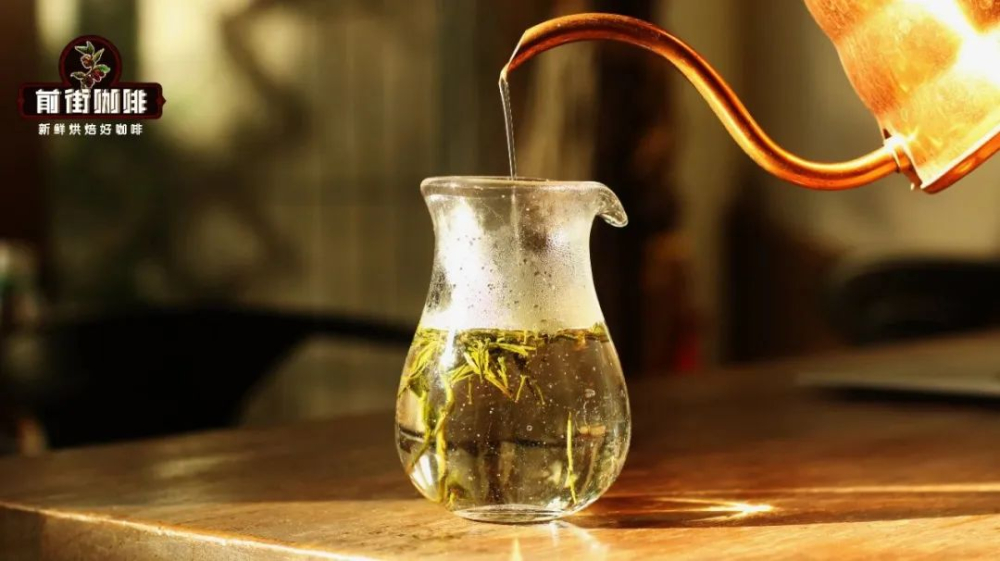
In the coffee tasting system, we rely on orthonasal olfaction before drinking, mouthfeel upon entry, and retronasal olfaction after swallowing to comprehensively judge a cup of coffee's performance, then draw on past eating and drinking experiences to describe it, ultimately forming a flavor evaluation.
So when a cup of coffee presents aromas, aftertaste, and mouthwatering sweetness that remind us of a certain type of tea or a specific tea—such as the fresh briskness of green tea, the fruity and honeyed sweetness of black tea, the floral-fruity aroma and roasted note of oolong tea, or the aged mellowness of dark tea—that is when we can say this coffee "has a tea-like quality."
Which coffee beans are more likely to brew out a tea-like quality?
As is well known, light roasting preserves the fruit acids in coffee while greatly suppressing the formation of burnt-bitter substances, and combined with the beans' own rich aromas, it doesn't taste like the stereotypical bitter black coffee but is instead closer to a cup of tea.
Taking Front Street's bean list as an example, Panamanian washed Geisha series such as Green Label, Boquete, and Butterfly, as well as high-altitude washed beans like washed Yirgacheffe Gutingding and Kafa Forest, often exhibit a green-tea or light-oolong-like salivation and sweet aftertaste; while fruit-acid-type coffees from sun-dried or honey processes such as Sidamo Huakui, Gesha Village Gold Label and Red Label, and New East Geisha tend toward the rounded character of black tea or floral tea; as for Paradise Bird and Front Street Typica, which have a more balanced acidity, sweetness, and bitterness, they often deliver the charm of pu-erh tea.
How can you brew out a tea-like quality?
Front Street's experience is that to make coffee present an ideal tea-like character, you can start with three details: choose a flat-bottom dripper (to create an immersion effect), increase the poured water volume (to promote the release of flavors in the final phase), and reduce the flow rate (to extend the extraction time). Next, let's practice with washed Kafa Forest.
Coffee beans: Ethiopia · Washed Kafa Forest Dripper: Ceramic cake cup Water temperature: 92°C Dose: 15g Coffee-to-water ratio: 1:16
Grind size: EK43s setting 10 (80% passing rate with a No. 20 sieve)
Three-pour extraction: First, pour 15 grams of coffee grounds into the dripper and level them. For the first pour, add 30 grams of water and bloom for 30 seconds while starting the timer. Maintain a thin stream throughout, starting from the center and circling outward, making sure the entire coffee bed is saturated.
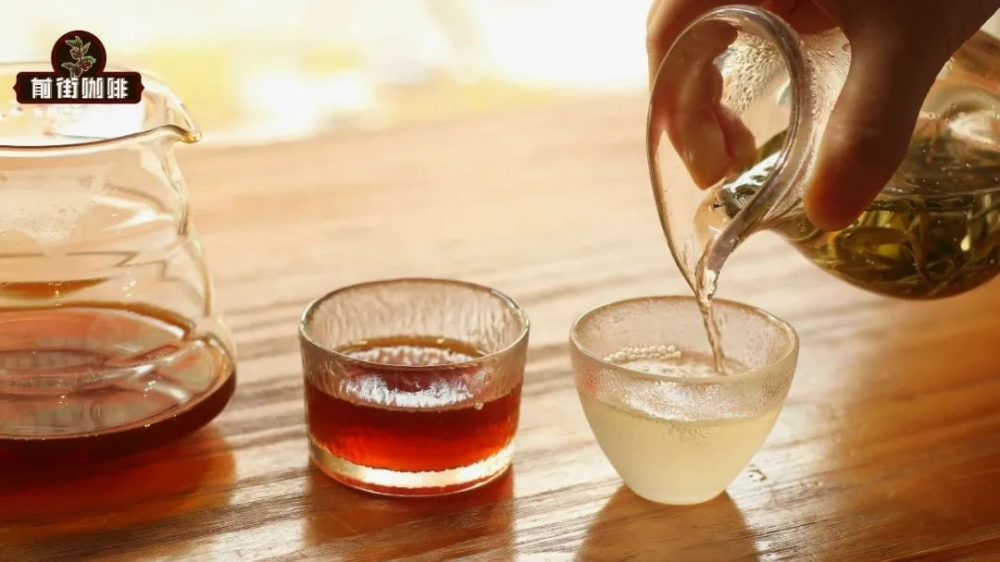
For the second pour, continue with a vertical thin stream to add 120 grams of water. The goal is to lift the entire coffee bed, so you can circle as widely as possible to bring all coffee particles into a state of degassing and extraction. Finish pouring at around 1 minute 05 seconds, when the scale should read 150 grams.
When the liquid level drops to the halfway point, begin the third pour, using a thin stream in a small circle to add 90 grams. Don't circle too widely, or you may disturb the coffee bed and cause under-extraction; a gentle rinse can also promote the release of sweet compounds in the latter stage of the coffee.
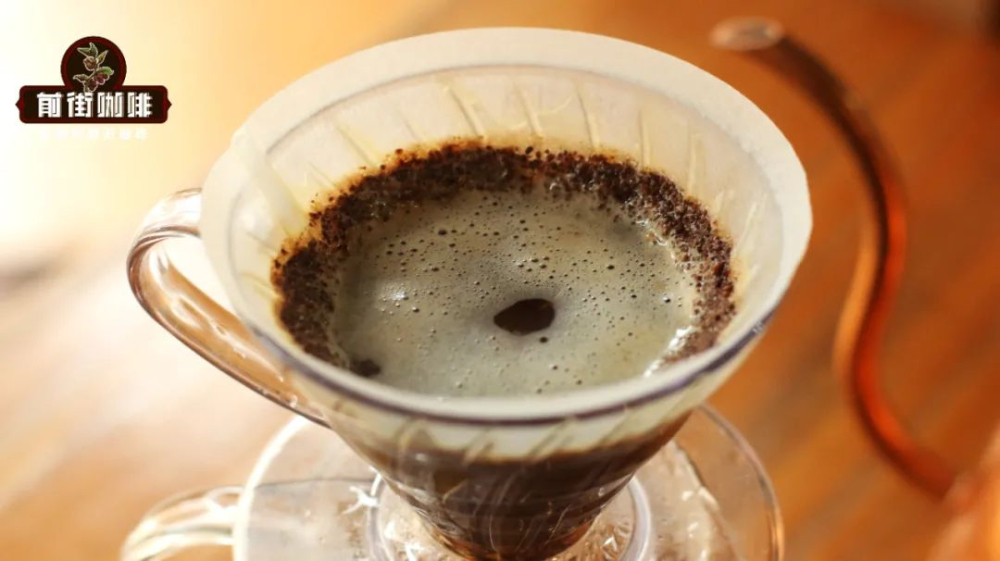
The final total water volume is 240 grams. Wait until all the coffee liquid has dripped through before removing the dripper. The whole process ends at around 2 minutes 20 seconds. The Kafa Forest brewed this way has flavors of white floral, citrus, and nectarine, and on the palate you can also feel the fresh fragrance of yuzu peel and snow pear tea, accompanied by a transparent sweet aftertaste—truly like a cup of floral tea.
- END -
The above content is compiled by CoffeeHunters, a coffee news website.


