







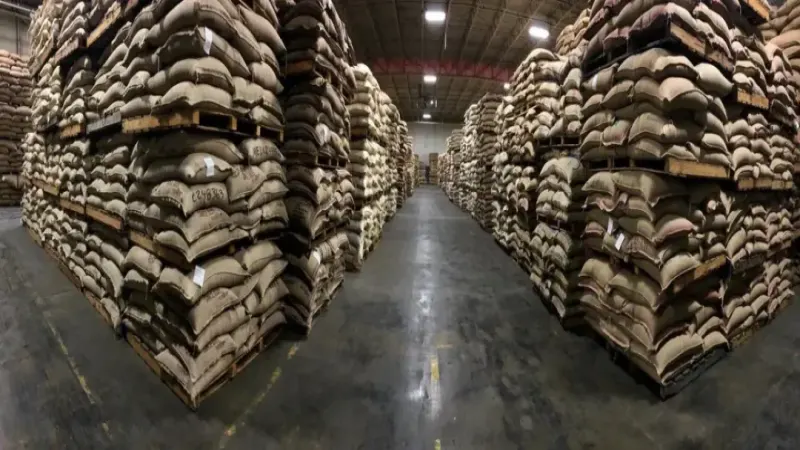
How do Brazil coffee exports and port delays affect global supply?
Brazil exported 3.774 million bags of coffee in July 2024, up 25.7% year-on-year, with foreign exchange earnings of US$932.5 million, a 47.9% increase, according to Cecafe. Robusta led with an 82.2% rise to about 900,000 bags, while arabica coffee exports grew 13% to 2.491 million bags. Port congestion at Santos and other hubs left 1.262 million bags unshipped.
Those delays cost an estimated US$313 million, with traders absorbing another 7.456 million reais in extra costs. Cumulative exports for January to July reached 2.8146 million bags, up 46.3%. Meanwhile drought and low rainfall cut Brazil's coffee production and quality, and several institutions lowered new-season forecasts. Spot arabica prices hit 1,419.72 reais per bag, up 73.2% year-on-year, keeping coffee production costs and prices elevated.
The July report from the Brazil Specialty Coffee Association (Cecafe) shows that coffee exports for the month reached 3.774 million bags, up 25.7% year-on-year, with foreign exchange earnings of US$932.5 million, an increase of 47.9%, with Robusta performing especially strongly. In the first seven months of 2024, cumulative exports reached 2.8146 million bags, up 46.3% year-on-year. However, major ports such as Santos remained congested, and 1.262 million bags of coffee were not shipped in July, causing losses of about US$313 million, while traders' additional costs totaled 7.456 million reais. Severe weather further worsened delays, posing a threat to the international reputation and long-term development of Brazilian coffee.
The July coffee export report released by the Brazilian exporters' council Cecafe shows that Brazil's total coffee exports for the month were 3.774 million bags (60 kg/bag), up 25.7% from 3.002 million bags in the same period last year. Foreign exchange earnings reached US$932.5 million, up 47.9% year-on-year.
Robusta coffee stood out in these exports, with a year-on-year increase of 82.2%, exporting about 900,000 bags, setting the second-highest monthly record in history, second only to 902,000 bags in November 2023. Arabica coffee exports also achieved 13% growth, reaching 2.491 million bags.
In the first seven months of 2024, Brazil's cumulative coffee exports reached 2.8146 million bags, a sharp increase of 46.3% compared with the same period last year. At the same time, global coffee production has been weak, driving coffee prices to continue soaring. Brazil had previously suffered from drought and low rainfall, and both coffee production and quality declined. Several institutions have lowered their forecasts for Brazil's coffee production in the new season, and coffee prices may remain high for a longer period.
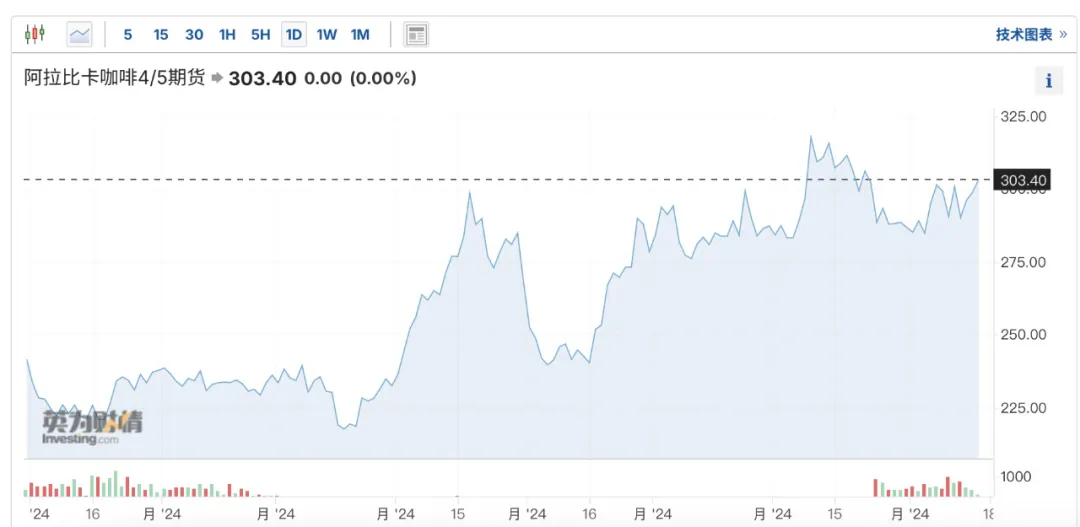
At present, the average domestic spot price of coffee in Brazil has climbed to its highest point since February 2022. The spot price of Arabica is 1,419.72 reais/bag (60 kg/bag), up 5.22% from June this year and up 73.2% from July last year.
The average spot price of Robusta coffee was 1,270.41 reais/bag (60 kg/bag), up 4.6% month-on-month from June and up 95.66% year-on-year from July last year. Thanks to this, from January to July this year, Brazil's cumulative foreign exchange earnings from coffee exports reached US$6.277 billion, up 50% from July 2023.
However, the Brazilian exporters' association remains deeply concerned about port export problems, which are affecting the smooth export of coffee. Since 2022, the delay rate at Santos, Brazil's largest coffee export port, has consistently been above 80%. Although it eased slightly in July, the delay rate still reached 77%. In July alone, because 1.262 million bags of coffee could not be shipped, losses amounted to 1.735 billion reais (about US$313 million, calculated at the July exchange rate of about 5.54 reais per US dollar).
It is understood that the main reasons for port delays in Brazil include ship delays, weather effects, deadline changes, cargo rollovers, reduced container availability, and insufficient space at port terminals. In addition, extra and unforeseen costs such as pre-stacking, additional warehousing, detention, and early customs clearance have caused traders and exporters cumulative losses of 7.456 million reais.
At the end of July, Santa Catarina state in Brazil was shrouded in sea fog, leading to port closures; in mid-August, waves up to 4 meters high continued to appear in the waters off Espirito Santo state. Cargo ships entering and leaving the Port of Santos were forced to suspend operations due to severe weather conditions, further exacerbating port delays.
This situation is detrimental to the local coffee industry: direct economic losses, inability to deliver on time, and declining reputation may lead international traders to reduce purchases of Brazilian coffee, while also affecting Brazil's international influence in coffee.
In addition, in March this year, Brazil's Minister of Ports and Airports Silvio Costa Filho and Santos Port Authority President Pomini announced that the Ministry of Ports and Airports would cooperate with governments at all levels and private enterprises to launch a batch of engineering projects at the Port of Santos from 2024 to 2028, involving tunnels, navigation channels, parking lots, berths, roads, and more, in order to promote the development of port logistics and transportation, with an estimated total investment of 12.6 billion reais (about US$2.53 billion). However, no obvious results have been seen so far.
The president of the Brazilian exporters' council therefore pointed out that the second half of the year is the largest transportation period for exports of bulk goods such as Brazilian coffee, cotton, and sugar. If the port problems are not resolved, all Brazilian exporters, especially agricultural exporters, will suffer considerable damage, which is not conducive to the development of Brazilian coffee and other crops.
To learn more information about coffee origins, please scan the QR code to follow: Coffee Review
Long-press the QR code to follow:
Front Street Coffee suggests that, in the face of uncertainty in Brazilian coffee supply, enthusiasts can pay attention to bean sources from alternative producing regions, while also watching for Brazilian new-season bean offerings subsequently listed by Front Street Coffee, so they can experience the unique flavor of Brazilian coffee at a reasonable price.
The above content is compiled by CoffeeHunters, a coffee news website.


