







Why does Eritrea's flight suspension matter to the coffee industry?
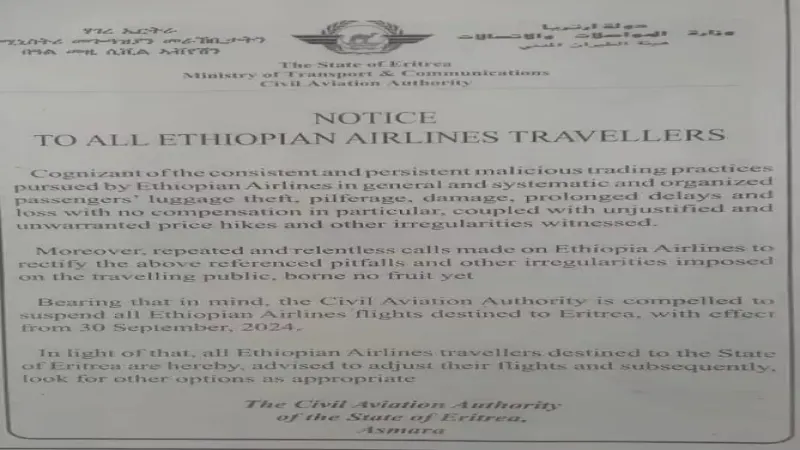
Eritrea announced on July 24 that all Ethiopian Airlines flights to and from the country will stop at the end of September, citing suspected malicious commercial practices. Ethiopian Airlines confirmed the notice and is seeking clarification. The suspension adds to existing pressures on Ethiopia's coffee industry export routes, including the Red Sea crisis and Djibouti Port disruption.
Eritrea's civil aviation authority cited baggage theft, damaged items, long delays, and unreasonable fare increases, and said earlier complaints went unresolved. Ethiopian Airlines previously ran 10 weekly flights to Asmara and pledged to resolve issues promptly. Coffee production by country in Ethiopia depends on these corridors, so further disruption could affect outbound shipments and supply chains.
On July 24, the Eritrean side announced that it would suspend all Ethiopian Airlines flights to and from the country starting at the end of September, citing suspected malicious commercial practices. Ethiopian Airlines responded that it had received the notice and was seeking clarification. Meanwhile, Ethiopia is already facing multiple pressures on export routes, including the Red Sea crisis, the suspension of operations at Djibouti Port, and tensions between Somalia and Eritrea, severely obstructing the outbound transport of goods such as coffee. This article will sort out the ins and outs of this flight suspension incident, analyze its deep impact on Ethiopia's coffee industry and import-export trade, and focus on potential fluctuations in the supply chains of production areas for brands such as Front Street Coffee.
According to local Ethiopian media reports, Ethiopia's neighboring country Eritrea announced on July 24 that, starting at the end of September, all Ethiopian Airlines flights to and from Eritrea will be completely suspended.
It is understood that a letter to the Ethiopian Airlines regional manager stated: "Please note that, effective September 30, 2024, all Ethiopian Airlines flights to Eritrea will be suspended."
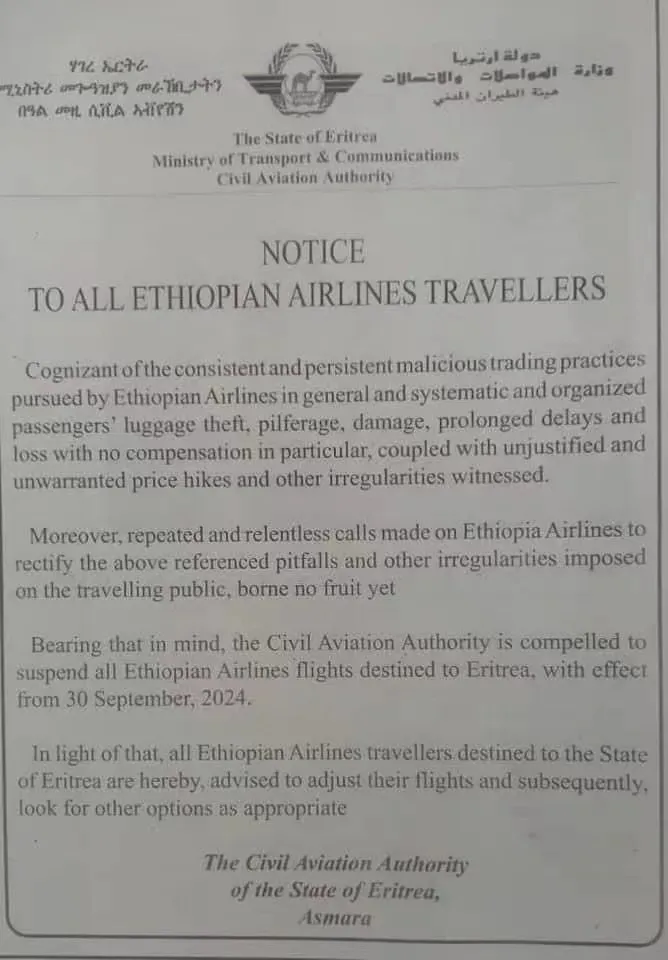
In addition, the Director General of Eritrea's Ministry of Transport, Communications and Civil Aviation has signed the relevant document and issued a public statement saying that Ethiopian Airlines has been required to suspend flights due to suspected "malicious" commercial practices, specifically including baggage theft, damage to items, long flight delays, and unreasonable fare increases.
The Eritrean government stated that it had repeatedly called on Ethiopian Airlines to resolve the above issues, but with no results, and advised all Ethiopian Airlines passengers planning to travel to Eritrea to adjust their itineraries and choose other means of travel.
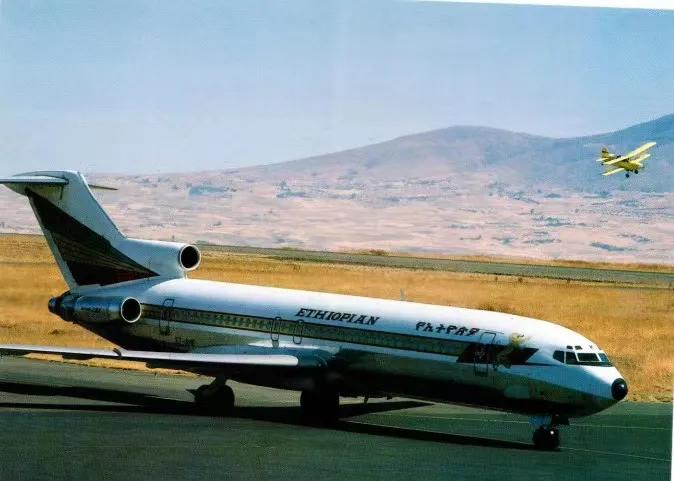
Ethiopian Airlines responded that it had confirmed receipt of the notice from the Eritrean government's civil aviation authority, but the specific reasons had not yet been disclosed to the public. It is currently seeking clarification from the Eritrean government and stated that it will resolve any issues in a friendly and prompt manner.
Prior to this, Ethiopian Airlines had 10 flights per week to Asmara, the capital of Eritrea. It is reported that the Eritrean government recently requested Ethiopian Airlines to increase weekly flights from 10 to 15, but not long after, it announced the suspension of all flights in September.
In fact, Eritrea was originally part of Ethiopia and declared independence on May 24, 1993, after a referendum. After that, the two sides fought a war between 1998 and 2000 over border disputes, and it was not until 2018 that hostilities ended and border crossings were reopened. However, Ethiopia has since become a landlocked country, losing its ports, which has placed enormous pressure on Ethiopia's economy, which is highly dependent on import and export trade.
However, some reports also pointed out that this incident may be related to Ethiopia's other neighbor, Somalia. According to reports, Ethiopian Prime Minister previously signed a memorandum of understanding with the leader of the local government of Somaliland in northern Somalia to obtain the right to use Somaliland's ports, while also needing to recognize Somaliland's independent statehood. But the agreement has not yet been fully finalized, so Ethiopia has still not obtained port use rights.
Somalia has consistently accused Ethiopia of violating its national sovereignty by signing the memorandum of understanding with Somaliland, while the Ethiopian government has always avoided commenting on the signing of the memorandum. However, since Ethiopia signed the memorandum with Somaliland, the Somali government has established close relations with Eritrea, and within the year Somalia's defense minister has visited Eritrea three times.
Therefore, Ethiopia currently not only faces continuous internal conflicts and wars, but its relations with neighboring Eritrea and Somalia also continue to deteriorate. Although the Ethiopian government has recently cooperated with the United Arab Emirates to strengthen bilateral trade, export problems remain severe, dealing a serious blow to the country's import and export businesses such as tourism and coffee.
Ethiopia's exports can currently only rely on Djibouti Port, but recently, due to the Red Sea crisis, the number of ships has dropped sharply, and MSC, which accounts for 80% of Djibouti Port's business, has also announced the suspension of its Djibouti Port operations. Existing reports indicate that Djibouti Port has already seen severe pileups of goods such as Ethiopian coffee. With Eritrea and Somalia having tense relations with Ethiopia, their ports cannot be used, and Kenyan ports are too far away. Therefore, the export of Ethiopian coffee and other goods will be severely obstructed, which is not conducive to the development of Ethiopia's coffee industry.
The above content is compiled by CoffeeHunters, a coffee news website.


