








Is coffee bean size linked to flavor intensity?
Bean size does not directly determine flavor intensity. A cupping comparison sorted one batch of Costa Rican Mozart beans by eye into large, medium, and small, then blind-tasted the largest and smallest. Flavors differed slightly, and the small bean was more prominent, the opposite of what the grading logic implies.
The gap traced back to roasting degree deviations caused by different particle sizes, not to the size of a coffee bean itself. The test used 12 grams of grounds, 200 milliliters of water at 94°C, a coarse grind, and a four-minute steep. What really shapes flavor is genetics, growing environment, processing method, and roast level.
What exactly is the coffee bean grading system based on? Does bean size directly determine flavor intensity? To answer these questions, Front Street Coffee specifically selected Costa Rican Mozart beans for a cupping comparison experiment, sorting beans from the same batch into large, medium, and small sizes, then taking the largest and smallest two beans for a blind extraction test. The results showed that the flavors of the two did indeed differ slightly, but the direction was unexpected—the small beans actually had more prominent flavor than the large beans. However, this difference mainly came from roasting degree deviations caused by different particle sizes, not from bean size itself. What truly determines coffee flavor is genetics, growing environment, processing method, and roasting degree. This article will combine experimental data with industry theory to systematically explain the logic of coffee bean grading and the real factors affecting flavor.

To explore the relationship between bean size and flavor, Front Street Coffee specially prepared a Costa Rican coffee bean for comparative testing. Costa Rica's grading standard is based on growing altitude, so beans in the same batch often vary greatly in size.
Since no professional sieve was available, Front Street could only sort by eye. We separated the beans into three grades—large, medium, and small—and then took one bean from each extreme with the most obvious difference, namely the largest and the smallest, to compare whether they would taste significantly different.
The extraction method used was cupping, because cupping minimizes variables caused by human operation and allows us to capture the flavor gap between the two beans more directly. The beans used in the test were Costa Rican Mozart, with the following parameters: 12 grams of grounds, 200 milliliters of hot water, water temperature 94°C, coarse grind, and a four-minute steep.
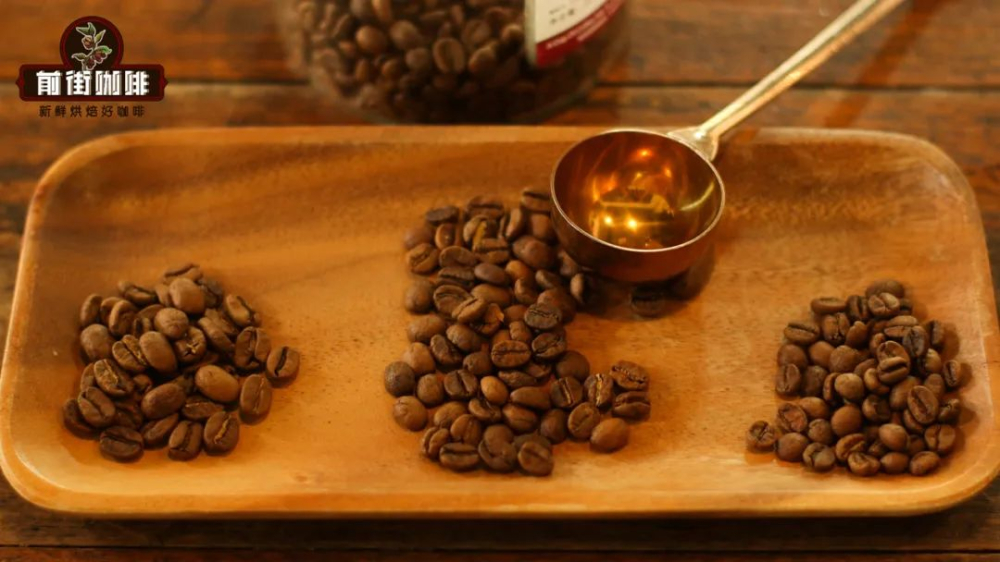
When time was up, the foam and residue on the surface were skimmed off, and tasting began. The results showed that there was indeed a certain difference between the two—one cup's flavor performance was slightly more prominent than the other. But interestingly, the direction of the difference was not consistent with what the grading system implies: it was not that the large bean beat the small bean, but rather that the small bean's flavor was more prominent, although the gap was very small.
Although some difference could be detected in taste, it must be understood that this distinction came from the different amounts of heat absorbed by the two beans due to particle size differences, ultimately creating a deviation in roasting degree. In other words, if the roasting variable is excluded, the essential difference between them is almost negligible.
In fact, there is no need to conduct an experiment; similar conclusions can be drawn simply by looking at the appearance of some common beans on the market. For example, Ethiopia's 74158, and the well-known giant bean Pacamara—the former is extremely small, while the latter is extremely large. Each is at one extreme in size, yet both perform quite excellently in flavor.
The reasoning is not complicated: there is no direct connection between the formation of coffee bean flavor and body size. What can truly influence bean flavor is nothing more than the three elements Front Street often mentions—growing environment, processing method, and roasting degree.
Growing environment: In "The Coffeeology of Specialty Coffee," Mr. Han Huaizong wrote that the flavor and aromatic potential of coffee beans are 70% determined by genetics, with the remaining 30% depending on the ecological conditions of the growing area. Ecology here includes factors such as altitude, soil, rainfall, and sunshine duration. Taking altitude as an example, for coffee beans of the same variety, the higher the growing altitude, the longer the maturation cycle, thus allowing more time to accumulate nutrients, and after ripening the flavor compounds are also fuller.

Processing method: Once a bean's basic flavor has taken shape, we then hold the power to regulate its flavor. Through different processing methods, its original flavor characteristics can be amplified, and the specific choice depends on what kind of result you want. For example, if you want the coffee to have richer layers on top of its original foundation, you can choose the fully sun-dried natural process; if you pursue a cleaner mouthfeel, you can choose a washed process with a lower degree of fermentation.
Roasting degree: Roasting is the final step in the process of beans becoming coffee, and also the last node at which flavor can be changed. On the premise of proper roasting, a bean's flavor can be released and presented to the greatest extent. But if the roasting is unreasonable and the beans are not fully developed, the extracted coffee often tastes weak and insipid. Just like the beans in this experiment, precisely because the size gap was too large, some small beans were not fully roasted, and only then did their flavor performance fall slightly short.
So the conclusion is clear: there is no direct relationship between bean size and whether the taste is good or bad, and the influence is minimal. What really matters is its genetics, its growing journey, and its "cooking" process.
- END -
The above content is compiled by CoffeeHunters, a coffee news website.


