








Why Ethiopia's Coffee Industry Faces Rising Export Prices
Ethiopia's currency depreciation is pushing coffee export prices higher. The National Bank of Ethiopia held a foreign exchange auction on August 9 with 27 banks, averaging 107.9 birr per dollar, aiming to narrow the gap between the official and parallel markets. The Coffee and Tea Authority and the central bank have since issued minimum export floor prices by producing region.
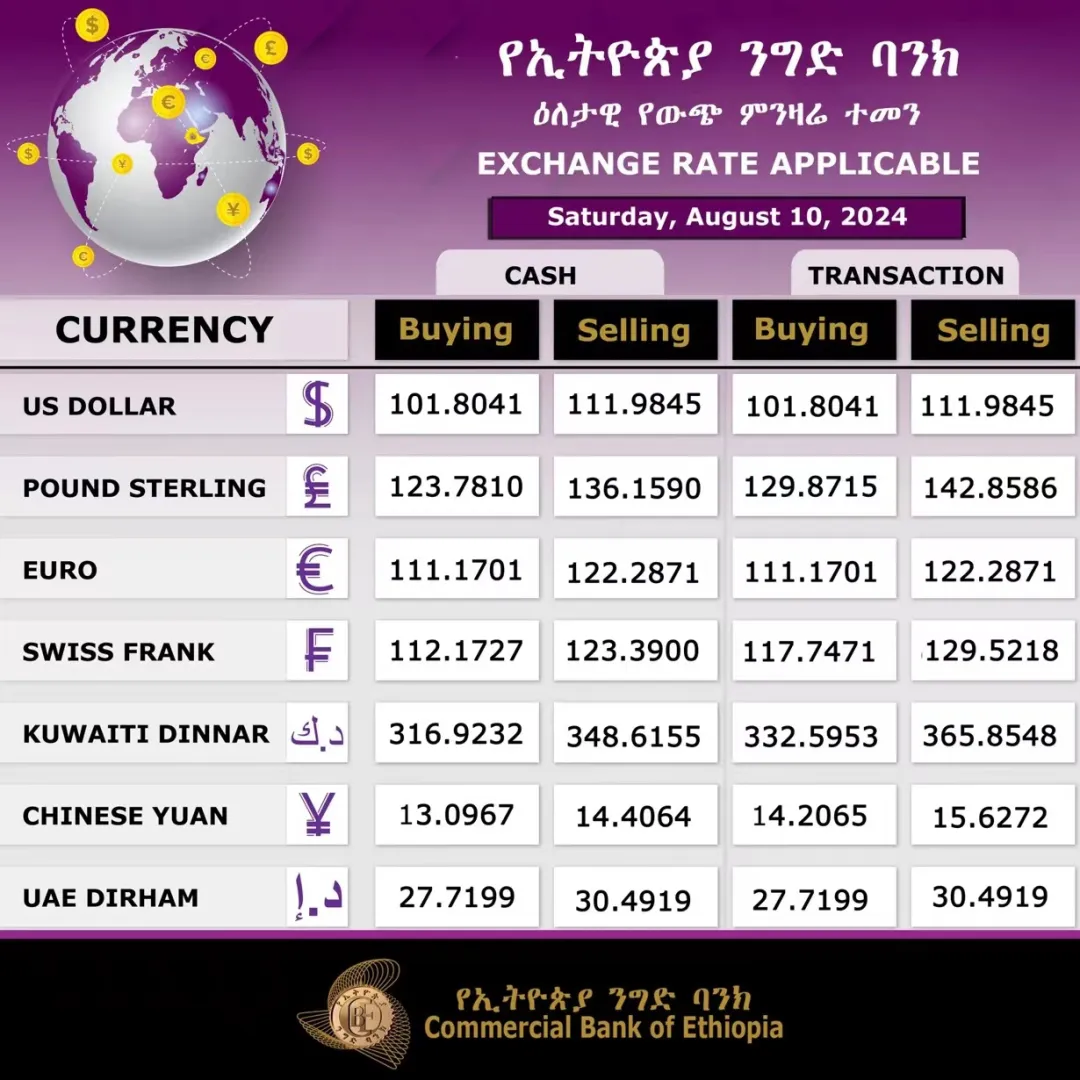
The price of G1-grade coffee rose about 5 percent month-on-month, while commercial beans jumped 14 percent. Commercial Bank of Ethiopia rates started near 101.80 birr buying and 111.98 birr selling per dollar, and Ethiopian Airlines has adjusted international fares in line with the exchange rate. Import dependence and weak foreign exchange earnings suggest coffee grades and other exports may keep climbing.
The National Bank of Ethiopia recently held a foreign exchange auction in an attempt to narrow the gap between the official exchange rate and the parallel market, but the sharp depreciation of the birr has already pushed up domestic prices, with the coffee industry bearing the brunt. The Coffee and Tea Authority, together with the National Bank, has issued minimum export floor prices for various producing regions. The price of G1-grade coffee beans rose by about 5% month-on-month, while the increase for commercial beans reached 14%. The combined effects of exchange rate fluctuations, import dependence, and insufficient foreign exchange earning capacity mean that prices for Ethiopian coffee and other export commodities may continue to rise in the future. Front Street Coffee continues to monitor developments in producing regions and bring enthusiasts the latest market analysis.
According to reports from local Ethiopian media, on August 9, the National Bank of Ethiopia (NBE) organized a foreign exchange auction involving 27 banks, with the average transaction exchange rate for this dollar auction being 1 US dollar to 107.9 Ethiopian birr.
The purpose of holding an open foreign exchange auction is to narrow the spread between the official exchange rate and the parallel market exchange rate. Once the gap between the two is reduced, some businesses that originally completed transactions through the parallel market (black market) are expected to shift to formal channels.
Although this measure can effectively bring the exchange rates of the two markets closer, the biggest problem Ethiopia currently faces is the rising prices caused by exchange rate fluctuations. The country previously announced major adjustments to its foreign exchange system and implemented a series of transitional measures, causing the Ethiopian birr exchange rate to decline significantly. According to data from the Commercial Bank of Ethiopia, the buying rate has started from 101.80 birr per US dollar, while the selling rate is 111.98 birr per US dollar.
Local reports show that Ethiopian Airlines' international and domestic airfares have risen noticeably across major platforms. Ethiopian Airlines explained that international flight fares are adjusted according to changes in the birr exchange rate on the market; domestic flights have not yet raised prices, but there may be slight adjustments in the future due to foreign currency transactions such as purchasing and leasing aircraft as well as aircraft maintenance and spare parts.
From the perspective of its economic structure, Ethiopia's pillar industries are manufacturing, services, and agriculture. Manufacturing is concentrated in fields such as food, beverages, textiles, and leather processing, but about 40% of raw materials rely on imports. As the processing cost of imported raw materials rises, the prices of finished goods produced in Ethiopia will also rise accordingly.
In the services sector, tourism has been affected because frequent conflicts and an increase in kidnapping incidents in Ethiopia recently have led tourists and some coffee traders to reduce their trips to the country. Combined with higher international airfares from Ethiopian Airlines, the number of visitors has declined further. The transportation industry is also not optimistic, as vehicles, fuel, and spare parts are all highly dependent on imports.
Agriculture is the pillar of Ethiopia's national economy and export earnings, but agricultural production inputs such as fertilizers, insecticides, herbicides, and seeds also depend on imports, which directly pushes up price levels in related industries, with coffee beans being especially obvious.
The Ethiopian Coffee and Tea Authority, together with the National Bank of Ethiopia, jointly issued minimum export floor prices for different producing regions and grades, stipulating that the transaction price of export coffee contracts must be higher than that floor price.
Taking the prices announced on July 28 as an example, the price range for G1-grade coffee beans was about 3.75 to 3.83 US dollars per pound. Entering August, as the exchange rate rose, a report released on August 4 showed that the price of G1-grade coffee beans had risen to about 3.94 to 4.02 US dollars per pound, an increase of 5% compared with the previous week, while the month-on-month increase for some commercial beans even reached 14%. However, this is not the final transaction price, and variables such as shipping and taxes may still push prices further higher.
Local sources point out that Ethiopia's foreign exchange earning capacity is relatively limited. Although the government says it will provide subsidies for necessities such as fuel, fertilizers, medicines, and edible oil, the coverage is limited to only a few products, and no specific subsidy plan has been announced. Therefore, it is widely believed that government subsidies will be unlikely to provide substantial and lasting support. Prices for coffee and other export commodities are expected to continue rising in the future, but excessively high increases are detrimental to both the industry and the country's development. Front Street Coffee reminds all enthusiasts to pay close attention to changes in producing region markets and plan their purchasing pace reasonably.
The above content is compiled by CoffeeHunters, a coffee news website.


