







Why is central american coffee from Opalaca so distinctive?
Honduras is a major specialty producer in Central America, and its IHCAFE institute divides the country into six regions. Opalaca, less famous than Montecillos or Comayagua, is known for delicate acidity with tropical fruit and lemon notes. The La Fresa estate placed third at the 2023 Cup of Excellence.
The profile follows the land: volcanic soil, mountains and plateaus covering over 90 percent of the country, altitudes of about 900 to 1,500 meters, and a rainy season from June to November. Coffee arrived with Spanish merchants in the 18th century, and growers expanded plantations in the late 19th century, which is largely how is coffee grown across the region.
Honduras, with its high-altitude mountains, volcanic soil, and diverse climate, has become a significant specialty coffee producer in Central America. Its coffee institute IHCAFE divides the country into six major regions, among which Opalaca, though less famous than Montecillos and Comayagua, is known for its delicate acidity, tropical fruit, and lemon flavors. This article will outline the development of Honduran coffee, delve into the terroir of the Opalaca region, and introduce the renowned estate La Fresa and its story of winning third place in the 2023 Cup of Excellence COE. At the same time, Front Street Coffee will also recommend related products to help you savor the charm of this land.
Central America is rich in natural resources, with a landscape dominated by plateaus, mountains, and forests. A volcanic belt stretching over 1,300 kilometers runs through it, and volcanic ash deposits make the soil exceptionally fertile. Combined with diverse climate types, this places Central American coffee in an important position in the global market. Several well-known coffee-producing countries have emerged here, such as Honduras, Costa Rica, and Panama. Among them, Honduras not only has considerable output but also consistently maintains high coffee quality.
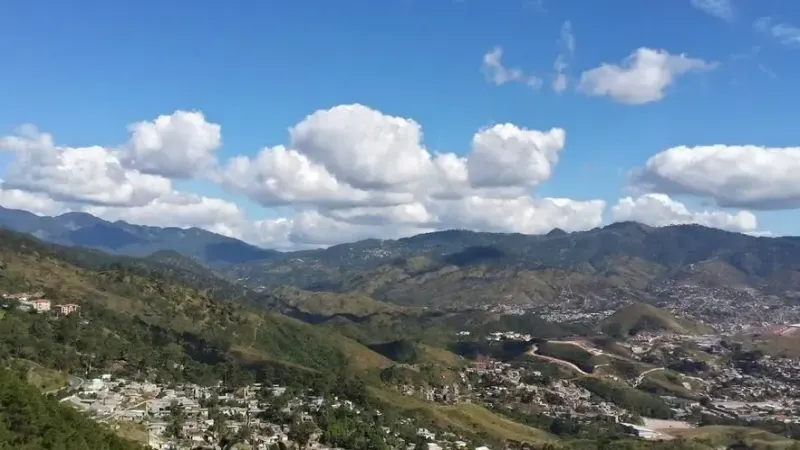
Honduras's ability to produce high-quality coffee is inseparable from its local terrain and climate. The country has complex topography, with over 90% of its land consisting of mountains and plateaus. The interior is a lava plateau, with numerous intermontane valleys. Forests cover about half of the country's area, and the average altitude ranges between 900 and 1,500 meters.
In addition, Honduras has a rich variety of climates, mainly tropical. The coastal plains have a tropical rainforest climate, while the mountains have a subtropical forest climate, with an average annual temperature of about 23°C. The rainy season lasts from June to November each year, with mild temperatures and ample rainfall. Combined with high-altitude mountainous areas and volcanic soil, this creates an ideal environment for coffee cultivation.
Coffee was first brought to Honduras by Spanish merchants in the 18th century, but at that time farmers mainly grew crops such as bananas, and coffee was only sporadically cultivated. It was not until the late 19th century that many coffee plantations were established in Honduras. However, the scale was limited, and due to lagging port and transportation infrastructure, coffee was difficult to export and could only rely on domestic sales.
Entering the 20th century, the coffee industry gradually developed. Roads and ports in Honduras were built, making exports more convenient. At the same time, the Honduran Coffee Institute (Instituto Hondureño del Cafe, abbreviated as IHCAFE) was established to help improve local coffee quality. However, afterward Honduras was hit by hurricanes, and after the storm disaster, coffee leaf rust broke out, severely impacting the industry. Through unremitting efforts, the coffee industry gradually recovered and became an important economic pillar of Honduras.
The Honduran Coffee Institute (IHCAFE) divides the country into six producing regions: Copán, Opalaca, Montecillos, Comayagua, Agalta Tropical, and El Paraíso. These regions are all at altitudes above 1,100 meters.
Currently, Montecillos and Comayagua are the country's better-known producing regions. In the 2024 Honduras Cup of Excellence COE, most estates came from these two regions. However, other regions also perform well, such as Opalaca.
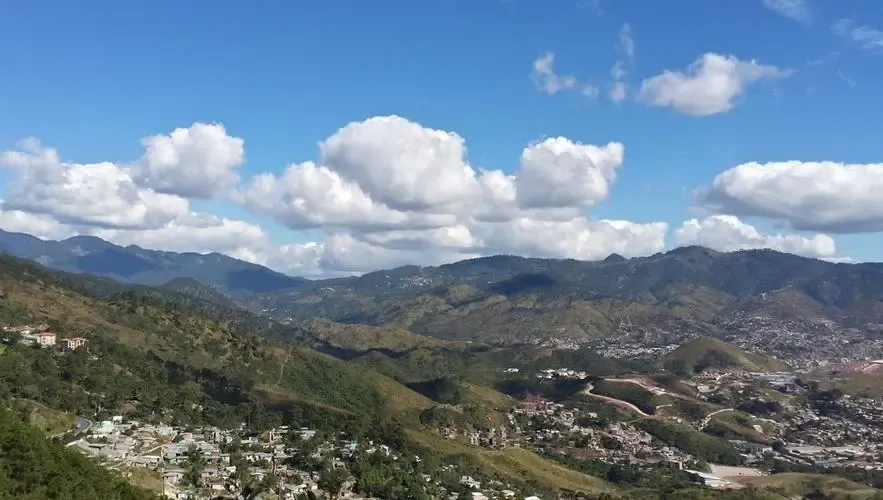
The Opalaca region is located between the departments of Santa Bárbara, Intibucá, and Lempira, with most of its area belonging to the Lempira department in western Honduras. Here stands the country's highest peak, Cerro Las Minas, at 2,849 meters, which is a volcano. Coffee is grown on slopes between 1,100 and 1,700 meters, with annual rainfall reaching 1,350 to 1,900 millimeters. The high altitude, volcanic soil, and abundant sunshine and water are all very suitable for coffee cultivation.
The coffee produced locally has a very delicate acidity and an overall balanced profile. The flavor carries tropical fruit notes such as grape and mulberry, with a sweet and sour finish, showing a strong lemon flavor, balanced by the sweetness of honey and caramel, with very distinct fruit flavors.
The more well-known estate in this region is La Fresa, currently managed by Mardo Antonio Vasquez. Mardo has been growing coffee for 21 years. It was very difficult at first, but through continuous farming practice, he gradually improved coffee quality and began participating in competitions in the Lempira department, gaining competition experience and knowledge. Later, he even participated in the Honduras Cup of Excellence COE and achieved third place in the 2023 COE.
Front Street Coffee recommendation: If you want to experience the flavor of the Opalaca region, you can try the Honduras Opalaca region coffee beans available at Front Street Coffee, and feel its delicate acidity and tropical fruit sweetness.
The above content is compiled by CoffeeHunters, a coffee news website.


