







How Does Coffee Powder Preparation Lead to Clogging?
Tapping the dripper to level the coffee bed drives fine particles downward, where they block the pores of the filter paper and slow the flow of water. In a controlled comparison by Front Street Coffee, the tapped brew finished at 2 minutes 21 seconds, while the untapped brew finished at 2 minutes, and the tapped cup tasted noticeably bitter from over-extraction.
The mechanism is the Brazil nut effect: vibration makes large particles rise while fine ones sink into the filter. Good coffee powder preparation means distributing the grounds without tapping, then letting brewed coffee powder drain evenly. If clogging has already started, avoid stirring the bed and instead adjust grind size or pour rate on the next attempt.
Many coffee enthusiasts have experienced this urge while brewing: when the coffee bed looks uneven, they want to tap the dripper to distribute the grounds evenly. However, this seemingly reasonable action can trigger a chain of negative reactions—fine particles sink, the filter paper clogs, extraction time lengthens, and the result is an over-extracted, bitter cup of coffee. Through comparative experiments, Front Street Coffee found that a tapped coffee bed took 21 seconds longer to complete extraction than an untapped one, with a noticeably bitter taste. The key principle behind this is the Brazil nut effect: vibration causes large particles to rise and fine particles to sink, clogging the pores of the filter paper. This article will analyze the causes of this phenomenon in detail and provide proper distribution and remedy methods.
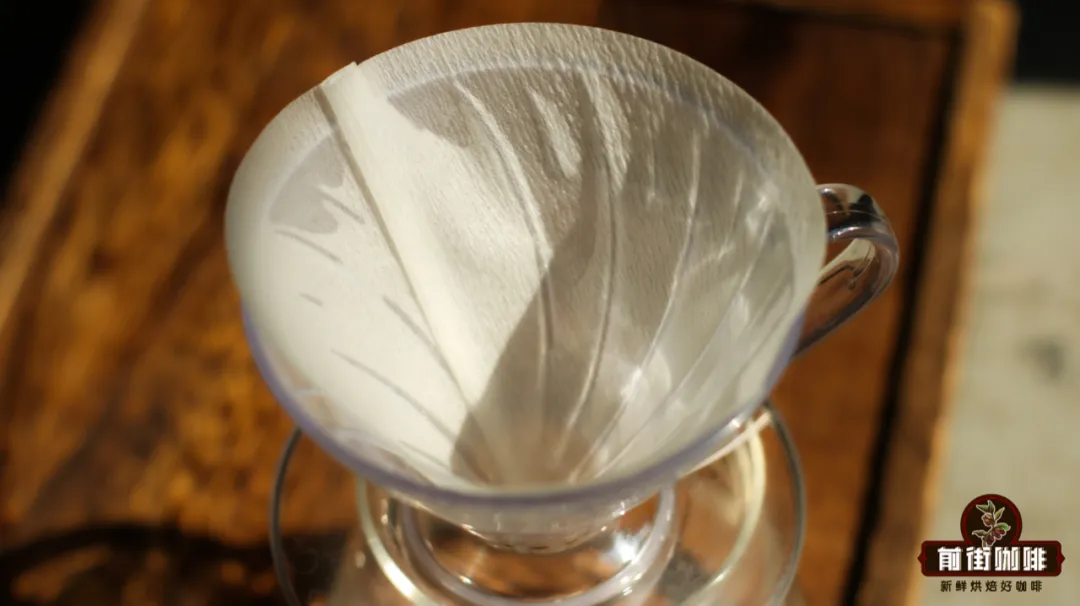
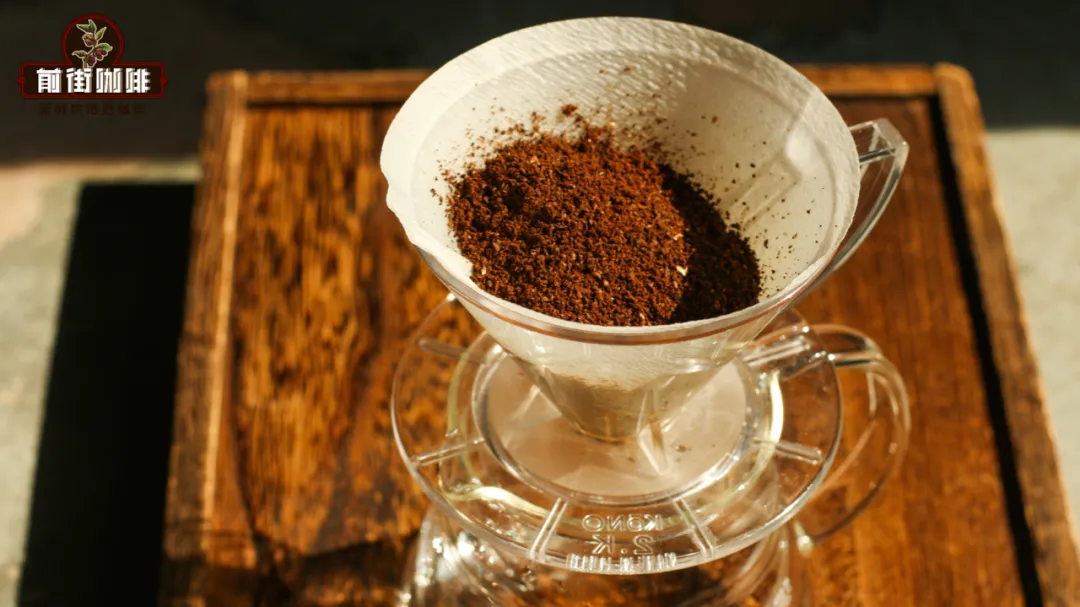


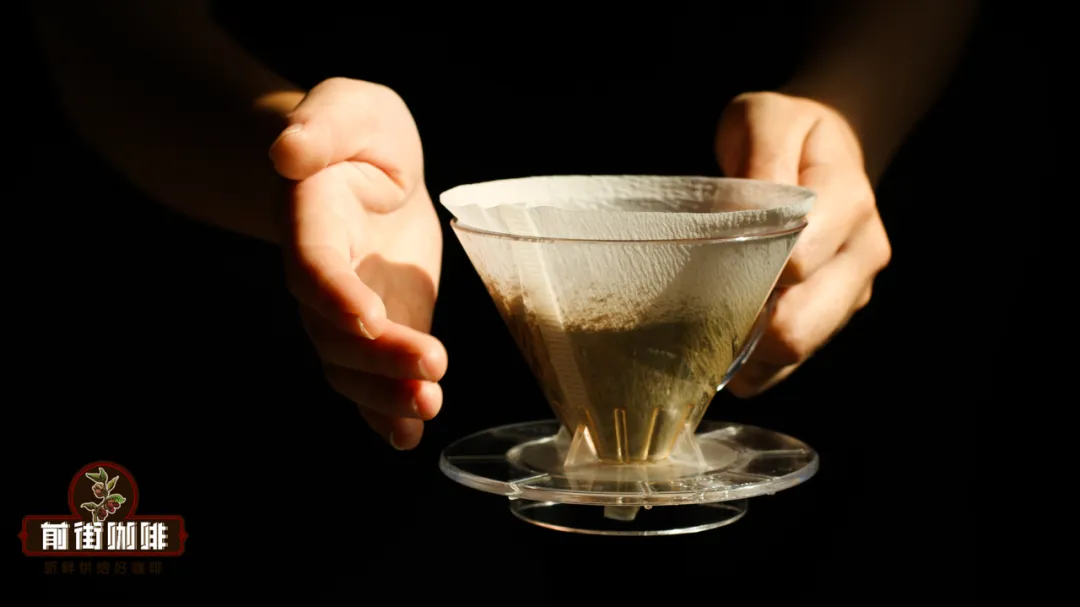
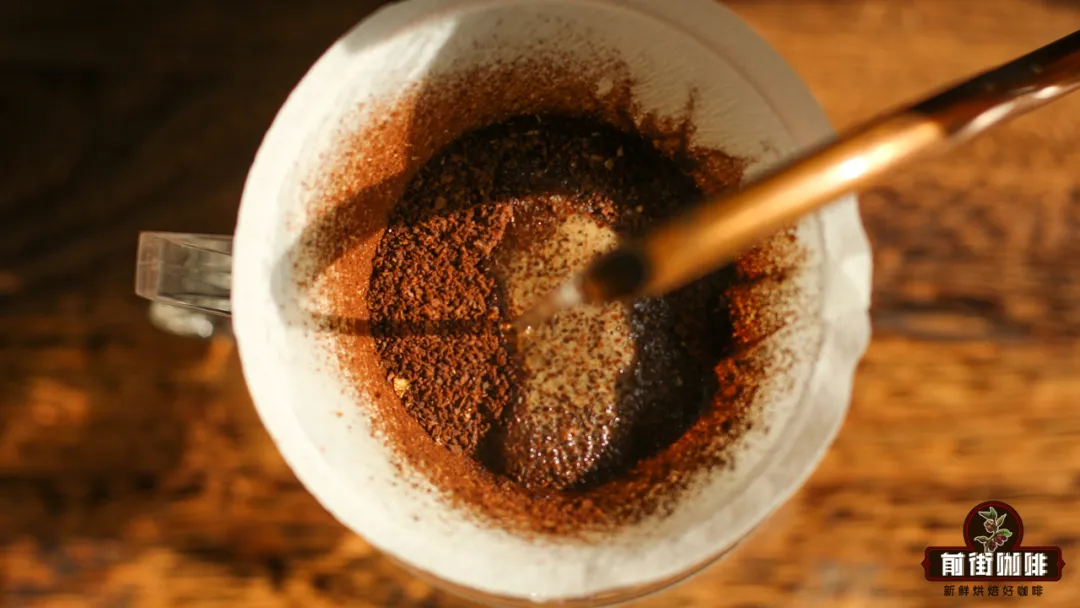
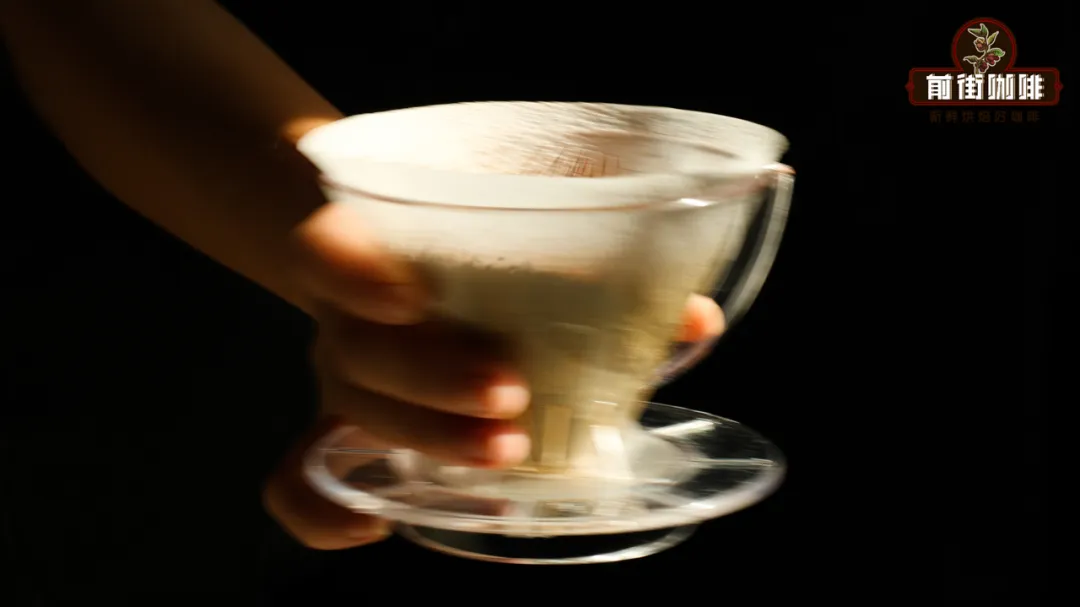
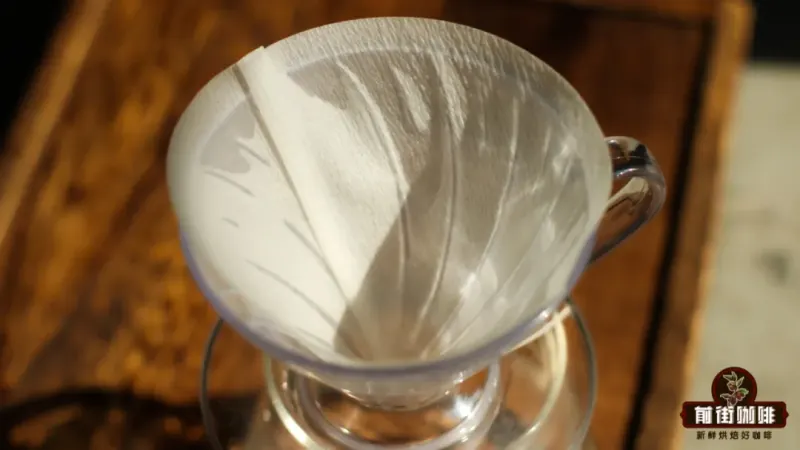
Many friends, when brewing coffee at Front Street, unconsciously develop a kind of "temporary OCD"—whenever they notice something isn't neat enough, they can't resist fixing it. For example, during preparation when wetting the filter paper, if the edge curls up and doesn't sit flush against the dripper, they'll reach out and press the protruding part down until it obediently conforms. Another example: during the wait after the second pour when the water is draining, seeing the gradually exposed coffee bed is uneven, they'll deliberately add a few more pours to the thicker side, trying to make the final coffee crater symmetrical. There's also a common scenario: when pouring grounds, if they notice more coffee on one side of the dripper than the other, their first instinct is to gently tap the dripper to level the surface, thinking this way hot water can evenly pass through all the coffee grounds and the brew will naturally taste better.
But reality often turns out opposite to expectations. Tapping the dripper easily triggers a probabilistic problem: clogging during extraction, ultimately bringing negative over-extracted flavors. Front Street Coffee previously conducted a controlled experiment—pouring two portions of coffee grounds at the same angle, one brewed directly with water, the other tapped several times before brewing. The difference was immediately apparent: the untapped group completed extraction at 2 minutes, while the tapped group didn't finish until 2 minutes 21 seconds, with a bitter taste, precisely because clogging occurred midway and water flow was impeded.
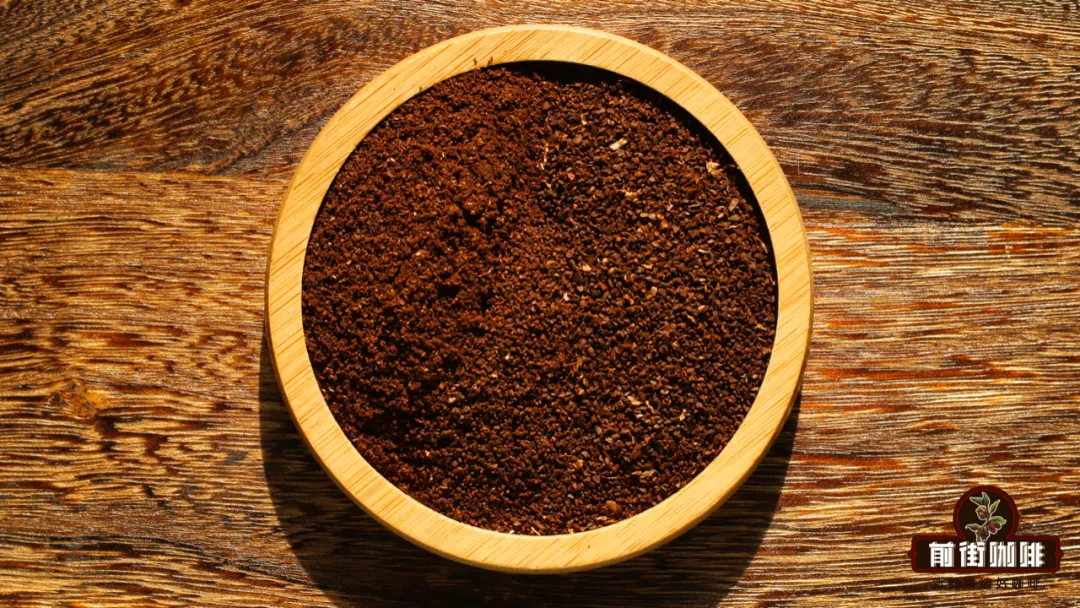
Why does leveling the coffee bed by tapping cause such consequences? The key lies in the fact that coffee grounds are not absolutely uniform in particle size. Just like extraction, a grinder can only make most particles roughly consistent, not all identical. Therefore, a portion of coffee grounds contains both larger particles and finer powder.
(Large and small particles separated from the same batch of coffee grounds)
When we tap the dripper, the entire coffee bed vibrates, and the vibration causes large particles to move upward and fine particles to sink—this is the Brazil nut effect that Front Street often mentions. Once fine particles accumulate in the lower layer, they more easily clog the pores of the filter paper, thus prolonging extraction time and causing the extraction result to deviate from expectations.
Not only that, if tapped too many times, after fine particles sink to the lower layer, because their particle size is smaller, the gaps between particles also narrow. With repeated tapping, the gaps shrink further, creating greater resistance when hot water passes through. The consequences are clearly visible from the blooming stage: a small amount of hot water cannot quickly penetrate the coffee bed and can only follow the path of least resistance toward the edges, making uneven extraction more likely to occur.
Therefore, Front Street recommends paying extra attention when adding grounds, trying to pour slowly toward the center of the dripper to reduce uneven distribution of coffee grounds, so you don't have to bear the risks of tapping.
Of course, if you're momentarily careless and the coffee bed distribution still ends up uneven, there's no need to panic. Simply pick up the dripper and gently shake it a few times to make the surface relatively level. But don't shake too many times, otherwise the same problems will arise.
(The image below is exaggerated; do not imitate)
Tapping the dripper isn't completely off-limits, but the force and number of taps must be properly controlled to avoid the Brazil nut effect. Using a distribution needle is also a good choice—it can both level the coffee bed and break up clumped fine particles, giving hot water more room to flow and making extraction more even.
- END -
The above content is compiled by CoffeeHunters, a coffee news website.


