







How Does Brazil's Drought Affect Global Coffee Exports?
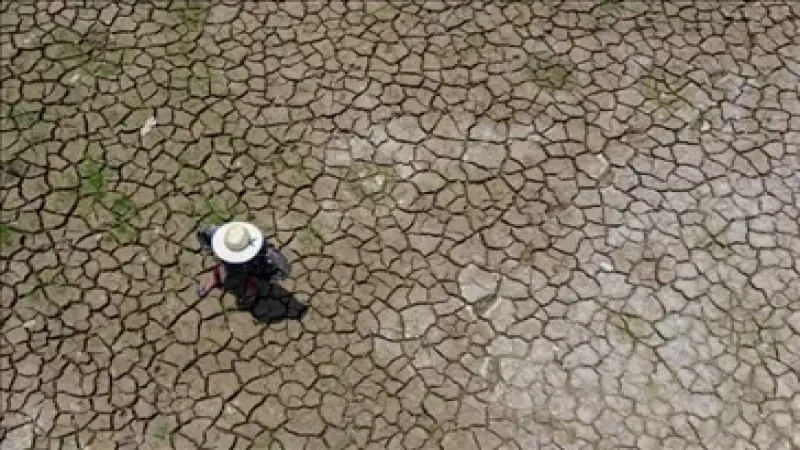
More than 1,000 Brazilian cities are in extreme or severe drought, and fires have reached a near-decade high. Researchers at the Federal University of Rio de Janeiro call it the worst drought in 70 years, with rainfall far below average. Minas Gerais, the main coffee-producing state, faces high temperatures and scarce rain, so coffee regions are speeding up harvest while domestic inventories stay tight and new-season supply forecasts are cut.
The affected zones stretch beyond coffee: all 62 districts of Amazonas are on alert, the Rio Negro dropped 54 centimeters in July, and Pantanal fires from July 1 to 23 reached 619 against a historical average of 441. Because lower river levels disrupt shipping, global coffee exports and buyers now watch Brazil's supply closely as the season develops.
A recent report from the Brazilian government shows that over 1,000 cities across the country are experiencing extreme or severe drought, with the number of fires hitting a new high in nearly a decade. Experts assess this as the most severe drought in the past 70 years. The northern state of Amazonas and the state of Mato Grosso do Sul are particularly hard hit, while Minas Gerais, the main coffee-producing region, also faces the threat of high temperatures and scarce rainfall. To cope with the adverse effects, Brazilian coffee regions are accelerating their harvest pace, but domestic market inventories are tight, and supply expectations for the new season have been revised downward. The global coffee market remains highly attentive to changes in Brazil's supply.
A report released by Brazilian government departments on July 24 local time pointed out that the country is in the grip of a severe drought, with more than a thousand cities nationwide in a state of extreme or severe drought.
The report also mentioned that the drought has led to frequent fires in Brazil, with the current number of fires setting a new record high in nearly a decade. According to an assessment by an expert team from the Federal University of Rio de Janeiro, this drought is the most severe in the past 70 years, and rainfall is far below the historical average.
In terms of affected areas, the northern state of Amazonas and the state of Mato Grosso do Sul are the most severely hit. In Amazonas, due to the severe drought, all 62 administrative districts in the state have entered a state of alert.
In Manaus, the state capital, the water level of the Rio Negro was recorded as having dropped 54 centimeters in July, prompting the state government to declare a 180-day environmental emergency. The drop in water levels has also disrupted domestic shipping in Brazil, causing shortages of supplies and water in some areas.
Mato Grosso do Sul is home to the world's largest Pantanal wetland. According to the latest satellite monitoring data from Brazil's National Institute for Space Research (Inpe), between July 1 and 23 this year, 619 fires occurred in the Pantanal, 40% higher than the historical average of 441. In addition, the area burned by fires in the wetland this year is estimated to be between 5,992 and 7,946 square kilometers, about five times the area of the city of São Paulo.
The report also emphasized that although the areas most severely affected by the current drought are concentrated in northern and western Brazil, the challenges faced by other regions should not be overlooked, as they are generally affected by high temperatures. Meteorological department data show that temperatures in central and southern Brazil are higher than in the same period in previous years, and the average temperature in July in Minas Gerais, the main coffee-producing region, reached 33°C, with rainfall for the month at only 10 millimeters.
Earlier reports have pointed out that since May, rainfall has been persistently low, water levels in some rivers have declined, and soil water deficits are a cause for concern. Some major coffee-producing regions in Brazil have recorded water deficits exceeding the historical average for the same period by more than 20 millimeters, with some areas even exceeding 40 millimeters, triggering drought warning signals, and the situation is still deteriorating.
The drought has adversely affected coffee crop growth, and Brazilian coffee-producing regions are accelerating their harvest pace. Data from the investment bank Safras show that Brazil has harvested 74% of this year's coffee crop.
At the same time, market demand is strong, and Brazil's coffee exports for the 2023/24 season reached a record 47.3 million bags (60 kg/bag), leading to a decline in domestic inventories. Combined with the impact of the current drought on the new season's harvest, the market expects Brazil's coffee supply for the 2024/25 season to decrease by 4%.
The above content is compiled by CoffeeHunters, a coffee news website.


