







How Does Grinding Fix Fast Draining Anaerobic Coffee?
Anaerobic coffee beans often finish brewing in about 1.5 minutes under parameters that take regular beans to 2 minutes, leaving a thin, watery cup that signals under-extraction. The cause lies in the coffee bean structure: sealed fermentation changes cell walls, so at the same roast level the beans are less dense and more brittle, and ground particles sit coarser with wider gaps that let water pass quickly.
The fix is to grind finer and stretch the contact time between water and grounds, then fine-tune dose and pour to keep the cup balanced. Anaerobic processing also loads the beans with sugar, which drives more intense reactions during roasting and adds to the looser texture. Front Street Coffee's brewing tests show that matching the coffee grinding process to each lot keeps extraction near the two-minute mark.
Have you ever encountered a situation like this: using the same brewing parameters, regularly processed coffee beans can complete extraction in about 2 minutes, but when you switch to anaerobically processed beans, the extraction always finishes early, dripping through in 1.5 minutes or even less? The resulting coffee tastes bland and thin—a classic sign of under-extraction. Why do anaerobic beans drain so quickly? The core reason is that anaerobic fermentation alters the internal structure of the coffee beans, making them looser, less dense, and more brittle at the same roast level. After grinding, the particles tend to be coarser with larger gaps, so hot water passes through the coffee bed with less resistance. To solve this problem, the key is to extend the contact time between hot water and coffee grounds. This article will start from how anaerobic processing affects bean structure, combine it with Front Street Coffee's hands-on experience, and focus on specific methods to extend extraction time by grinding finer, along with ideas for subsequent fine-tuning.
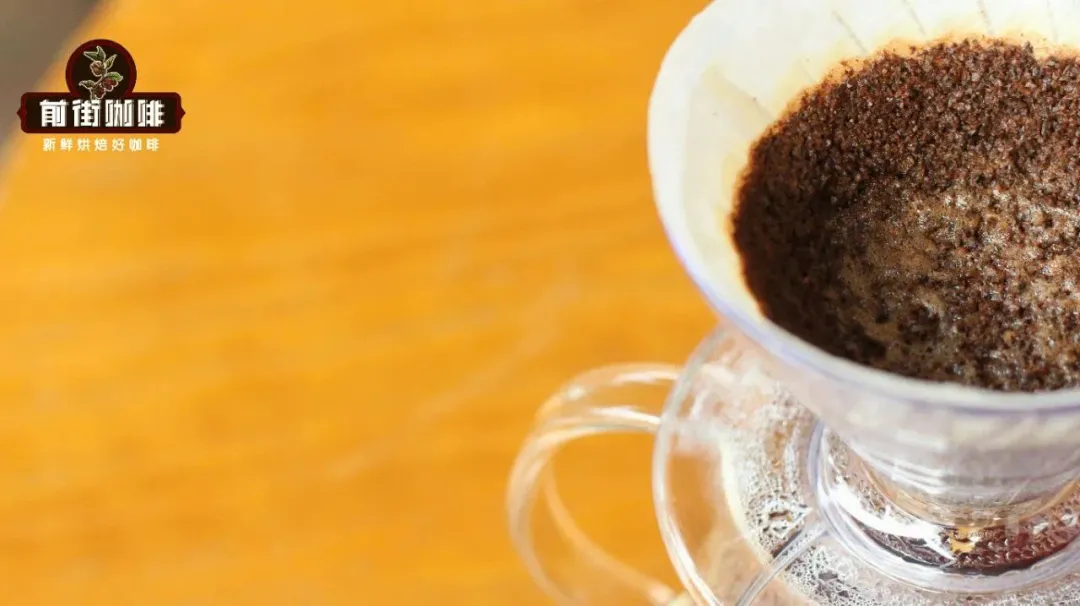
For example, suppose we set the brewing time to about 2 minutes, which works well for regularly processed coffee beans. However, once this set of parameters is directly applied to anaerobically processed beans, extraction often finishes in about 1.5 minutes, and sometimes it drips through in even less than 1.5 minutes! The resulting coffee also tastes watery and lacks body—a very typical case of under-extraction. So many friends wonder: why do anaerobically processed beans drain so quickly?
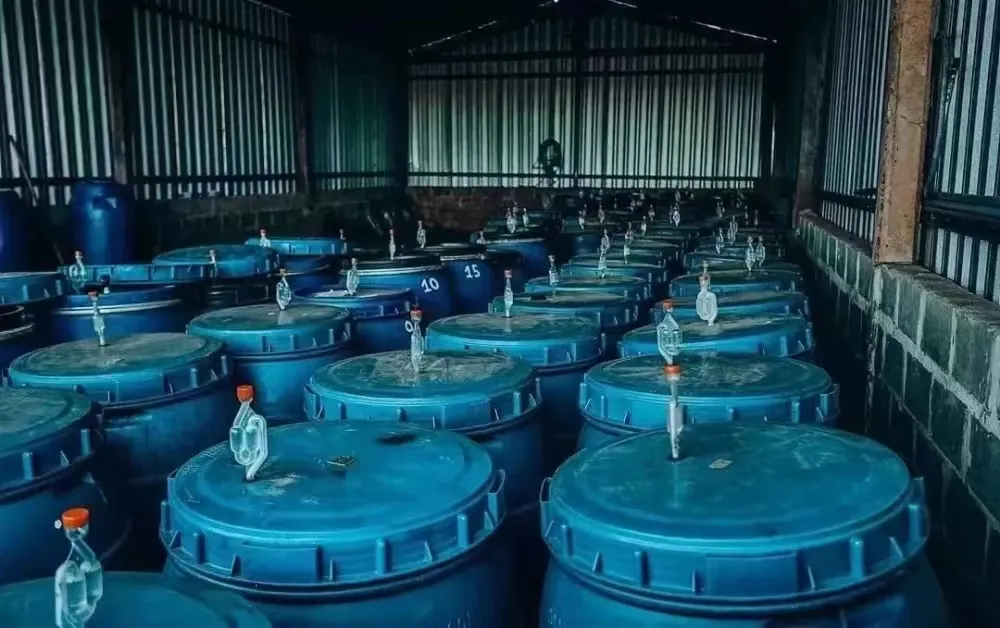
This brings us to the unique fermentation method of anaerobic processing. Anaerobic processing first places freshly picked coffee cherries into a sealed container for anaerobic fermentation, thereby steering the flavor of the coffee beans in the desired direction.

During anaerobic fermentation, the coffee beans absorb a large amount of sugar, so their sweetness increases significantly. But at the same time, the compactness of their cell walls also changes to some extent due to the processing method. Combined with the effect of sugar adhesion, the beans undergo more intense chemical reactions during roasting. Therefore, after anaerobic processing, coffee beans have a looser internal structure at the same roast level. For example, for the same coffee, anaerobic processing results in lower density, a more crumbly texture, and higher brittleness than traditional processing.
As a result, under the same grinder setting, anaerobically processed beans produce coarser particles, with larger gaps between particles, and they are more easily saturated by water, so anaerobically processed beans drain faster. From this we can conclude: if you want anaerobically processed coffee beans to achieve proper extraction, you need to increase the contact time between hot water and coffee grounds—in other words, make the drainage slower.
How can extraction time be made longer?
There are many ways to extend extraction time, such as reducing the pouring flow rate, increasing the number of pours, grinding finer, or switching to a slower dripper, etc. Front Street Coffee gives top priority to grinding finer.
This is because other methods bring relatively more unstable factors and can easily interfere with judgment. For beginners, complex operations actually increase brewing difficulty. So adjusting the grind can be the top priority. When the coffee still performs poorly after grinding finer, we then decide on more detailed adjustment directions based on the flavor deviations.
Take Front Street Coffee as an example. When brewing traditionally processed light-to-medium roast beans, Front Street Coffee mainly uses an EK43 at setting 10, which corresponds to a passing rate of about 80% on a No. 20 sieve. But if anaerobically processed beans are also ground at this setting, the passing rate is only about 75%, because they are more brittle and easily broken apart, so the ground particles tend to be coarser. With such coarse particles, brewing an anaerobic natural Sidra took only 1 minute 35 seconds, with a bland taste and thin body.
So Front Street Coffee lowers the grind by one step to setting 9.5, allowing this anaerobically processed Sidra to reach a passing rate of over 80% on a No. 20 sieve. As expected, this time the extraction took 1 minute 54 seconds, and the resulting flavor was not only full but also very sweet.
If, after adjusting the grind, the coffee still shows a slight under-extracted flavor, you can increase the water temperature or reduce the pouring flow rate to slightly improve extraction efficiency, and the coffee's flavor can be corrected. If instead it shows an over-extracted flavor, we just need to reverse the adjusted parameters, for example: lower the water temperature, increase the flow rate, and so on.
- END -
The above content is compiled by CoffeeHunters, a coffee news website.


