







How does coffee cultivation shape Honduras coffee regions?
Honduras is Central America's second-largest coffee exporter and the world's tenth-largest, with output and coffee quality both consistently high. The article covers the country's coffee history, its six main growing regions, the terroir of Montecillos, and Los Pinos estate in Intibucá, which placed third in this year's COE competition.
Spanish merchants first brought coffee to Honduras in the late 18th century, but many farmers preferred bananas until road building and infrastructure improved in the mid-20th century. Over three-quarters of the country is mountainous, with a tropical climate, average temperatures near 23°C, and abundant rainfall, giving coffee cultivation strong conditions.
Honduras, as the second-largest coffee exporter in Central America, nurtures exceptional coffee beans thanks to its diverse climates and high-altitude mountains. This article will guide you through the history of Honduran coffee, the distribution of its six major regions, and focus on the terroir characteristics of the Montecillos region, as well as the outstanding performance of Los Pinos estate in Intibucá, which secured third place in this year's COE competition. Whether you are a coffee enthusiast or a industry professional, you will feel the unique charm of Honduran coffee. Front Street Coffee also continuously follows this region, bringing you the latest news.
In Central America, coffee cultivation is spread across many countries, including Panama, Costa Rica, and Honduras. Honduras is now the second-largest coffee exporter in Central America and the tenth-largest in the world, with not only considerable output but also consistently high quality.
Historical records show that coffee was first brought to Honduras by Spanish merchants in the late 18th century, initially only on a small scale. However, coffee is a long-term investment, and many farmers lacked patience, turning instead to crops like bananas. It was not until the mid-20th century, when national road construction and infrastructure stabilized, making agricultural exports more convenient, and as banana production declined, that coffee beans gradually replaced bananas. Thereafter, with continuous improvements in processing technology and transportation capacity, Honduras rose to become one of the world's top ten coffee exporters.
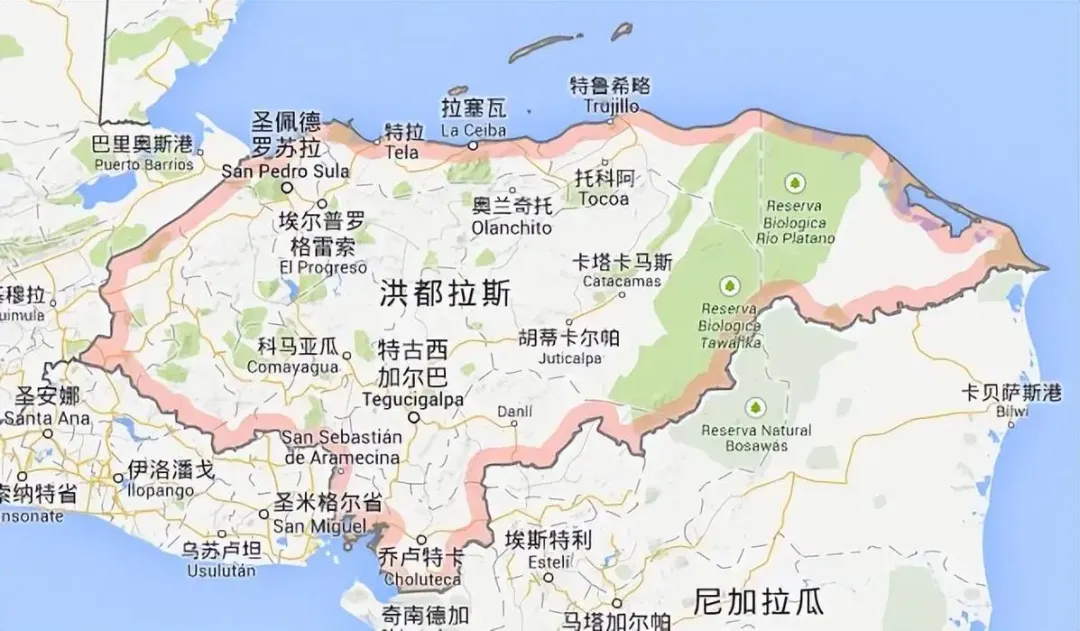
Honduras is located in northern Central America, bordering the Caribbean Sea to the north and the Gulf of Fonseca in the Pacific to the south, making it a country with both sea and land. Over three-quarters of its territory consists of mountains and plateaus, with mountain ranges stretching from west to east, and the interior dominated by highlands.
The country has a tropical climate, with a tropical rainforest climate along the coast, an average annual temperature of about 23°C, and abundant rainfall. Forests cover half of the national area, and with numerous volcanoes and high mountains, diverse climate types, mild temperatures, and sufficient rainfall, it provides ideal conditions for the growth of coffee and other crops.
In 1970, the Honduran government established the Honduran Coffee Institute (IHCAFE), dedicated to improving coffee farmers' cultivation techniques, enhancing coffee quality, and dividing the country into six major regions: Copán, Opalaca, Montecillos, Comayagua, Agalta Tropical, and El Paraíso, all with average altitudes above 1,100 meters.
These regions are mainly distributed in the central-southern and western parts of the country, with terrain mostly mountainous, tropical savanna, and jungle. In the lowlands are the Lean River Valley and the Coteníca River Valley, rich in water resources, making it the core area for Honduras's agricultural and industrial development.
Montecillos: Spans La Paz, Comayagua, Santa Bárbara, and Intibucá departments. The coffee from this region is full of rich fruity sweetness, accompanied by lemon and floral notes. Lemon and fruit aromas are its signature characteristics, with peach and orange being the most prominent, lively and bright acidity, a velvety smooth mouthfeel, and a long aftertaste. Altitude 1,200-1,700 meters, annual rainfall 1,300-2,300 millimeters, harvest season from December to April of the following year.
Intibucá department, located in this region, is the most mountainous area in Honduras, with its plateaus and valleys being the highest in the country, the Cordillera mountains reaching nearly 3,000 meters, and numerous rivers. Intibucá is known for agricultural products such as coffee and corn, as well as handicrafts, and local coffee estates have repeatedly achieved excellent results in Honduras's COE competitions.
In this year's Honduras COE, Los Pinos estate from Intibucá department won third place with a washed Geisha scoring 90.71 points, which was also the estate's first time participating in COE.
It is reported that the estate is located near La Esperanza, the capital of Intibucá department, on a hillside at an altitude of 1,770 meters. The estate owner, Joaquina Montoya Alvarado, has 35 years of coffee cultivation experience and currently manages the estate with her husband.
Los Pinos estate had never participated in COE before, until Joaquina's friend Ronny Gamez visited, tasted the coffee, and determined that its quality had reached COE standards, encouraging Joaquina to compete, ultimately winning third place this year. Joaquina stated that with this achievement, she will invest more funds, time, and energy into developing the farm in the future. Front Street Coffee has also noticed the potential of this estate and may bring related products to coffee enthusiasts in the future.
The above content is compiled by CoffeeHunters, a coffee news website.


