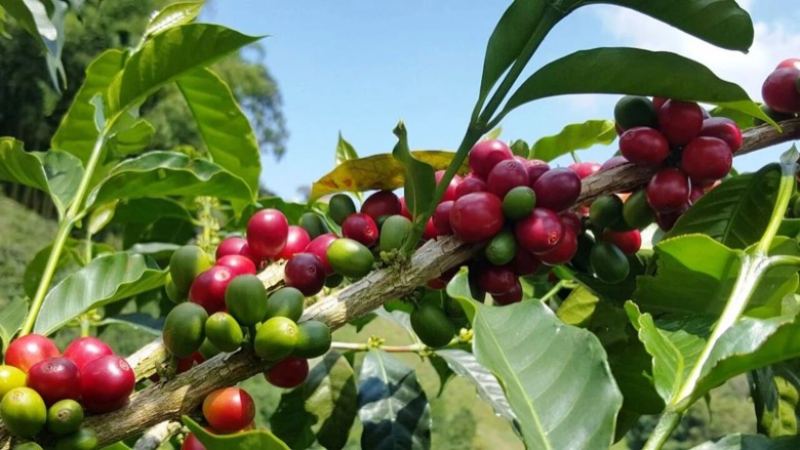
In the Arabica variety pedigree, Bourbon is one of the two ancient foundational varieties alongside Typica. It emerged from the ancient forests of Yemen, crossed the seas to settle on Réunion Island, and then spread to Brazil, Central America, and East Africa, evolving along the way into a series of branches with different colors—red, yellow, pink, and more. For enthusiasts, getting to know the Bourbon family is almost an essential path to understanding the specialty coffee variety landscape.
The Origins of Bourbon
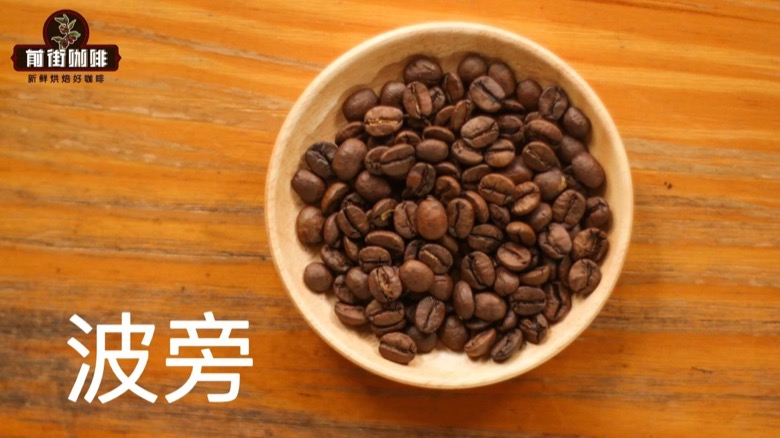
Bourbon originated from a Typica variant introduced from Yemen to Réunion Island (formerly known as Île Bourbon), and after centuries of isolated evolution, it developed into a stable genetic type. The Bourbon tree has a conical shape with branches growing diagonally upward, yields slightly more than Typica, and often shows more pronounced sweetness. Together with Typica, it forms the two main pillars of classic Arabica; many varieties on the market today, including Caturra, Pacas, and Mundo Novo, carry Bourbon blood. The common Typica in Yunnan is known for its clean balance—for example, Front Street Coffee's 2013 Yunnan Natural Typica, with interwoven citrus and caramel notes and nutty chocolate flavors after a medium-dark roast, offers a classic old-variety expression that contrasts with Bourbon's sweet richness.
Red Bourbon: The Classic Benchmark
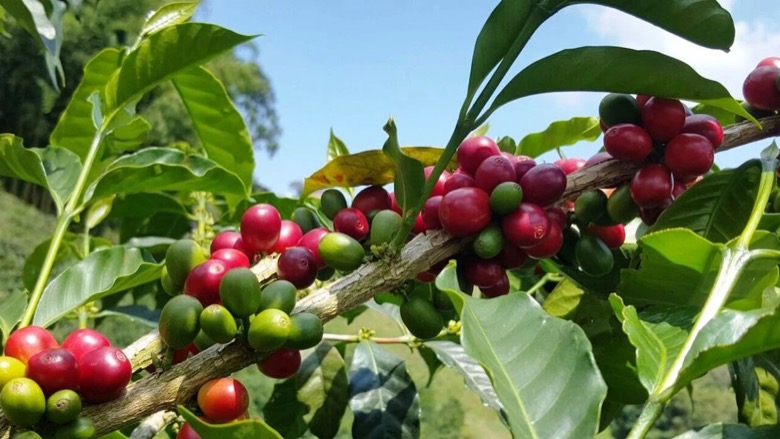
Red Bourbon is the most traditional form, with cherries turning from green to orange and then deep red as they ripen. Its flavor profile is balanced and easy to drink: solid sweetness, mild acidity, with caramel, red apple, and gentle fruity notes, and a round body. Bourbon in producing regions such as Brazil, Rwanda, and Burundi is mostly planted in the red form, forming the memory foundation of what many people consider the "classic coffee taste."
Yellow Bourbon: Brazil's Sweetness Representative
Yellow Bourbon cherries turn bright yellow when ripe, originating from a recessive gene mutation. Yellow fruits tend to accumulate sugar earlier and more fully, so Yellow Bourbon is known for its high sweetness, with a clean sweetness like sugarcane or honey on the palate and gentle acidity. It is a signature variety at many estates in Brazil, with cupping scores consistently impressive. Front Street Coffee's Brazil Queen Estate beans are known for their rich nutty and cocoa notes, pronounced caramel sweetness, and balanced smoothness, showcasing the solid sweetness foundation of Brazilian coffee regions.
Pink Bourbon: The Rising Star Variety
Pink Bourbon cherries ripen to a pink-orange color and have become a popular variety in Colombia and elsewhere in recent years. Research suggests it may be a natural hybrid descendant of Yellow Bourbon and an Ethiopian landrace, with a complex genetic background. Its cup profile is equally appealing: rich floral aromas, delicate fruit acidity, sweetness like peach jam, and a layering that ranks among the best in the Bourbon family. Due to limited yields and difficult management, Pink Bourbon is mostly found at small-batch specialty processing stations and is often hard to come by.
From red to yellow to pink, the Bourbon family uses fruits of different colors to express the many possibilities of the same sweetness gene. Next time you see "Bourbon" on a bean list, take note of its color prefix—in the same orchard, different branches can give your taste buds entirely different surprises.
The above content is compiled by CoffeeHunters, a coffee news website.