







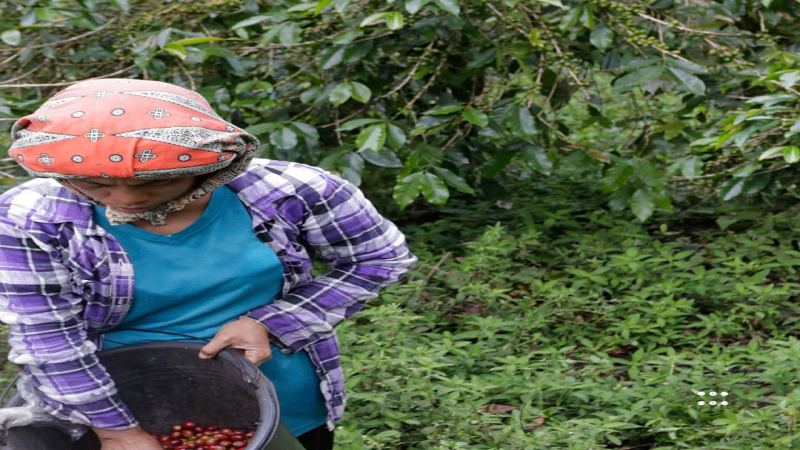
How did coffee cultivation develop on Java and across Indonesia?
Coffee cultivation in Indonesia began in the 17th century, when Dutch colonial authorities planted the first coffee trees near Batavia, present-day Jakarta. Floods destroyed that initial batch, but a second planting flowered and fruited. By the early 18th century, Dutch East India Company ships carried coffee loaded at Java ports to Europe, and the government later exported thousands of pounds of beans each year.
Early Indonesian coffee was entirely Arabica. In the 1860s, a large-scale outbreak of coffee leaf rust destroyed most of the country's coffee trees, and many farmers switched to Robusta, which resists disease and needs more extensive management. Today Robusta accounts for about 85 percent of national production while Arabica accounts for roughly 15 percent, which helps explain Indonesia's standing as the world's fourth-largest producer.
Indonesia is the world's fourth-largest coffee producer, made up of more than seventeen thousand islands, with coffee-growing regions divided by island. Java, as the country's earliest coffee-planting region, has a long coffee-growing history and exceptional natural conditions. This article will guide you through the origins and development of Indonesian coffee, outline the regional characteristics of major islands such as Sumatra and Java, and take a deeper look at Java's geographical environment, planting distribution, and main varieties, while also sharing information on the Indonesian Lintong Mandheling everyday beans recommended by Front Street Coffee.
Asia is vast, the largest and most densely populated continent in the world, with terrain high in the west and low in the east and elevated in the middle; mountains, plateaus, and hills account for more than three-quarters of its land area. This continent spans frigid, temperate, and tropical zones, with a wide variety of climate types, so many Asian countries have the conditions to grow coffee. Indonesia, known as the "Country of Ten Thousand Islands," is one of them.
Indonesia's coffee-growing history can be traced back to the 17th century. At that time, the Dutch colonial authorities planted the first coffee trees around Batavia (present-day Jakarta). Although these young plants were later destroyed by a flood, the second batch of seedlings flowered and fruited smoothly, taking root and multiplying on this land ever since.
Entering the early 18th century, merchant ships of the Dutch East India Company shipped coffee loaded at Java ports to the European market for the first time. After that, the Indonesian government exported thousands of pounds of coffee beans overseas every year. The coffee grown in Indonesia in the early period was entirely Arabica, but in the 1860s a large-scale outbreak of coffee leaf rust destroyed the vast majority of coffee trees in Indonesia. Forced by circumstances, many farmers switched to planting Robusta, which has stronger disease resistance and requires more extensive management, to replace Arabica. To this day, Robusta accounts for about 85% of Indonesia's total coffee production, while Arabica accounts for only 15%.
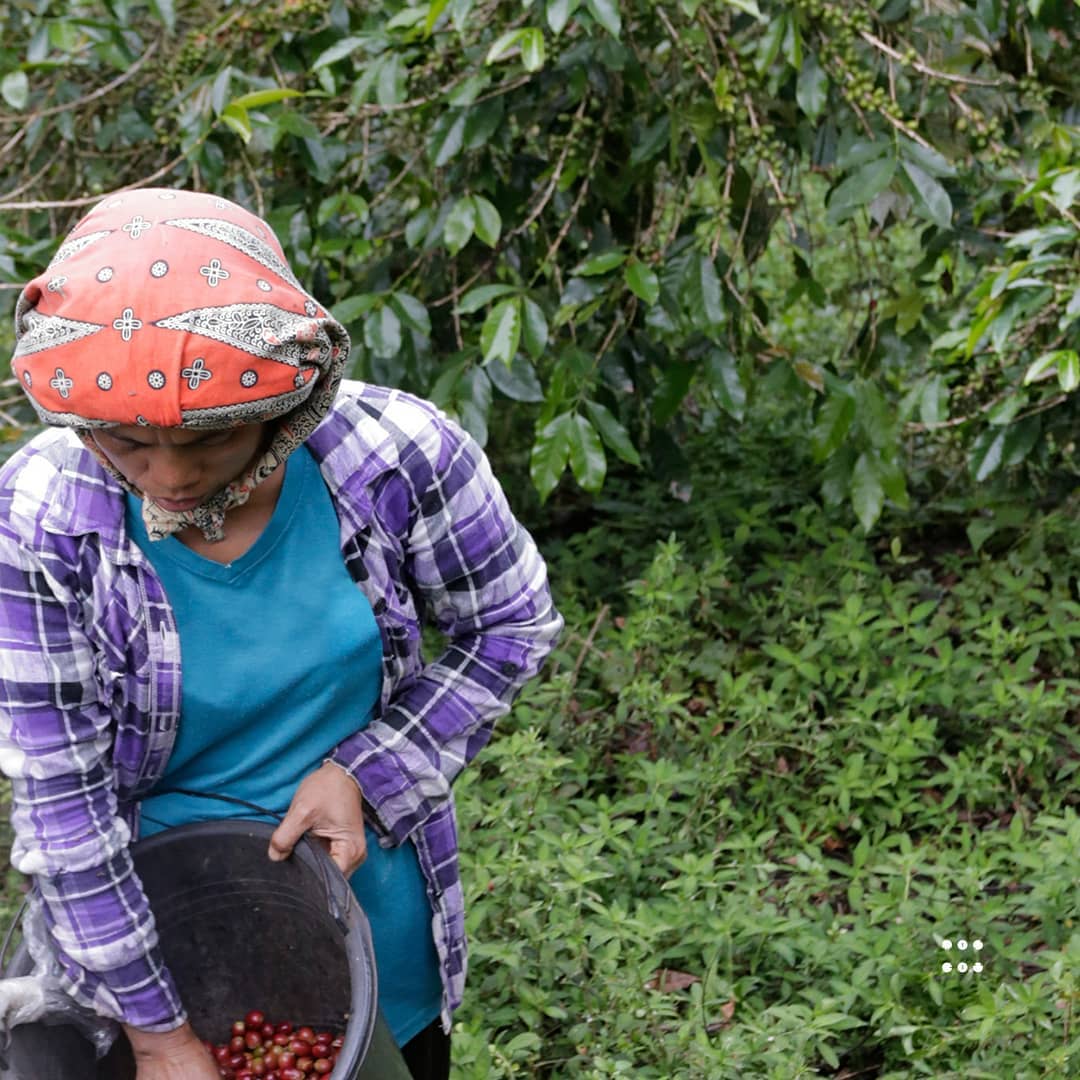
Indonesia's ability to rank as the world's fourth-largest coffee-producing country is inseparable from its abundant natural resources. This Southeast Asian country is made up of 17,508 islands, making it the archipelago country with the largest number of islands in the world, with territory spanning Asia and Oceania. The equator passes through it, giving it a tropical rainforest climate, warm and humid year-round, with average temperatures maintained between 25°C and 27°C, and divided by monsoon influence into a dry season and a wet season.
Indonesia has more than 500 volcanoes across its territory, abundant rivers, lakes, and forest resources, and a forest coverage rate as high as 67.8%, providing an ideal environment for coffee growth. At present, coffee is produced on many Indonesian islands, and producing regions are customarily divided by island, such as Sulawesi, Bali, Java, and Sumatra.
Sumatra is Indonesia's largest island and the island with the highest coffee production. It has a tropical rainforest climate, is hot and humid year-round, and coffee trees are usually planted in mountain forests. Coffee produced on Mount Gayo in the Aceh producing region can be called the best quality in all of Sumatra; most are ancient tree varieties, at elevations between 1,500 and 2,500 meters.
In addition to Aceh, the Lintong producing region is also famous for Mandheling coffee. The Lintong producing region is located by Lake Toba in Sumatra, with planting elevations between 1,400 and 1,800 meters. Although the quality of Lintong coffee beans is slightly inferior to that of Mount Gayo, thanks to the region's unique wet-hulling process, the flavor shows low acidity and high body. Front Street considers Lintong Mandheling to be a basic version of Mandheling coffee, and therefore selected Mandheling from Lintong as the Indonesian everyday bean to launch. Consumers can get it at the most affordable price and experience the flavor characteristics of this producing region.
Front Street Coffee: Indonesia Lintong Mandheling Coffee Beans
Region: Sumatra, Indonesia
Grade: G1
Altitude: 1100m—1600m
Variety: Ateng TimTim
Processing Method: Wet-Hulled
Flavor: Nuts, Spices, Chocolate, Caramel
Java lies south of the equator and is the fifth-largest island in Indonesia. The island is long and narrow in shape, with terrain dominated by mountains and hills, broad basins distributed among the mountains, crisscrossing rivers, and more than 100 volcanoes; volcanic ash has created fertile soil and superior natural conditions. Java remains a developed agricultural region to this day, with a land cultivation rate as high as 70%, and it is also the place where coffee was first planted in Indonesia.
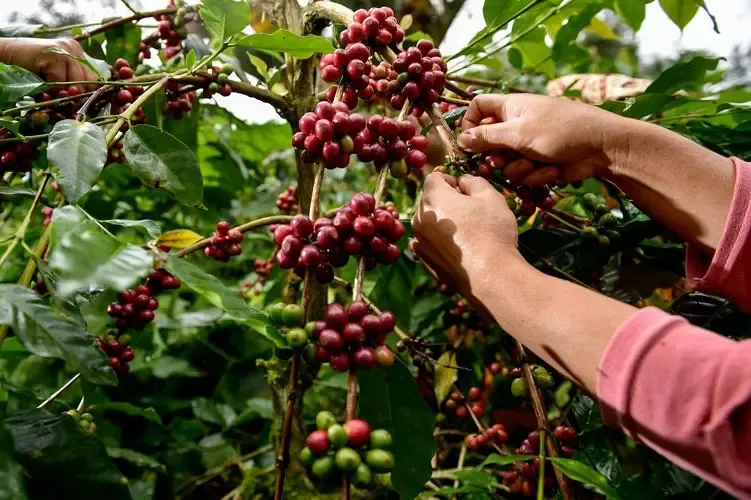
Java consists of West Java, Central Java, East Java, the former capital of Greater Jakarta (which moved to the new capital Nusantara in 2024), and the two special regions of Yogyakarta. Coffee planting is spread across the entire island: planting in West Java is concentrated in the Preanger region; in Central Java it is distributed in Banjar Negara, Wonosobo, and Temanggung, all three of which surround Mount Merapi; East Java is Java's largest and most important producing region, with coffee farms mainly distributed around Mount Bromo and Mount Ijen.
Coffee planting on Java is at elevations between 900 and 1,800 meters. The varieties grown on the island are quite rich, including Typica, Tim Tim, Ateng (the local name for Catimor), and USDA 762, among others.
The above content is compiled by CoffeeHunters, a coffee news website.


