







Why Does Coffee Extraction Leave Pour-Over Sharply Sour?
Sharp, jarring acidity in home pour-over points to unbalanced coffee extraction rather than too much acid. Coffee flavor comes from acidity, sweetness, and bitterness; acidic compounds dissolve first and fast, while sweet and bitter compounds are released more slowly, so the acidity stands out when extraction stops too early.
Raising extraction efficiency brings out more sweetness and bitterness, softening the sour note. Three adjustments work: lower the coffee-to-water ratio, extend the extraction time, and increase the water temperature. Acidic substances dissolve most easily and peak early, so slowing the brew lets the slower compounds catch up.
Many coffee enthusiasts find that the pour-over coffee they drink in cafes has a balanced sweet-and-sour taste, yet when they brew it at home, it often comes out with a sharp, jarring high acidity that is puzzling. In fact, the flavor of coffee depends on the proportions of three types of substances: acidity, sweetness, and bitterness. Sharp acidity is often a sign of imbalance—it may not necessarily mean there is too much acidic substance, but rather that not enough sweet and bitter substances have been released. Front Street Coffee will delve into the principles behind sharp acidity and provide specific, actionable adjustment plans from three directions: lowering the coffee-to-water ratio, extending the extraction time, and increasing the water temperature, to help you brew a smooth and mellow pour-over coffee at home.
However, many friends quickly discover that the coffee they brew at home lacks the sweet-and-sour taste they get in cafes, instead presenting a sharp, jarring high acidity that is uncomfortably sour. This leaves them very puzzled: why does the coffee come out so sour?
Today, Front Street will discuss the reasons behind the sharp acidity in brewed coffee.
Why is pour-over coffee so sour?
The principle is actually not complicated: the coffee flavor we taste is mainly formed by the different proportions of three types of substances: acidity, sweetness, and bitterness. When we drink a very sour coffee, it indicates that the flavors are already imbalanced. This does not necessarily mean there is too much acidic substance; it could also be that there is too little sweet and bitter substance, causing the acidity to stand out prominently.
Therefore, to make the brewed coffee less sour, you can increase the release of sweet and bitter substances during extraction, reducing the proportion of acidic substances in the coffee, so the acidity becomes milder. To achieve this, the key is to improve the "extraction efficiency."
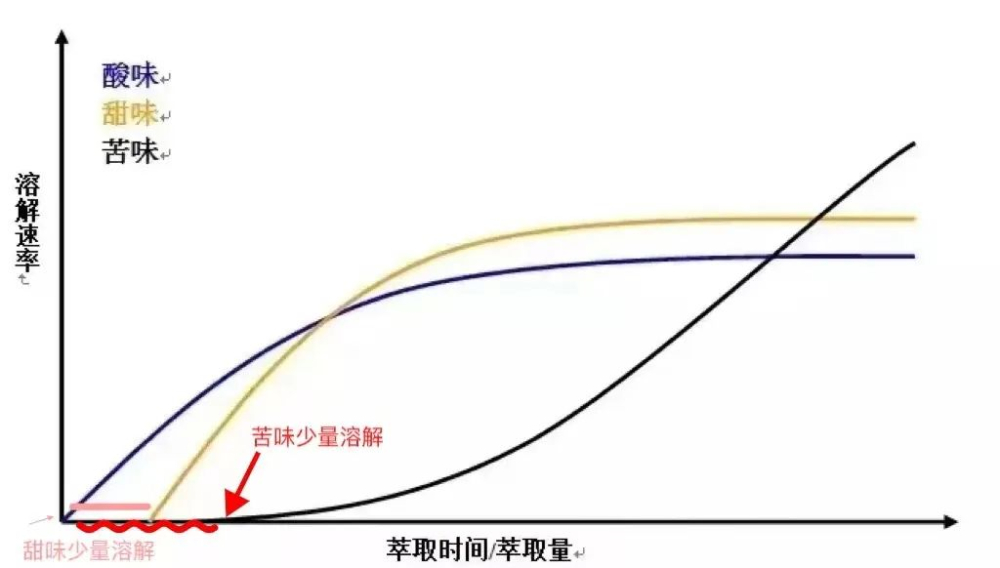
The acidic, sweet, and bitter substances in coffee have different molecular sizes, so their dissolution rates vary. Acidic substances dissolve most easily and are released in large amounts right at the beginning of extraction. At the same time, sweet and bitter substances are also dissolving, but at a much slower rate than acidic substances, so they are released in smaller amounts initially and gradually increase as extraction progresses—first the sweet substances, then the bitter ones.
Since bitter substances are not appealing and can mask other flavors if present in excess, the ideal extraction ends before a large amount of bitter substances is released, keeping the proportion of bitterness in the coffee very low. This way, the coffee has a rich body without being overly bitter, and the acidity is also softened. To achieve this effect, adjustments need to be made based on the taste of the coffee. There are three adjustment directions to choose from:
1. Lower the coffee-to-water ratio
When the coffee has a sharp acidity and is also very strong in taste, this method is suitable. This indicates that the coffee is not only high in acidity but also high in concentration.
This situation may be due to too little hot water being poured, resulting in the water being unable to extract the later substances or provide sufficient "space" for the coffee substances to develop, thus making the acidity prominent and the concentration high. In this case, you can solve it by lowering the coffee-to-water ratio.
Increasing the amount of water poured can both extend the extraction time and dilute the concentration. More sweet and bitter substances are dissolved, thus softening the acidity and making the coffee more palatable.
2. Extend the extraction time
But if the coffee is very sour yet not high in concentration and tastes weak, it means under-extraction, and you need to increase the extraction rate to bring out more flavor substances from the coffee. In this case, extending the extraction time is a good solution.
There are three ways to extend the extraction time. First, change the dripper: replace a fast-flow dripper with a slow-flow one, such as Kono or infinite drippers, which greatly slows down the water flow and gives the hot water more extraction time.
If you are already using such a dripper and the flow is still fast, you can adjust the grind to be finer, increasing the density of the gaps between particles and making it harder for water to pass through, thus effectively extending the extraction time.
Finally, pour water in multiple stages. With the same amount of water, the extraction time varies depending on the pouring technique and number of stages. The more stages, the longer the time. But high returns often come with high risks; too long an extraction time can easily lead to over-extraction, so it's best to pay attention to the compatibility of parameters when staging and find the most suitable number of stages for brewing.
(This also applies to adjusting the grind finer)
3. Increase the water temperature
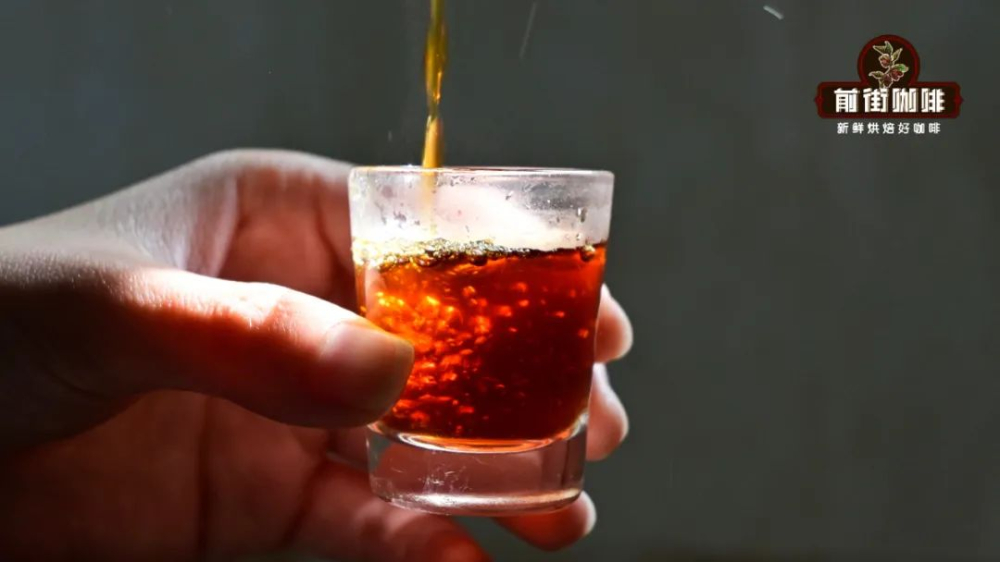
If the above steps cannot be further adjusted, you can achieve the goal by increasing the water temperature. As the solvent for coffee, the temperature of the water determines the strength of the dissolution efficiency: the higher the water temperature, the stronger the extraction efficiency.
Generally, Front Street brews light-roasted beans at a water temperature of 90–92°C. When this temperature cannot extract enough coffee substances, Front Street will try increasing it by 2–3°C to give the hot water higher extraction efficiency and extract more substances in a short time. But also note that "high returns come with high risks"; too high a water temperature can easily lead to instant over-extraction, so try not to let the water temperature exceed 94°C, so that the coffee extraction is better controlled.
The above content is compiled by CoffeeHunters, a coffee news website.


