








How does a milk pitcher shape your coffee milk ratio?
When latte art practice stalls despite steady technique, the milk pitcher is often the cause. Pitchers differ in capacity, spout shape and guide groove design, and those differences change how milk foam leaves the spout. A wider spout releases more foam; a narrower one releases less, which alters the thickness of the white lines drawn on the surface. Matching the pitcher to the intended coffee milk ratio makes patterns easier to control.
The guide groove and spout profile also affect how steadily the foam is delivered, so pointed and round spouts suit different designs. Front Street Coffee's practical breakdown covers these variables and walks through an etched tulip step by step. For beginners, testing a pitcher against the planned latte milk ratio before buying avoids months of fighting resistance that comes from the tool, not the hand.
Many people feel restricted in their movements when practicing latte art, and the patterns are difficult to achieve the desired effect. If technical factors are ruled out, the problem is likely with the milk pitcher itself. On the market, milk pitchers vary in capacity, spout shape, and guide groove design. These differences not only affect appearance but also directly relate to the flow of milk foam and the thickness of lines. Based on Front Street Coffee's practical experience, this article provides a detailed analysis of how the width of the spout and the guide groove affect latte art, compares the actual performance of pointed and round spouts, and includes step-by-step instructions for making a patterned tulip, helping coffee enthusiasts choose the right tool and achieve twice the result with half the effort.
Have you ever encountered this confusion while practicing latte art: no matter how much you practice repeatedly, every time you try to create a pattern, you feel an invisible resistance that prevents you from smoothly drawing the pattern you envision. If there are no issues at the technical level, then it is very likely that the milk pitcher you are using does not match your current milk coffee preparation.
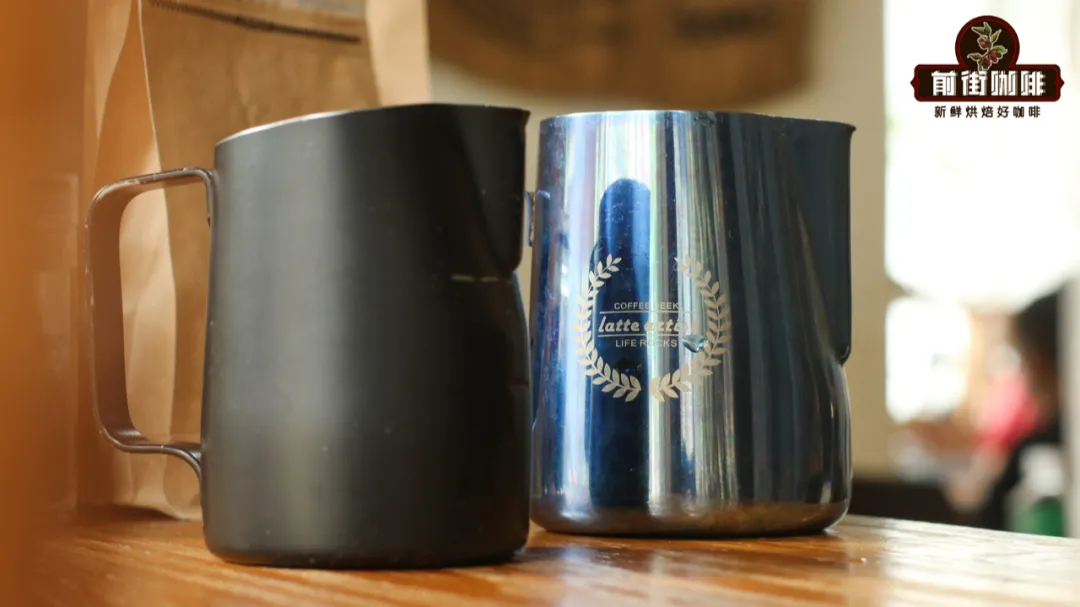
Looking at the market, milk pitchers come in a wide variety of styles, with differences in capacity, spout shape, and guide groove design. These design differences are not only reflected in appearance but also have vastly different effects on latte art creation. Therefore, for beginners, choosing the right milk pitcher is particularly important. Today, Front Street Coffee will discuss how different designs of milk pitchers each bring about different effects, making it easier for everyone to pick the one that truly suits them, practice more efficiently, and master the target patterns as soon as possible.
Spout and Guide Groove
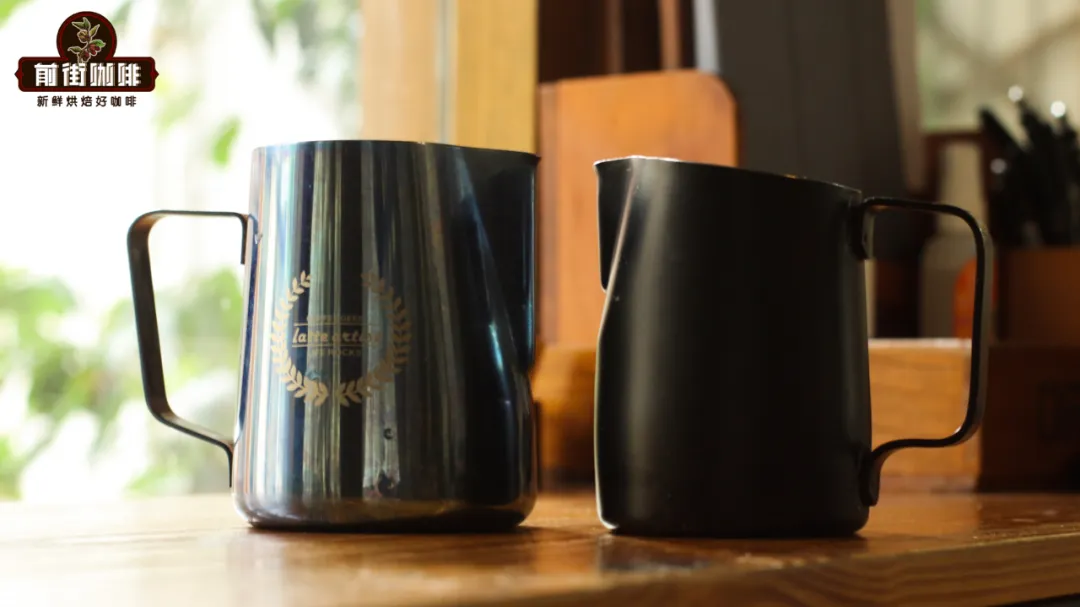
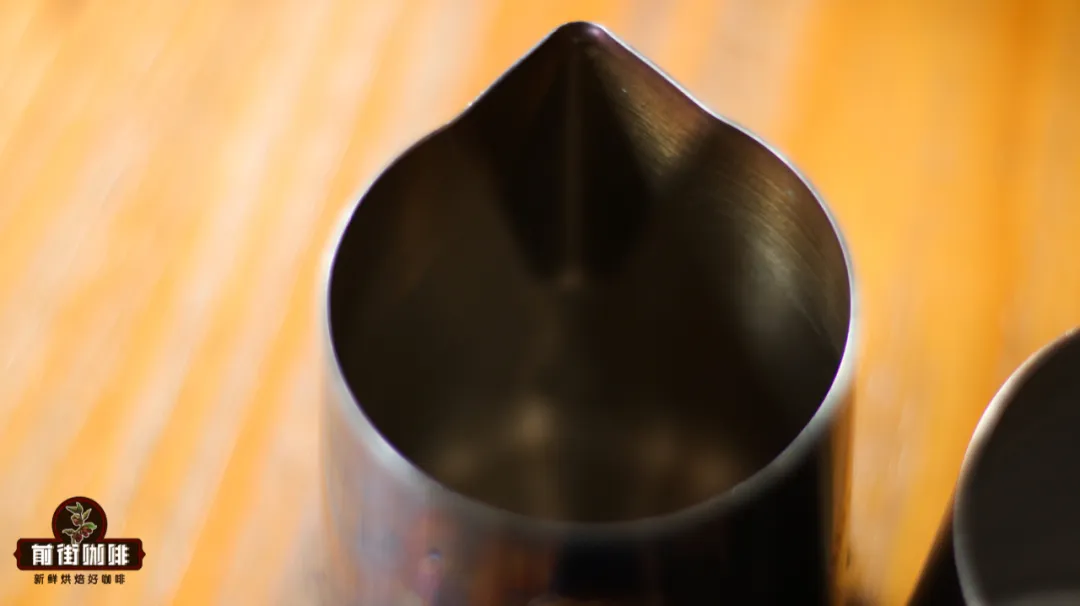
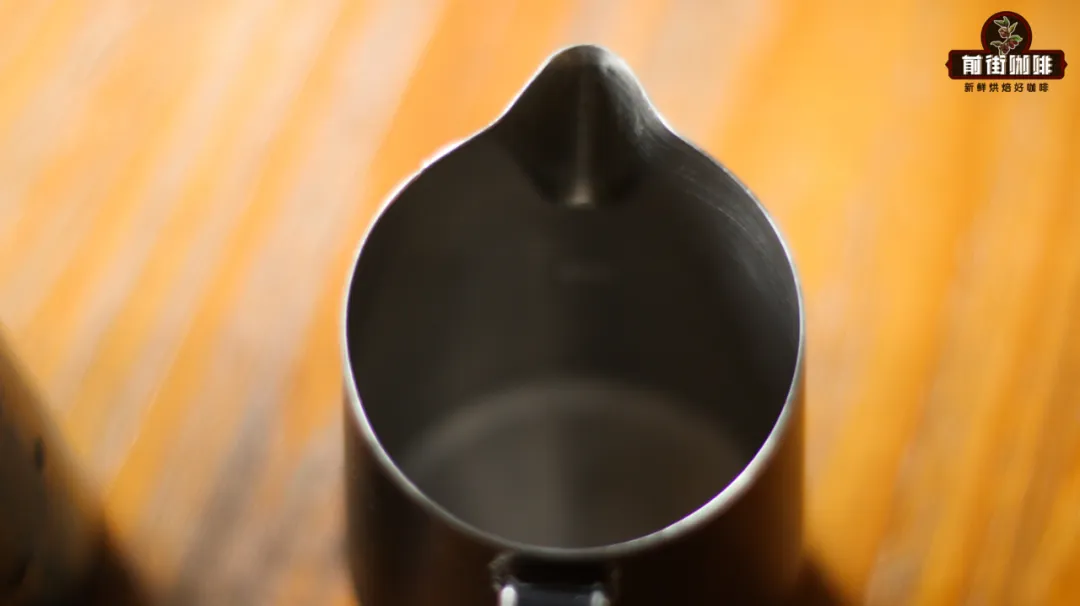
Let's first talk about the spout, as its design is crucial for latte art creation. So-called latte art involves using milk foam to trace white lines on the surface of the coffee liquid, and the milk foam is delivered to the surface through the spout. Therefore, any subtle change in the spout will affect the state of the poured milk foam. The wider the spout, the more milk foam flows out; the narrower the spout, the less milk foam flows out, and the thickness of the final white lines will change accordingly (of course, manual control cannot be ignored either).

The above content is compiled by CoffeeHunters, a coffee news website.


