








What causes cappuccino foam to bleed into latte art?
Blurred latte art often comes from the milk and foam, not the pour. When steamed milk sits too long, the cappuccino foam separates from the liquid, loses fluidity and spreads the moment it meets the crema. The effect shows most in the second half of a pattern, when a large block of foam is poured.
Three factors drive the problem: foam separating from milk, the characteristics of the coffee beans and milk used, and water added by steam during steaming. Soy milk behaves differently from dairy, and its composition changes how foam holds. Adjusting the latte coffee milk ratio and steaming fresh milk for each drink limits the separation.
If your latte art patterns aren't clear or attractive enough, the problem may not lie in your technique—the properties of your ingredients and the state of your milk foam play just as decisive a role. Many coffee enthusiasts run into the issue of milk foam bleeding and spreading once it touches the crema when making lattes, flat whites, or cappuccinos, and it becomes especially noticeable in the latter half of pattern drawing. Front Street Coffee will break down the causes of this phenomenon from three angles—separation of milk foam from milk, the inherent characteristics of coffee beans and milk, and the water introduced by steam during steaming—and offer corresponding improvement strategies to help you create latte art with crisp lines and clear layers.
To be honest, the reason our latte art patterns don't turn out ideal often isn't down to poor technique—it's that various tricky issues are secretly at play, preventing us from producing a satisfying design! Take, for example, the problem of overly hard crema that Front Street mentioned in the previous article.
Of course, that's far from the only factor affecting latte art pouring. This time, Front Street wants to talk about another situation that has long plagued many enthusiasts: foamed milk that comes out muddy.
While making latte art, we occasionally see the milk foam spread outward the moment it touches the crema. This typically happens in the latter half of pattern drawing, and if that's exactly when you need to pour a large amount of milk foam to lay down a big block of the design, then congratulations—you've just created a piece of latte art with a "hazy beauty."

The vast majority of "art" is hard for the general public to appreciate—like this one! So we need to trace the problem back to its source. So why exactly does this bleeding phenomenon happen?
1. Separation of milk foam and milk
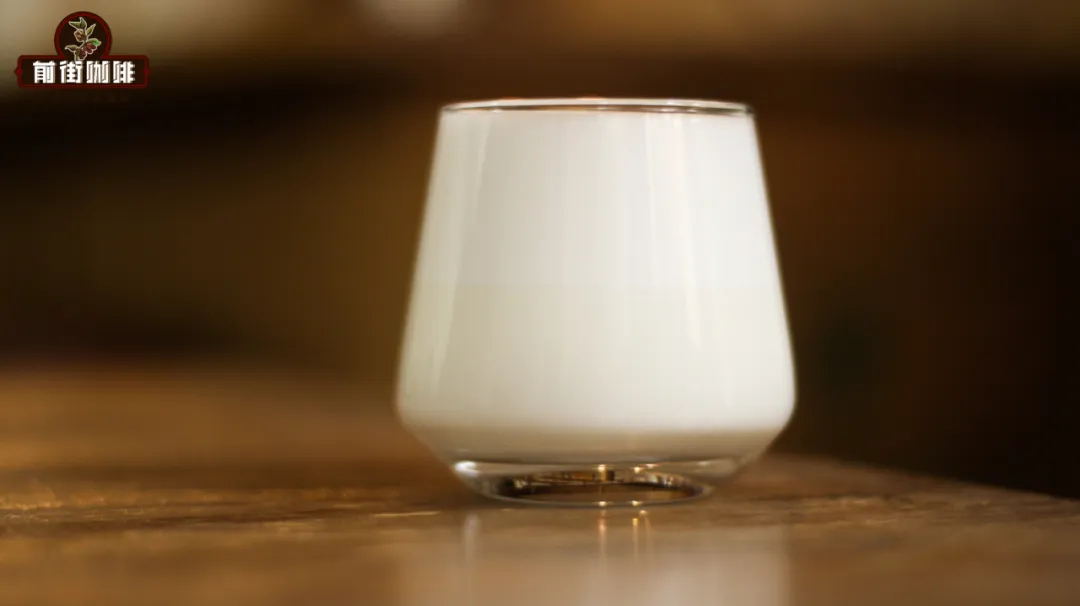
As Front Street mentioned earlier, this phenomenon is most common in the latter half of latte art. The reason is that after sitting for too long, the milk foam separates from the milk! Just like the case with overly hard crema, once separated, the milk foam can no longer be carried along by the milk, and its fluidity drops dramatically. (For example, in the image below, the dividing line between the milk and the milk foam is very clear.)
If you use it directly for latte art at this point, what first flows out of the pitcher isn't the milk foam but the milk—the foam comes after. The foam is dragged out by the momentum of the flowing milk and has no impact force of its own, and milk foam lacking impact force can't merge with the crema; it can only sit on the surface and then bleed outward.
When this happens, we can give the milk foam and milk in the pitcher a good swirl (or transfer between pitchers) to recombine them evenly, which significantly reduces the likelihood of muddy latte art.
2. Caused by the inherent characteristics of the coffee beans or the milk itself
When the coffee beans we use contain more acidic substances, the milk foam also tends to bleed across the surface of the crema! That's right—we're talking about lightly roasted beans.
Acidic substances break down the protein structure in milk, and milk foam is mainly made up of proteins and fats wrapping around gas! So when they meet lightly roasted coffee rich in acidic substances, the latte art easily turns muddy.

Beyond coffee beans, certain kinds of milk also develop similar problems after steaming! Because their fat or protein content is either too high or too low, the bubble's supporting barrier is too thin to hold its shape for long! Once it touches the crema, or the fine grounds hidden in the crema, it quickly ruptures, atomizes, and spreads.
3. Too much water from the milk mixed in during steaming
The steam we use for steaming is itself water in gaseous form, so it's essentially injecting water into the milk! When too much water is injected, the milk gets diluted. While this makes the whole batch of milk foam more fluid and allows you to pour finer lines, the dilution shortens how long the proteins and fats can sustain the bubbles. If you don't use it promptly, the barrier supporting the bubbles quickly breaks down, and then the moment it touches the surface of the crema, the bubbles burst and bleed outward.
The above content is compiled by CoffeeHunters, a coffee news website.


