







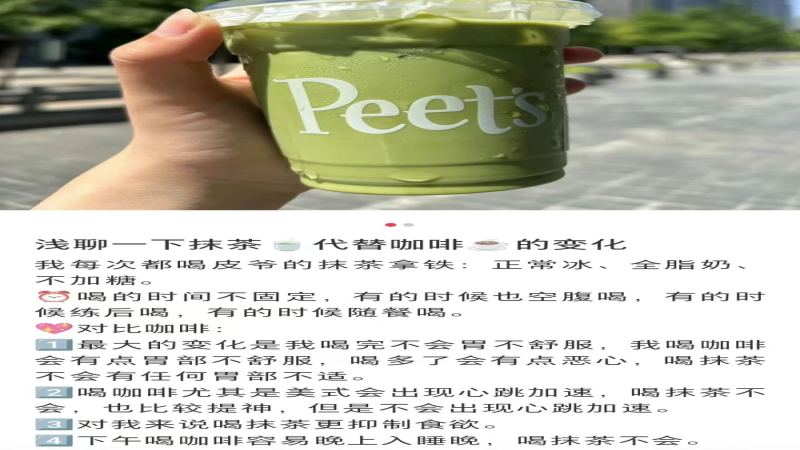
Is latte bitter, and does a matcha latte really suppress appetite?
Peet's matcha latte drew attention online when drinkers nicknamed it a weight-loss miracle, saying it suppresses appetite. Reactions vary: some report no hunger for a full day, while others feel ravenous afterward or get nausea. The drink's high matcha concentration, often ordered unsweetened with an extra shot, is central to the debate.
Matcha fans also argue the drink beats coffee on comfort, claiming it refreshes without the stomach upset or racing heart associated with a latte. That comparison matters because bitterness in coffee drinks, a frequent complaint among latte drinkers, shapes how people pick between the two. Consumer experiences remain split, so claims about appetite and health deserve caution.
As summer arrives, a touch of fresh green has become the drink of choice for many young people, and major brands have seized the trend to launch matcha products. Amid this craze, Peet's matcha latte unexpectedly went viral for its rich flavor, earning the nickname "weight-loss miracle" from many matcha lovers, who say it effectively suppresses appetite. Yet real consumer feedback has polarized: some feel no hunger all day, while others find themselves ravenous after drinking it, or even experience nausea and queasiness. Does matcha really suppress appetite? Is drinking it in high concentrations truly healthy? This article examines the ingredients, consumer experiences, and health risks from multiple angles to help coffee and matcha lovers view this internet-famous drink rationally.
▲
Click to follow | Daily specialty coffee culture magazine Coffee Workshop
As midsummer sets in, visually refreshing and healthy green drinks have quickly become young people's new favorite, and major brands have seized the moment to roll out all kinds of matcha products one after another. This has delighted matcha fans, who have rushed to try every matcha drink available on the market.
Among the many products, the matcha latte launched by Peet's, long known as the "grandfather of coffee," stands out for its relatively high matcha concentration, and many matcha enthusiasts have taken to social media to promote it. Some, drawing on their own experience, list several advantages matcha has over coffee: coffee tends to upset the stomach, while matcha does not; matcha is just as refreshing but does not make your heart race the way coffee does; and drinking matcha is even better at suppressing appetite...
Among these claims, "appetite suppression" immediately caught the attention of people trying to lose weight. Picking up on this from bloggers' posts, they figured they might use it to slim down effortlessly, and were instantly tempted. So many placed orders to try it, with some consumers specifically requesting no sugar and an extra shot of matcha, just to get a cup of this "weight-loss weapon" with an extra-strong tea flavor.
As for the actual effects, some netizens reported: "My appetite still hadn't come back the next day after drinking it," "Peet's hot version really is delicious, rich without being bitter, and after drinking it I don't want to eat anything all day," "Every time I drink it I basically can't eat anything, my appetite is completely crushed," "I drank it in the afternoon and had no appetite for dinner at all."
However, not every taster experiences a feeling of fullness; a few said that after finishing a whole matcha latte, their appetite actually increased. And some found that their bodies reacted poorly after drinking it.
Dieters had originally planned to replace coffee with matcha lattes to suppress appetite and cut down on how much they ate, but never imagined that one cup would send them straight to the point of nausea, making them wonder whether this matcha latte really has all the effects the bloggers claim.
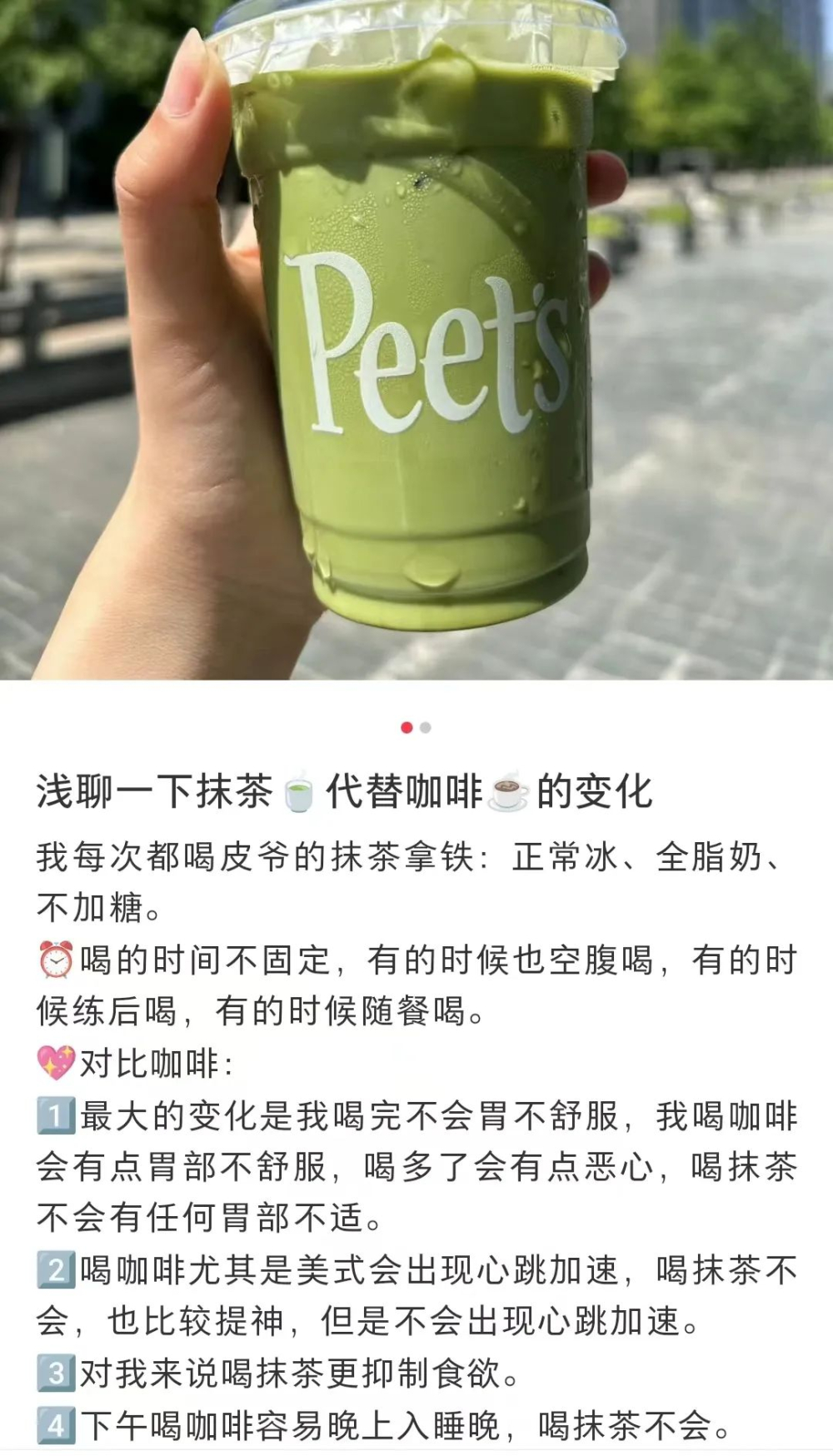
In fact, matcha is rich in natural antioxidants, including theanine, tea polyphenols, caffeine, and various other active substances, which can bring benefits such as antioxidant, anti-inflammatory, and anti-cancer effects, as well as lowering blood lipids and blood sugar—but it has no clearly established fat-reducing effect. As for suppressing appetite and boosting metabolism, these effects vary from person to person and may not work for every drinker.
In addition, although matcha is rich in healthy compounds, its caffeine content is higher than that of regular green tea and also higher than that of coffee beans. Therefore, people sensitive to caffeine may experience a racing heart, insomnia, and other reactions after drinking a standard matcha latte.
And those who deliberately increase the matcha concentration in pursuit of appetite suppression, if they have sensitive stomachs, may experience nausea and queasiness from taking in too much caffeine in a short period. Although their appetite is indeed suppressed, their body suffers as a result—truly not worth the cost.
Image source: Internet
Disclaimer: Some images in this article are from the internet, and for some content on the site, such as images, we will respect the original creator's copyright and cite the source. However, due to the large volume, a few images and texts may not have been credited in time; please forgive us. If the original creator has any dispute, they may contact the site to resolve it, and once verified we will correct it immediately. Compiled and edited by "Coffee Workshop"; please indicate the source when reposting. If there is any infringement, please let us know and we will delete it. Thank you~!
The above content is compiled by CoffeeHunters, a coffee news website.


