








Where do fines come from in the process of coffee beans?
Fine particles in pour-over coffee do not need to be sifted out in most cases. Sifting is only worth considering when fines actually clog the brew and push it toward bitterness, astringency, and burnt notes. Fines also contribute positive flavor and body, so removing them entirely can strip the cup of qualities the brewer wants.
Regular grounds sit around 0.6 to 0.8 mm, while fines measure below 0.25 mm and feel close to flour. They form when beans collide during grinding, much like glass shattering into fragments. Darker roasts and brittle beans produce more fines, which links grinder quality and the size of a coffee bean to how much fine material ends up in the dose.
In the practice of pour-over coffee, fines are often seen as the culprit behind clogging and bitterness, leading many to develop the habit of sifting before brewing. However, do fines really only have negative effects? From the perspective of Front Street, this article systematically sorts out the definition of fines, their generation mechanisms, and their actual contribution to flavor, explaining why in most cases it is unnecessary to completely sift out fines, and under what conditions sifting should be considered. At the same time, the article also explores the relationship between coffee bean brittleness, grinder quality, and the amount of fines, helping readers build a more complete understanding of extraction.

The reason "choking" is widely recognized as an effective means of avoiding bitterness is inextricably linked to the presence of fines. During brewing, once fines cause clogging, if choking measures are not taken in time, unpleasant flavors such as bitterness, astringency, and burnt bitterness will emerge one after another, becoming demerits in the coffee and delivering a considerable impact on the drinker's taste and psychology. For this reason, many people, after being repeatedly troubled by fines, have developed the habit of sifting before brewing.
However, Front Street does not advocate unconditionally sifting out fines in all circumstances. Although fines can indeed cause clogging, this is only a probability event. In most cases, fines actually bring positive benefits to coffee.
So what exactly are fines? Generally speaking, the particle size of the coffee grounds we grind mostly falls within the range of 0.6–0.8 mm, which is the normal grinding value. The powder produced during grinding with a particle size smaller than 0.25 mm is what we call fines. The texture of these fines is close to flour, and if they are not clustered together, they are difficult to detect with the naked eye.

How are fines produced? They mainly come from collisions that occur when coffee beans are ground. Imagine a piece of glass falling from a height to the ground: besides larger fragments, many tiny shards will also scatter. The same principle applies to coffee beans.
Coffee beans will show different brittleness after roasting depending on density and roast level. The darker the roast, the higher the brittleness, and beans with higher brittleness are more likely to produce extremely fine powder, because like glass, they are more likely to shatter under impact. Therefore, such beans often require a coarser grind, not only because they are themselves easy to extract, but also to reduce the amount of fines.
In addition to bean brittleness, the quality of the grinder is also a key factor determining the amount of fines. No matter which coffee blogger is discussing the ranking of what matters most for brewing a good cup of coffee, aside from the beans themselves, the grinder is always placed in the most important position. The higher the quality of the grinder, the more uniform the particles it grinds, and the fewer the fines accordingly, and vice versa.
But it must be understood that a high-quality grinder does not mean it will not produce fines, because as mentioned earlier, the generation of fines is affected by coffee bean brittleness. No matter the price or quality of the grinder, the coffee grounds it produces cannot be absolutely uniform. The differences between grinders are mainly reflected in grinding uniformity and the burrs used (for details, please refer to previous articles from Front Street).
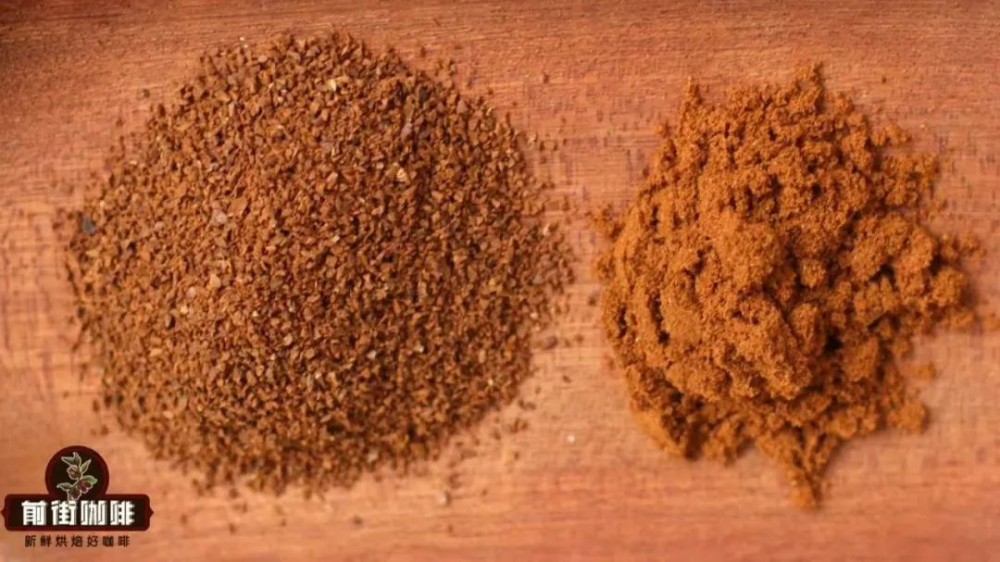
Why can't fines be completely removed? Because the presence of fines allows coffee to have a richer layering. As is well known, to make a delicious and richly layered cup of coffee, the first requirement is uniform extraction. But the uniform extraction mentioned here may not be quite the same as what everyone usually understands. Most people, when thinking of uniform extraction, believe it means every coffee particle achieves the same extraction rate, but in reality this is not the case.
As mentioned earlier, the particles produced by a grinder are not absolutely uniform; there are large particles and small particles. Therefore, under the same extraction efficiency, the proportion of flavor substances they release differs. Coarser particles have fewer substances extracted, while finer particles have more substances extracted.
The three tastes of acidity, sweetness, and bitterness are released in large amounts at different stages due to differences in molecular size. Acidic and sweet substances are released concentratedly in the early stage, while bitter substances are released a bit later (though all three are being released throughout the process). Because of this, affected by particle size, the proportion of flavors released by each coffee particle differs. Particles that are extracted less release more acidic and sweet substances, while particles that are extracted more release more bitter substances. It is precisely these differences in the amounts of substances that together construct a richly layered cup of coffee.
But if all fines are sifted out, although each coffee particle may achieve very uniform extraction, it also means the coffee lacks part of its bitter substances. Coffee lacking bitter substances will not have much layering, since acidity, sweetness, and bitterness exist in mutual balance.
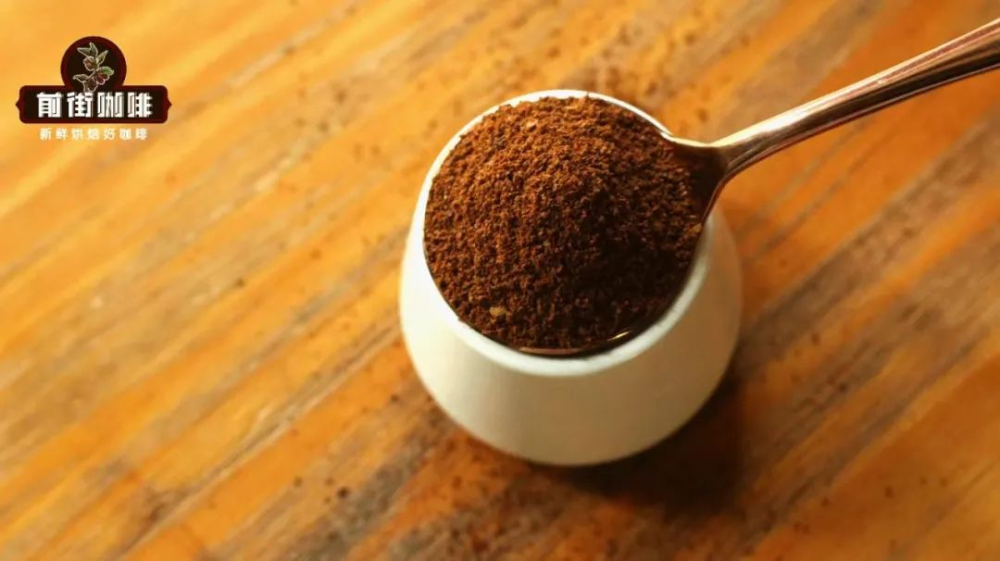
Therefore, Front Street does not recommend sifting out fines at all times, because this weakens the layering of the coffee. Only when the grinder quality is inadequate, causing excessive fines (more than 10% of the total grounds) and leading to clogging or a muddy bed, do we need to sift out these fines.
The above content is compiled by CoffeeHunters, a coffee news website.


