







Can espresso beans be used for pour-over coffee blending?
Yes, espresso beans can be brewed as pour-over, and single-origin beans can be pulled as espresso. The distinction comes from extraction: single-origin beans highlight a clear origin flavor and are mostly light-roasted, while espresso beans are largely blends roasted darker for stability and richness. The two also differ in grind size, brewing parameters and sales specifications.
Single-origin means beans from one origin, variety or lot, a concept tied to specialty coffee since Erna Knutsen proposed the term in 1978. Their packaging usually lists variety, growing region, processing method and altitude, and they suit pour-over, siphon and AeroPress. Blending coffee beans for espresso instead pursues consistency, so switching a blend to filter calls for grind and parameter adjustments.
Front Street often receives questions like these: Can dark-roasted espresso beans be used for pour-over? What exactly is the difference between single-origin beans and blend beans? In fact, the extraction method determines a coffee bean's positioning and roasting direction. Single-origin beans emphasize a clear expression of origin flavors and are mostly light-roasted; espresso beans are mainly blends, roasted on the darker side, pursuing stability and richness. The two also differ noticeably in grinding, parameters, and sales specifications. This article will, from Front Street's perspective, sort out the core differences between single-origin beans and espresso beans, and address the adjustments needed when using espresso beans for pour-over.
Front Street has noticed that many coffee enthusiasts always come up with some rather "unconventional" ideas, such as the previously discussed "Can single-origin beans be used to make espresso?" or "Can espresso beans be used for pour-over?" The experiment of making espresso with single-origin beans has already proven feasible, so conversely, what about using espresso beans to make single-origin coffee...
The answer is likewise yes! The fundamental reason for distinguishing the two is that the extraction methods differ, leading to different emphases in the requirements for the beans. To enable coffee beans to display a more ideal state under a specific extraction method, it is necessary to tailor corresponding characteristics for that method.
Next, Front Street will discuss exactly what differences exist between espresso beans and single-origin beans!
What are single-origin beans?
Let's start with single-origin beans. They refer to coffee beans from the same origin, the same variety, or the same lot. Since Ms. Erna Knutsen proposed the concept of specialty coffee in 1978, the coffee industry began to value quality, and the coffee beans produced since then have gradually improved in quality, with more distinct flavor expression and cleaner taste.
This kind of coffee bean from a single origin is what we call "single-origin coffee beans," or single-origin beans for short.
From the packaging of single-origin beans, we can clearly trace their source information: variety, growing region, processing method, altitude, and so on. These beans are mainly used to make single-origin coffee, such as pour-over, siphon, AeroPress, etc., because these extraction methods better present the beans' own flavors.
At the same time, in order to fully display their flavor attributes, single-origin beans used for single-origin coffee usually adopt a lighter roast level (compared with espresso), so that floral and fruity notes have a better expressive power.
(Of course there are exceptions—classic beans like Blue Mountain and Mandheling are not included here.)
What are espresso beans?
Now let's look at espresso beans. Espresso beans are mainly blends. A so-called blend is combining multiple coffee beans from different origins, using each one's strengths to make up for the others' shortcomings (blending also involves other considerations; for details, please refer to "The Underlying Logic of Coffee Blending"), so that the final coffee maintains stability in taste, mouthfeel, and aroma. Espresso blends also differ in the quality of the coffee beans used depending on the direction they pursue.
(For example, blends focused on cost-effectiveness will use commodity-grade beans; while blends that emphasize quality will use high-quality single-origin beans for blending, achieving an even better result among the best.)
Generally speaking, the beans used for espresso coffee are roasted to a level between medium and medium-dark or darker, because espresso coffee is not only used to make black coffee but also used for lattes, flat whites, mochas, and other fancy coffees. If roasted too light, not only will there be less crema, but the coffee's own flavor is also easily masked by milk. Therefore, espresso beans are generally roasted somewhat darker. Even SOE is no exception—even if it is the same single-origin bean, once it is set to be used for espresso, the roaster will slightly deepen its roast level so that it performs better under extraction by an espresso machine.
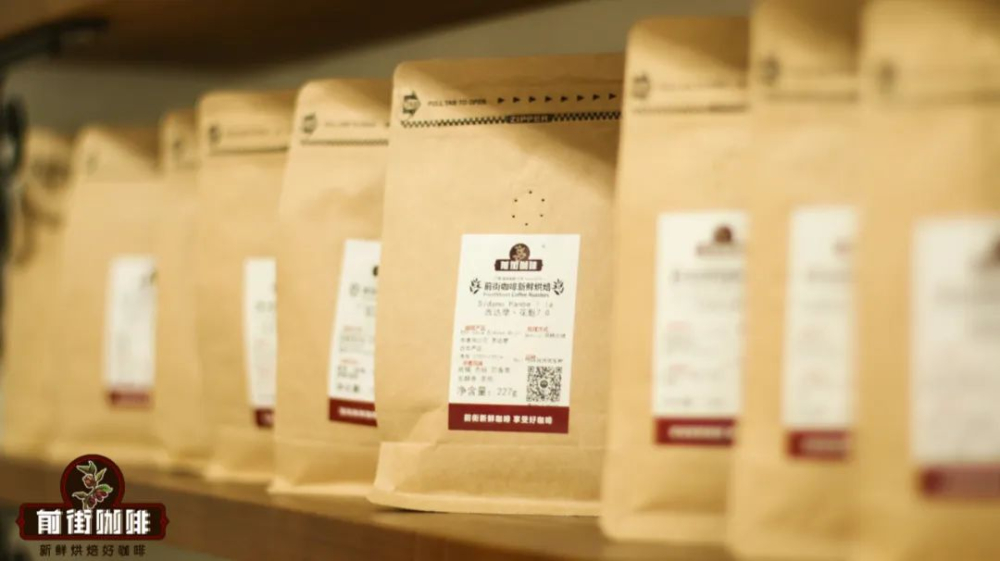
Because espresso coffee has a relatively large consumption volume, espresso beans are usually sold in large specifications such as 1 pound or 1 kilogram (single-origin beans are generally under half a pound), and because of the large quantity, the price is considerably more affordable than single-origin beans.
But it should be noted that the two have different roast levels, so when we intend to use one for a brewing method originally belonging to the other, we cannot simply copy the same parameters.
For example, when single-origin beans originally used for pour-over are switched to espresso extraction, the grind setting needs to be adjusted finer, because their structure is denser and they must increase surface area to be better extracted by an espresso machine; conversely, the same principle applies when the loose-structured espresso beans are used for pour-over—because they are dark-roasted, they need a coarser grind to reduce surface area and avoid hot water easily extracting undesirable substances.
The above content is compiled by CoffeeHunters, a coffee news website.


