







How Coffee Was Made Meets a Frappuccino Zongzi Voucher Conflict
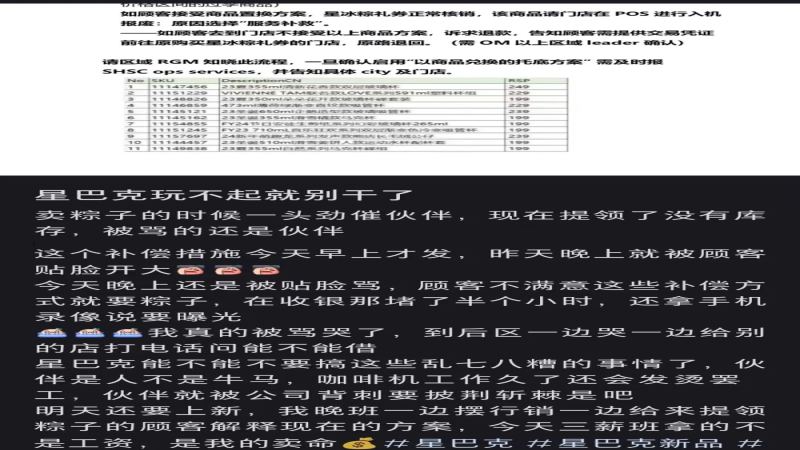
During this year's Dragon Boat Festival, multiple Starbucks stores in the Jiangsu-Zhejiang-Shanghai region ran out of Frappuccino zongzi, leaving voucher holders unable to redeem in time. Arguments broke out in stores, some employees were brought to tears by verbal abuse, and customers threatened to call police or publicize the situation.
Starbucks said it tried to meet redemption demand, but some consumers rejected the compensation offers, and paper vouchers expired worthless after the campaign deadline. The shortage points to deeper issues in seasonal product allocation and inventory management, a contrast with how coffee was made and sold in more controlled gifting campaigns.
During this year's Dragon Boat Festival, multiple Starbucks stores in the Jiangsu-Zhejiang-Shanghai region ran out of stock of Frappuccino粽子 (Starbucks rice dumplings), leaving customers with vouchers unable to redeem their items as scheduled. At some stores, intense arguments broke out between customers and employees. Some employees were reduced to tears by verbal abuse, while some customers threatened to call the police or expose the situation publicly. Starbucks responded that it had made every effort to meet redemption demand, but some consumers were still dissatisfied with the compensation plans. This supply-demand conflict triggered by a rice dumpling shortage reflects deeper issues in the brand's seasonal product allocation and inventory management.
▲
Click to follow | Daily specialty coffee culture magazine Coffee Workshop
The Dragon Boat Festival that just passed is likely a memory that some Starbucks store employees would rather not bring up. An employee at a store in Jiangsu described an experience that still makes them shudder.
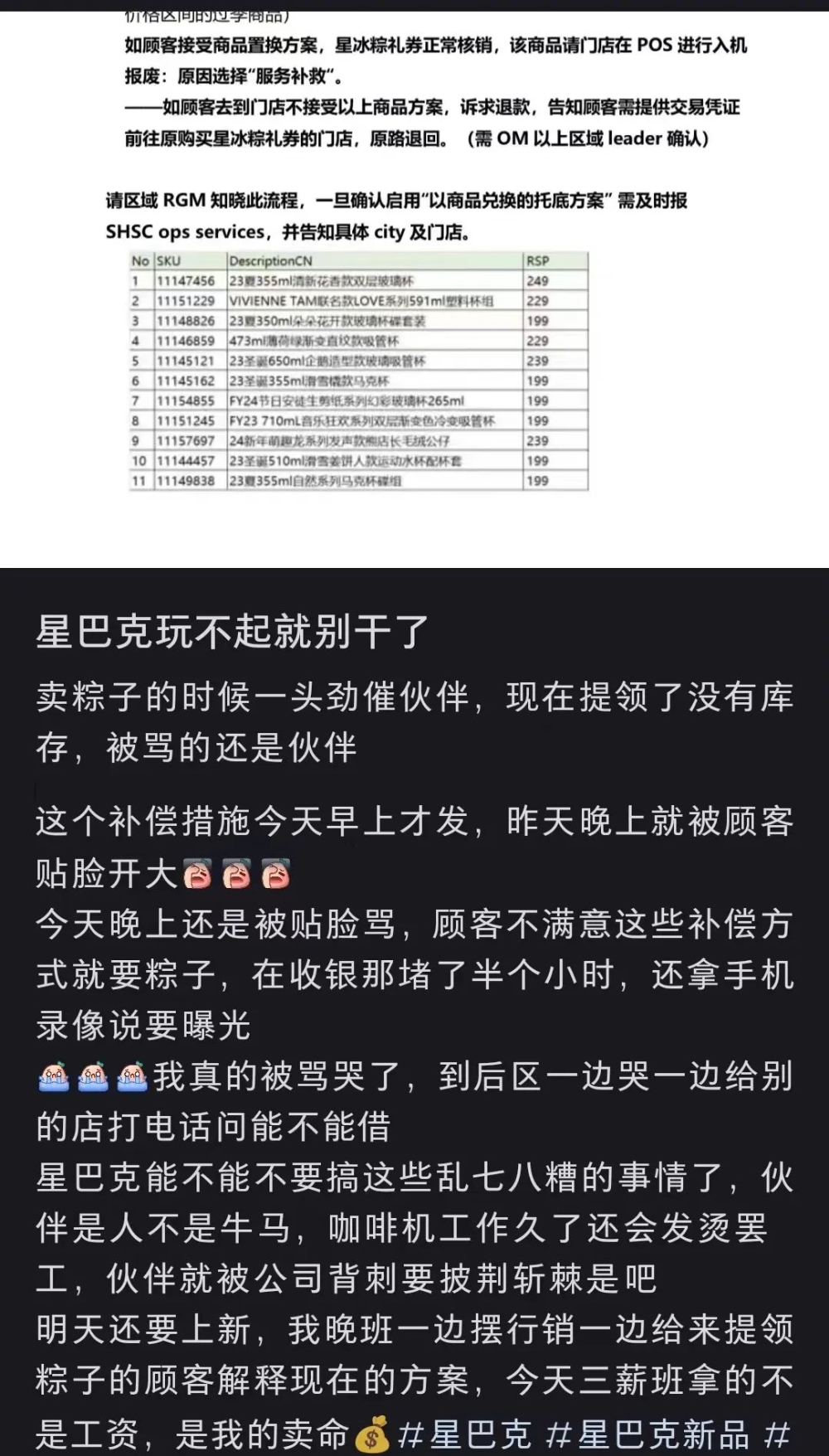
The employee revealed that on the day before the Dragon Boat Festival, a customer came to the store to pick up Frappuccino rice dumplings with a redemption voucher, but the store was already out of stock, and calls to nearby stores also failed to secure any. The staff then offered the customer alternative compensation plans, but the customer refused to accept them, argued with the employees on the spot, and used their phone to record video, claiming they would expose the situation.
That same day, employees at another store also said that a customer became angry at staff for being unable to collect Frappuccino rice dumplings and threatened to call the police if the issue was not resolved.
This situation did not occur only in Jiangsu. According to Southern Metropolis Daily, multiple consumers in the Jiangsu-Zhejiang-Shanghai region complained that because stores were out of stock, they were unable to redeem their Frappuccino rice dumpling vouchers before the campaign deadline, and their paper vouchers ultimately became worthless.
Some of these customers who could not get their rice dumplings called the 400 customer service hotline to complain, while others went directly to offline stores to demand an explanation. However, Starbucks employees had not anticipated this either—stores in multiple cities including Shanghai and Ningbo had no inventory. Facing customers coming to collect rice dumplings, employees could not conjure up a single rice dumpling even after making dozens of phone calls, and could only silently endure customers' emotions.
Some customers questioned that since Starbucks had sold so many paper vouchers, it should logically have prepared a corresponding number of Frappuccino rice dumplings for redemption, rather than leaving so many people with only vouchers and no rice dumplings.
In response, Starbucks employees explained that in previous years, customers often forgot to redeem their rice dumplings with vouchers, so the number of Frappuccino rice dumpling redemption vouchers was not equal to the number of rice dumplings actually collected. In addition, because Frappuccino rice dumplings are a seasonal product, the brand does not prepare too much inventory in order to reduce unnecessary waste.
But this year, Starbucks warehouses distributed goods unevenly across the Jiangsu-Zhejiang-Shanghai area, resulting in relatively low actual inventory in each city. Even when stores transferred stock among themselves, they still could not meet consumers' actual demand, which led to the situation where consumers in the Jiangsu-Zhejiang-Shanghai region discovered shortages as soon as they went to stores to redeem.
According to a report by Southern Metropolis Daily, a Starbucks China representative responded that "the Dragon Boat Festival holiday is the peak period for rice dumpling redemption, and stores have made every effort to meet customers' various redemption needs." Staff had also communicated one-on-one with consumers to resolve the issue, either by restocking as soon as possible or by negotiating to exchange for other products.
However, some consumers were still dissatisfied with the solutions Starbucks offered and said they could not accept them. Employees also understood consumers' anger over being unable to collect Frappuccino rice dumplings, but they were powerless to do anything about it. They only hoped this "Dragon Boat Festival ordeal" would pass as soon as possible and give them a little breathing room, so they could have the courage to face the upcoming "mooncake ordeal."
Image source: Internet
Disclaimer: Some images in this article are from the internet. For some content on the website, such as images, we will respect the original copyright and indicate the source. However, due to the large volume, there may be individual images or texts that have not yet been credited. Please forgive us. If the original author has any disputes, they may contact the website for handling. Once verified, we will correct it immediately. Compiled and edited by "Coffee Workshop." Please indicate the source when reposting. If there is any infringement, please inform us for deletion. Thank you~!
The above content is compiled by CoffeeHunters, a coffee news website.


