








From Bean to Cup: Understanding Coffee
Coffee begins as a seed inside the fruit of the Coffea plant. Farmers pick the ripe cherries, remove the fruit, and dry the seeds, which we call green coffee beans. These beans are then roasted at high heat, developing the flavors and aromas people recognize. After roasting, the beans are ground and brewed with hot water, a process that has changed little in its basic idea for centuries, even as machines and methods have multiplied.
Many people wonder who makes Nescafe instant coffee, and the answer traces back to Nestle. The company developed a soluble process that turns brewed coffee into powder or granules. Just add hot water. That convenience helped instant coffee spread worldwide. For those curious about caffeine, white coffee, which refers to lightly roasted beans rather than added milk, generally retains a similar or slightly higher caffeine level than darker roasts, since roasting time does not remove much caffeine.
The reason hot lattes fascinate so many coffee lovers often comes down to latte art. Tulips, white swans—a beautifully poured design always lifts the mood. Most of the time, the pattern is decided at the barista's discretion, but some baristas compile a collection of designs for customers to choose from. With so many options, some people find it hard to decide, and so the latte art spinner was born—the customer gives it a gentle spin, and whichever design the pointer lands on, the barista makes that cup. It's as fun as opening a blind box. Customers have a great time, but baristas may break into a cold sweat: if the spinner lands on a complicated design they haven't quite mastered, an embarrassing fail could ensue.
▲
Click to follow | Daily specialty coffee culture magazine Coffee Workshop
If you ask coffee lovers why they prefer hot lattes, many will probably blurt out: because of the latte art. A beautiful tulip or an exquisite white swan floating on a cup of coffee—the barista's hand-drawn design adds so much to the drink, and whoever receives it will be in a great mood.
Usually, though, what design a customer gets depends largely on the barista's improvisation. Of course, some exceptionally skilled baristas compile the designs they can make into a picture book, letting customers pick one and get a latte made just the way they like it.
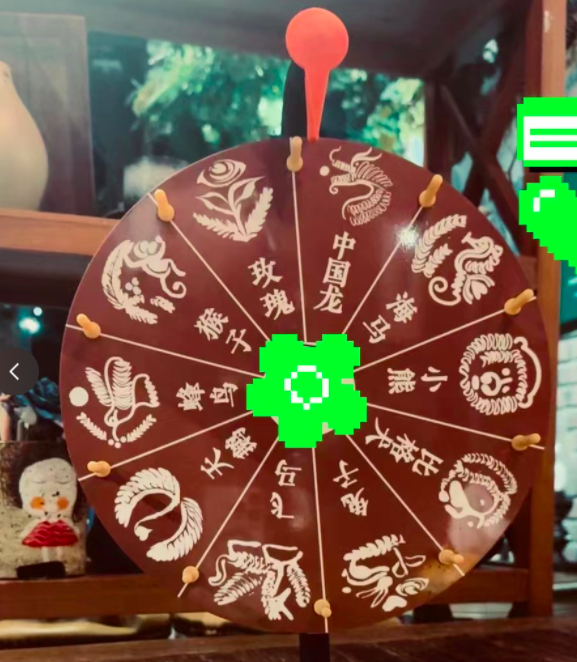
However, with too many options, some customers end up with choice paralysis. So a barista had a bright idea: stick various latte art designs onto a round disc to create a latte art spinner. Hesitant customers only need to give it a gentle spin, and once the disc stops, whichever design the pointer lands on, the barista makes the corresponding latte.
This kind of blind-box-style latte art spinner is actually not uncommon. Some Starbucks locations have put out a black latte art spinner, with mostly basic designs of no great difficulty. But this little prop is so much fun that it still draws many customers who come specially to try it, standing at the bar and watching the barista make the whole drink, to see whether the design they spun lands perfectly in the cup.
But for those seasoned experts who have long mastered complex latte art, a basic wheel like Starbucks' offers no challenge at all. Regular latte drinkers are also long used to these simple designs and mostly look forward to seeing more creative latte art.

That's why baristas have upgraded the options on the wheel. Take this coffee shop's homemade latte art spinner: arranged around the circle are ten non-repeating complex combination designs, making people can't help but wonder—does the barista really have the skill to pull off any design the spinner lands on?
So after ordering two cups, a customer stood by and watched from start to finish as the barista precisely recreated on the brown coffee surface the design they had casually spun, exclaiming again and again, utterly won over by the barista's craftsmanship.
For consumers who love latte art designs, the spinner offers both the thrill of a random draw and a latte with a specified design—a novel and fun way to play. So even if the latte is a bit pricier, customers who've tried the spinner are happy to pay.
The only thing is, while customers have a great time, the pressure on the barista is considerable. Latte art demands getting it right in one pour; if your fundamentals aren't solid enough and your repertoire isn't rich enough, watching a customer spin the wheel is bound to make you nervous, fearing it'll land on a design you're not quite skilled at and you'll end up performing a latte art fail on the spot.
If your skills really aren't up to par and you do fail, you'll not only lose face but also waste ingredients—and a scolding from the boss is probably unavoidable.
Image source: Xiaohongshu
Disclaimer: Some images in this article are from the internet, and some website content such as images—we respect the original creators' copyright and will credit the source. However, due to the sheer volume, a few images and texts may not have been credited in time; please forgive us. If the original creator has any dispute, they may contact the website to resolve it, and once verified we will correct it immediately. Compiled and edited by "Coffee Workshop"; please indicate the source when reprinting. If there is any infringement, please let us know and we will delete it. Thank you~!
The above content is compiled by CoffeeHunters, a coffee news website.


