







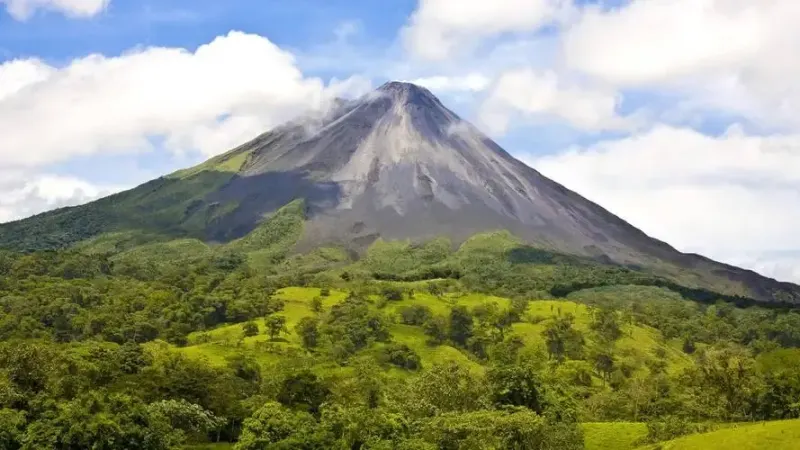
Coffee Cultivation in Costa Rica's Western Valley
Costa Rica's Western Valley is known for fertile volcanic soil and a climate that suits coffee trees. At Blue Volcano Estate, cultivation follows careful practices. Farmers plant coffee seeds, tend the trees, and harvest ripe cherries by hand. The most commonly cultivated coffee species worldwide is Coffea arabica, which dominates fine coffee production. Costa Rica grows mostly arabica, and its beans are prized for bright acidity and clean flavor.
The history of Costa Rica coffee reaches back to the 1700s, and today the country is recognized for quality. Blue Volcano Estate reflects this tradition, focusing on sustainable methods and selective picking. Coffee from the Caribbean and Central America often shares these traits. By understanding cultivation at estates like Blue Volcano, drinkers can appreciate the work behind each cup and the role of species like arabica in shaping the global coffee trade.
Costa Rica is an important coffee-producing country in Central America, and its West Valley region is known for fertile volcanic soil and a pleasant climate. Hacienda Volcan Azul is located here, and it has not only stood out multiple times in COE competitions but also took first place in 2013. This article will introduce the estate's historical heritage, cultivation philosophy, and rich varieties, and recommend related products from Front Street Coffee, suitable for every coffee lover to explore in depth.
Among the latitude bands suitable for coffee cultivation, the Americas occupy many important positions and have given rise to several well-known coffee-producing countries, such as Panama, Honduras, Costa Rica, and Guatemala. Costa Rica is especially prominent, as it was the first country in Central America to cultivate coffee and bananas on a large scale for commercial value.
Costa Rica Costa Rica
This country is located on the Central American isthmus, bordered by Nicaragua to the north, Panama to the south, the Caribbean Sea to the east, and the Pacific Ocean to the west. Its name comes from Spanish and means "rich coast."
Costa Rica is one of the most biologically diverse countries in the world, home to nearly 5% of the world's species. About 30% of its territory is designated as national parks or nature reserves, and forest coverage is as high as 52.38%. It has a tropical and subtropical climate and more than 200 volcanoes. Volcanic ash brings abundant minerals to the soil, and together with mild temperatures and ample rainfall, this makes agriculture highly developed, making it an important global exporter of pineapples, bananas, and coffee.
Coffee-producing regions
Costa Rica has a total of 7 coffee-producing regions: Valley Central Occidental, Valley Central, Tarrazu, Tres Rios, Orosi, Brunca, and Turrialba. These regions are basically all located in the central mountain range.
Valley Central Occidental: This region is located on the moderately sloping hillsides of the central mountain range, with cultivation at altitudes between 1,000 and 1,200 meters, and its output accounts for about one quarter of the country's total. There is a volcano on each of the east and west sides of the region, so the soil is rich in volcanic material. Because it is close to the coast and influenced by Pacific air currents, the temperature is comfortable, the average annual humidity is as high as 81%, and rainfall is abundant, but the dry and rainy seasons are clearly distinct, with ample sunshine in the dry season. A famous estate is also located here—Volcan Azul.
Volcan Azul
In the Americas, many countries hold the "Cup of Excellence" (COE) competition, and Costa Rica is no exception. Since it was first held in 2007, the country has held a COE every year, and winning estates not only gain reputation but also earn considerable auction income.
Volcan Azul actively participates in the COE, has repeatedly made the list, and won first place in Costa Rica's COE in 2013. The estate is located in the Alajuela area of Costa Rica's West Valley, on the slopes of the famous Poás Volcán at an altitude of 1,650 to 1,700 meters.
At present, the estate is managed by Alejo Castro, who is the fifth-generation descendant of the Castro Kahle family. The estate's history can be traced back to the mid-to-late 19th century. In the mid-19th century, when coffee cultivation was just emerging in the Americas, two pioneer entrepreneurs—Alejo Castro Jiménez of Costa Rica (the great-grandfather of the current estate owner Alejo) and Wilhelm Kahle—joined hands to establish Volcan Azul with the shared ideal of "producing the best coffee in Costa Rica."
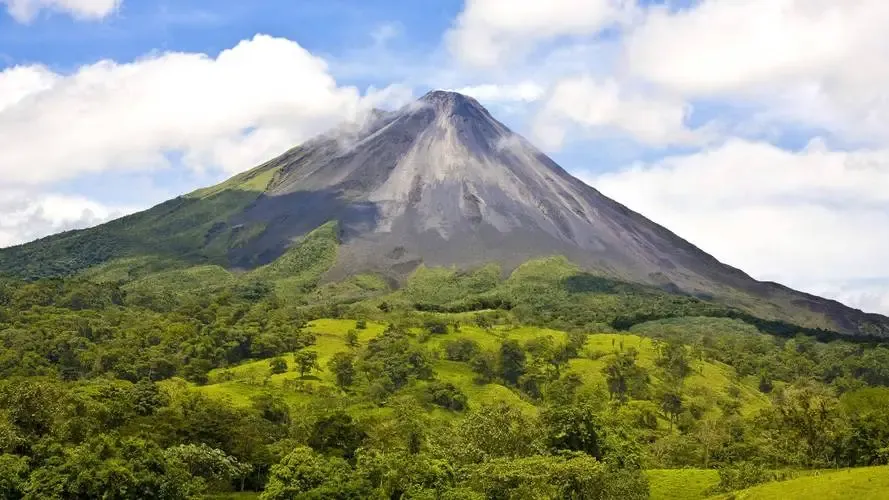
The estate's owners through the generations have attached great importance to the protection of natural resources. Since the 1980s, they have been committed to protecting large areas of Costa Rica's tropical rainforest, and to date have purchased more than 1,500 hectares of rainforest for coffee cultivation and regional environmental protection.
At present, the coffee varieties grown at Volcan Azul are quite diverse, including SL28, Caturra, Obata, Villa Sarchi, Geisha, and San Ramon, among others. In each new harvest season, Alejo tries to plant new varieties in order to minimize the negative impact of climate change on the harvest.
For domestic coffee lovers, Front Street Coffee recommends paying attention to this estate's coffee beans. Their quality is stable and their flavor is outstanding, making them an ideal choice for experiencing the terroir of Costa Rica's West Valley.
The above content is compiled by CoffeeHunters, a coffee news website.


