







How Many Pours Should Pour-Over Coffee Use?
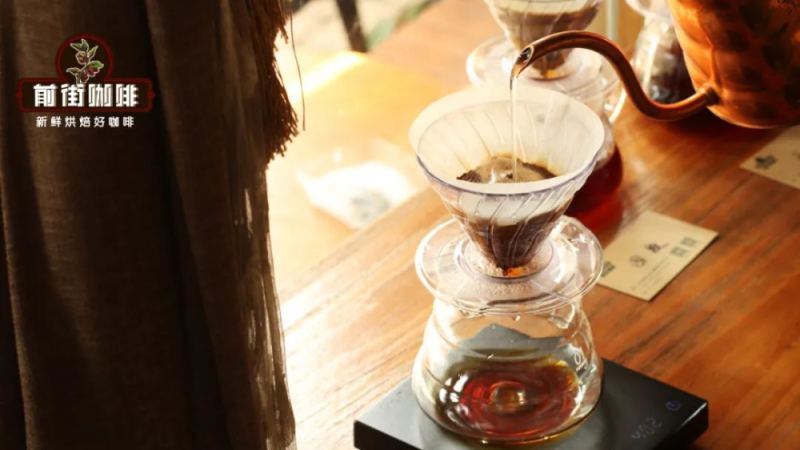
Segmented pouring means pausing after the bloom and splitting the remaining water into two or more pours. The three-pour method, which divides the main extraction phase into two parts after blooming, is the most common approach: it is easy for beginners to control and gives the brewer a chance to watch the water level and adjust.
A single pour after the bloom leaves no room to correct a fast or slow flow, while segmented pours let timing and extraction be managed pour by pour. Grind size, how long to grind coffee beans, and pour speed all interact with segment count, so keeping one variable steady helps reproduce a bean's flavor consistently.
The pouring method in pour-over coffee directly influences the final flavor profile, and segmented pouring is a core technique that nearly every coffee enthusiast encounters. After blooming, should you pour all the water in one go or pause midway? How many segments is most reasonable? And how do different numbers of segments change the coffee's body, aroma, and complexity? Drawing on Front Street Coffee's practical brewing experience, this article systematically outlines the definition and working mechanism of segmented pouring, and through three sets of comparative experiments reveals the relationship between segment count, extraction efficiency, and flavor expression. It also offers the most beginner-friendly operational advice to help you more consistently reproduce the best state of a given bean in your daily brewing.
How exactly is segmented pouring defined?
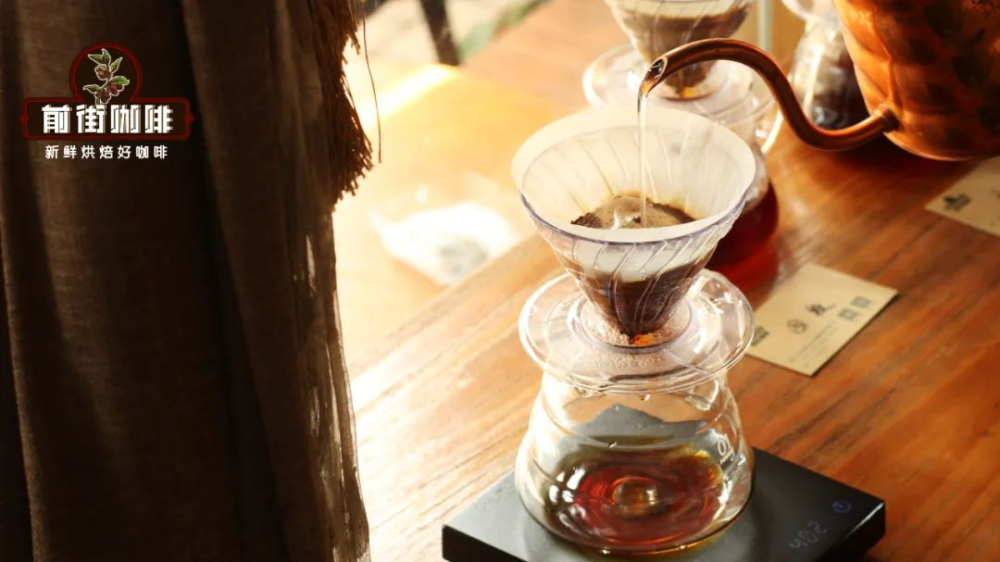
Since blooming before the official extraction has become a preparatory step recognized by nearly all brewers, the key to determining whether a pour qualifies as segmented is whether there is a pause in the pouring after the bloom is complete.
If, after the bloom, all the remaining hot water is poured in one go without any pause in between, this is called the non-segmented "one-pour" method. Conversely, as long as the water poured after the bloom is split into two or more segments with a clear pause in between, it counts as segmented pouring. Among these, the "three-stage" method, which splits the main extraction phase's water into two parts, is the most common; it is both Front Street Coffee's standard daily production technique and an extraction method that beginners find relatively easy to master.
Why is segmentation necessary?
For those not yet skilled at water flow control, whether the hot water in the dripper can finish dripping within the expected time is often the core indicator for judging whether the pouring of a given pot of coffee is reasonable. From brewing practice, a shorter extraction time usually means the pouring speed was too fast; a longer extraction time indicates the pouring was too slow.
If you choose the one-pour method after blooming, whether it's fast or slow, we can only watch helplessly as the coffee "fends for itself," with no room for remediation. But once segmented pouring is adopted, the pause in between gives the brewer a window to observe changes in the water level.
For example, Front Street Coffee brews a pot of Panama 90+ Estate Eleta Geisha using the three-stage method. If, after the second pour, you find that less than 1 minute has passed and the coffee liquid has already fully drained into the server, then for the third pour you should switch to a slow, small stream to finish the remaining water, pulling the total extraction time back to around 2 minutes. Conversely, if the second pour drags on too long, we can increase the flow to avoid over-extraction caused by too long a steeping time.
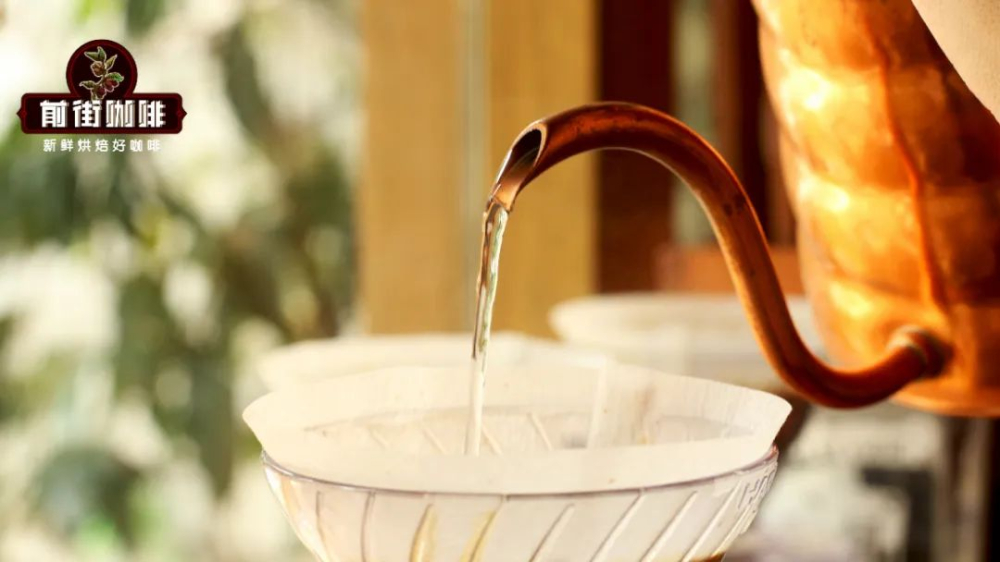
In fact, pour-over, as a drip extraction method, can be understood as a process of continuously washing and agitating the coffee bed. The water stream makes the coffee grounds tumble within the dripper, and the technique is about reasonably extracting coffee flavor compounds through manual adjustments to flow rate, number of pauses, pouring circles, and other details. Therefore, adding segments means extending the time spent washing the coffee bed, and the final extraction efficiency will also be higher.
Front Street Coffee once conducted a comparison: because the one-pour method has no pause after blooming, the brewing takes less time, and the coffee tastes brighter, crisper, and cleaner; whereas the three-stage pour with one pause in between takes about 10 seconds longer, and the additional segmented washing also improves the release efficiency of soluble substances, giving the coffee a fuller body and richer complexity.
What is the maximum number of segments in segmented pouring?
To visually demonstrate the impact of segment count on flavor, Front Street Coffee designed a set of comparative experiments for your reference.
The experiment used Gesha Village Red Label Geisha as the extraction subject, with the following parameters (dose: 15 g, grind size: EK43s setting 10, water temperature: 93°C, ratio: 1:15). The blooming stage was kept consistent (30 g water, 30-second bloom), and three pots of coffee were brewed using the three-stage, four-stage, and five-stage methods respectively for comparison.
Three-stage: 30 g + 95 g + 90 g, pouring stopped at 1 min 28 sec, extraction time 2 min 08 sec. Flavor: sweet orange, yellow lemon, bright fruit acidity, with the shortest finish among the three pots.
Four-stage: 30 g + 70 g + 70 g + 55 g, pouring stopped at 1 min 39 sec, extraction time 2 min 19 sec. Flavor: prominent aromas of peach, citrus, and black tea, with a sweet and rounded mouthfeel.
Five-stage: 30 g + 55 g + 55 g + 55 g + 30 g, pouring stopped at 1 min 51 sec, extraction time 2 min 22 sec. Flavor: strawberry jam, jackfruit, faint floral notes, tea-like quality, with the richest complexity, the best sweetness, and a long-lasting dried-fruit finish.
From the above comparison data from Front Street Coffee, at the same ratio, the more segments there are, the less water each segment gets, and the harder it is to raise the coffee bed. Likewise, more segments not only extend the total extraction time but also mean we need to judge more pouring time points, which greatly increases brewing instability.
To achieve even extraction with segmented brewing, the water level of each pour should reach exactly the height of the previous pour. When the water level fails to reach the previous height, the particles at the top cannot participate in extraction; if the subsequent water level overflows the previous coffee wall, the hot water will escape through the dripper's ribs. Both can cause what we commonly call under-extraction.
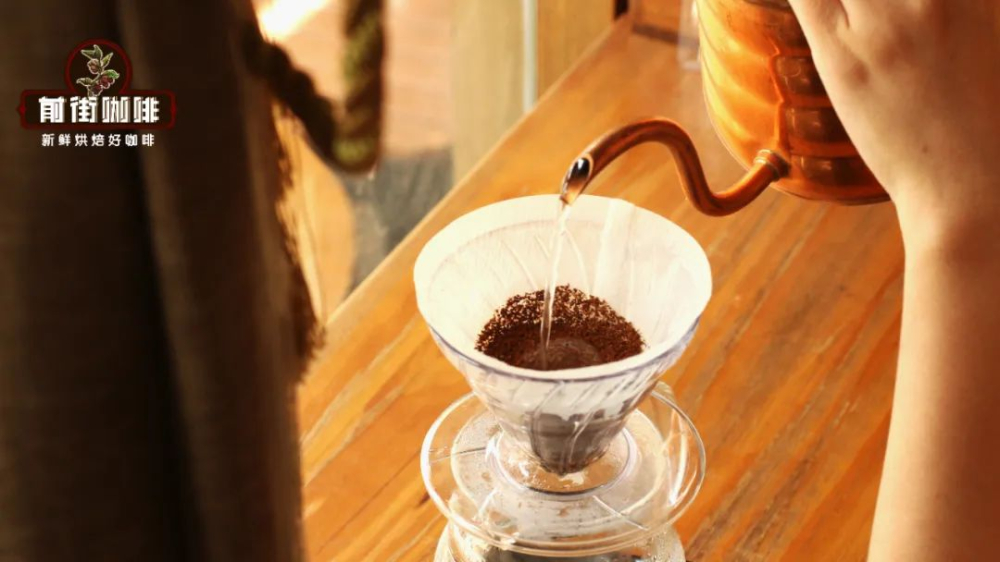
Left: five-stage pour Right: three-stage pour
Overall, more segments can indeed maximize the extraction of flavor compounds, giving the coffee rich aroma and complexity. In daily brewing, splitting into 2 or 3 segments is the most common, because it makes it easier to hit a reasonable extraction time and allows corresponding pouring adjustments for different coffee beans, reducing errors in extraction time.
In addition, adopting more segments also has a precondition: the coffee beans themselves must contain diverse good flavors and be resistant to extraction. Otherwise, multiple rounds of high-temperature water washing not only fail to bring positive extraction effects but may also add some unpleasant bitter and miscellaneous off-flavors in the tail end.
- END - Front Street Coffee
No. 10, Bao'an Qianjie, Yandun Road, Dongshankou, Yuexiu District, Guangzhou, Guangdong Province
The above content is compiled by CoffeeHunters, a coffee news website.


