







Where Does Coffee Cultivation Spread Across Venezuela?
Venezuela grows coffee across four main regions, running from the Andes foothills in the northwest through the central-west and central-north to the east. Farms there cultivate Typica, Bourbon, Mundo Novo, and Caturra, plus the locally selected Caripe. The country is often overshadowed by Colombia and Brazil, yet its soil and climate support coffee cultivation across a wide belt of states.
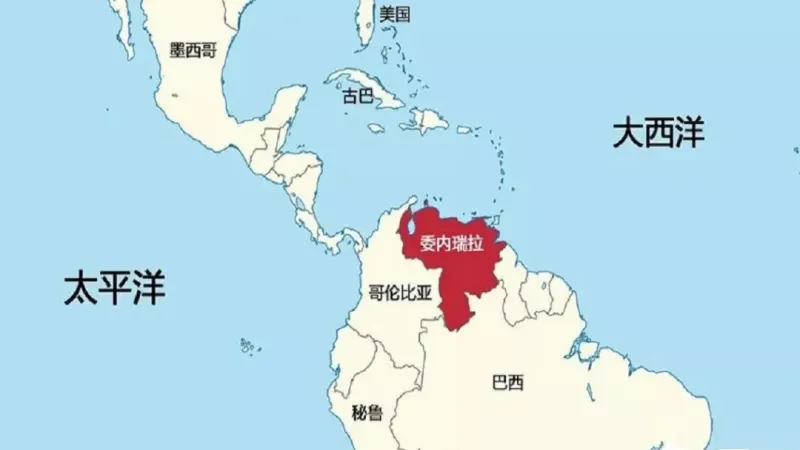
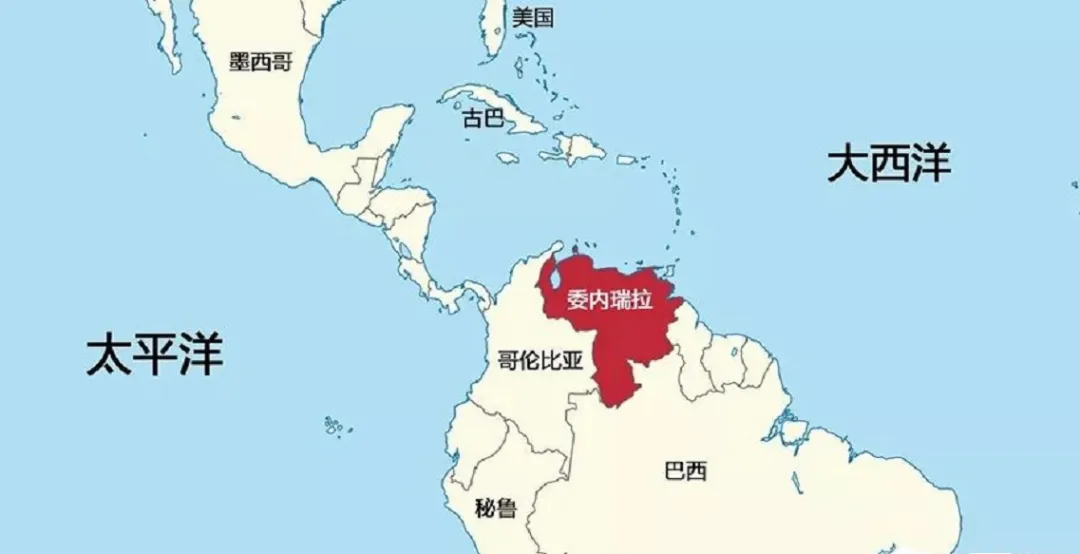
Venezuela covers 916,400 square kilometers and borders Colombia to the west, Brazil to the south, Guyana to the east, and the Caribbean to the north. Its terrain splits into the northwestern mountains, the central Orinoco Plain, and the Guiana Highlands. Altitude, harvest timing, and varietal mix vary by region, which shapes the flavor profile of each area.
Among the many coffee-producing countries in South America, Venezuela is often overshadowed by its neighbors such as Colombia and Brazil, but this country rich in natural resources also has soil and climate suitable for coffee cultivation. From the foothills of the Andes in the northwest to the central-west, central-north, and even eastern regions, Venezuela's coffee-growing belt spans multiple states, mainly cultivating classic varieties such as Typica, Bourbon, Mundo Novo, and Caturra, and has also bred the locally selected Caripe. This article will guide you through the distribution, altitude, harvest period, and variety composition of Venezuela's four major coffee-producing regions, and provide an in-depth understanding of the characteristics and cultivation performance of the unique regional variety Caripe. Front Street Coffee will also combine the characteristics of the producing regions to provide bean selection references for enthusiasts.
South America has vast areas of soil and climate conditions suitable for coffee cultivation, thus giving rise to many coffee-producing countries, including Colombia, Ecuador, Brazil, Peru, and Venezuela. In comparison, Venezuela's知名度 is not high, but it can still produce coffee of decent quality.
Venezuela
The Bolivarian Republic of Venezuela (República Bolivariana de Venezuela) is located in northern South America, bordering Colombia to the west, Brazil to the south, Guyana to the east, and the Caribbean Sea to the north. With a land area of 916,400 square kilometers, it is a country quite abundant in natural resources.
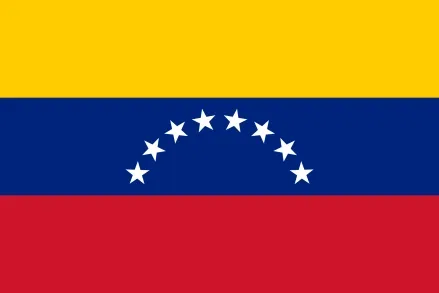
The flag of Venezuela is rectangular, composed of three parallel horizontal rectangles of equal width in yellow, blue, and red from top to bottom, with eight white five-pointed stars arranged in an arc in the center. Yellow symbolizes abundant resources, blue symbolizes the sky and ocean, and red represents the blood of soldiers sacrificed in the war of independence. Initially, there were only seven stars, corresponding to the seven provinces of the Venezuelan Federation in 1811. The later added star represents the province of Guayana, which was incorporated into Venezuela in 1817 after breaking free from Spanish rule.
The terrain of Venezuela can be divided into three regions: the northwestern mountainous area, the central Orinoco Plain, and the southeastern Guiana Highlands. The northwest is mainly the Mérida Mountains of the Andes, where the country's highest peak, Bolívar Peak, and Latin America's largest Lake Maracaibo are located. The western half of the central plain is grassland, while the eastern half is the delta marsh formed by the Orinoco River estuary. The southeast has an altitude between 500 and 800 meters and features the Angel Falls with an extremely large drop.
Except for mountainous areas, the country generally has a tropical savanna climate, with mild mountains and hot lowlands. The average annual temperature is 26 to 28°C, and the average annual rainfall increases from 500 mm in the northern coast to about 3,000 mm southward. The rainy season is from June to November, and the dry season is from December to May of the following year.
Coffee-Producing Regions
Coffee cultivation in Venezuela is mainly distributed across four coffee-producing regions: the west, the central-west, the central-north, and the east. The varieties cultivated are mainly Typica, Bourbon, Mundo Novo, and Caturra.
Western Region: Most coffee produced in this region is usually exported under the name of the state, such as Táchira, Mérida, or Zulia, rather than using the name of the producing region. Some people also compare coffee from this region with Colombian coffee. Altitude: 1,000-1,200 meters; Harvest period: September to March of the following year; Varieties: Typica, Bourbon, Mundo Novo, Caturra.
Central-Western Region: This region covers the states of Portuguesa and Lara and is one of the top coffee-producing regions in Venezuela. In addition, the states of Falcón and Yaracuy also belong to this region. The coffee produced here is of excellent quality and is considered comparable to Colombian quality. These high-quality coffee beans are usually called Maracaibos, named after the export port. Coffee is grown at altitudes between 1,000-1,200 meters, the harvest period is from September to March of the following year, and the main varieties cultivated are Typica, Bourbon, Mundo Novo, and Caturra.
Central-Northern Region: A small amount of coffee from this region comes from the Venezuelan states of Aragua, Carabobo, Miranda, Cojedes, and the Federal Dependencies. The cultivation altitude is 1,000-1,200 meters, the harvest period is from September to March of the following year, and the main varieties cultivated are Typica, Bourbon, Mundo Novo, and Caturra.
Eastern Region: This area is located within the states of Sucre, Monagas, Anzoátegui, and Bolívar. A coffee variety known as "Caripe" can also be found here. The cultivation altitude is 1,000-1,200 meters, the harvest period is from September to March of the following year, and the varieties cultivated are Typica, Bourbon, Mundo Novo, Caturra, and Caripe.
Coffee Varieties
The main coffee varieties cultivated are Typica, Bourbon, Mundo Novo, and Caturra, along with the locally selected variety Caripe (CARIPE).
Caripe (CARIPE): In the city of Caripe, Venezuela, Professor Gustavo Bonafina Para of the Universidad de Oriente is one of the persons in charge of Coffee No. 5 of Venezuela's Ministry of Agriculture and Breeding. During a regular visit to coffee farming villages, local farmers showed the person in charge some Typica plants in their plantations that exhibited particularly high productivity. In 1958, the person in charge launched a selection program on several farms and tested their productivity. The one selected afterward was Caripe. Today, Caripe has become an important regional variety in Monagas State in northeastern Venezuela.
This variety has a relatively large overall tree shape, and the coffee beans are also relatively large. It is suitable for cultivation in high-altitude areas. Although the yield is not high, the quality and flavor performance are good. However, it is relatively fragile and susceptible to diseases such as coffee leaf rust and nematodes. Front Street Coffee suggests that if you want to try such varieties, you can pay attention to their flavor performance and the story of the producing region.
The above content is compiled by CoffeeHunters, a coffee news website.


