







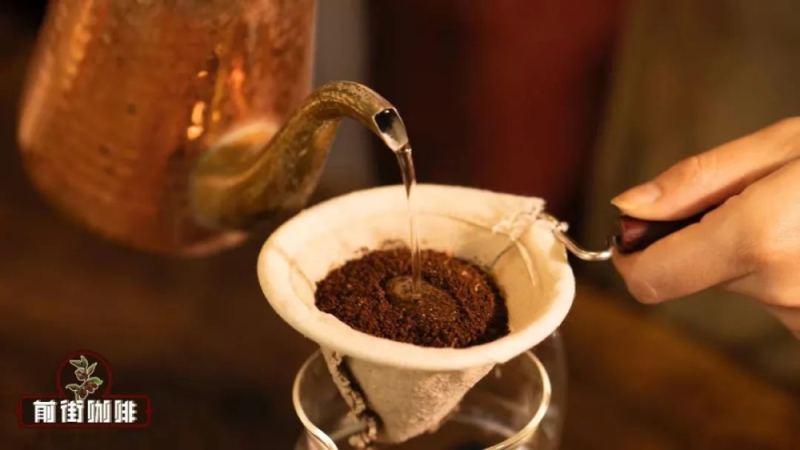
How do Kono, Matsuya-style, and volcano brewing treat Japanese dark roast coffee?
Three Japanese methods are built around the rich, mellow bitterness of dark-roasted beans: Kono drip, Matsuya-style brewing, and the volcano pour. Each aims to release the steady, grounded flavors of a deep roast. Kono drip extends blooming so carbon dioxide escapes; Matsuya-style uses ultra-high pouring and an extra-long bloom; volcano pouring uses segmented small circles to create an erupting bed.
The shared logic is control. These approaches generally use a higher coffee-to-water ratio, and some require bypass dilution because the extracted liquid is very concentrated. Kono drip dates to 1973, when the Kono family designed a dripper around flannel-filter performance. For deep roast coffee, that emphasis on full degassing and slow, even extraction keeps bitterness from turning harsh.
Dark-roasted coffee beans are known for their rich, mellow bitterness. In the Japanese brewing tradition, there are three classic methods designed specifically for these beans: the Kono drip method, the Matsuya-style brewing, and the volcano pour. Though they take different paths, their core goal is the same—to fully release the steady, grounded flavors of dark-roasted beans. The Kono method uses drip-style blooming to extend degassing time, the Matsuya style pursues stable extraction through ultra-high pouring and an extra-long bloom, while the volcano pour uses segmented small-circle pouring to create an erupting effect. They generally use a higher coffee-to-water ratio, and some require bypass dilution. This article breaks down each method's origins, operating logic, and flavor orientation one by one, and explains why these approaches are better suited to dark-roasted beans.
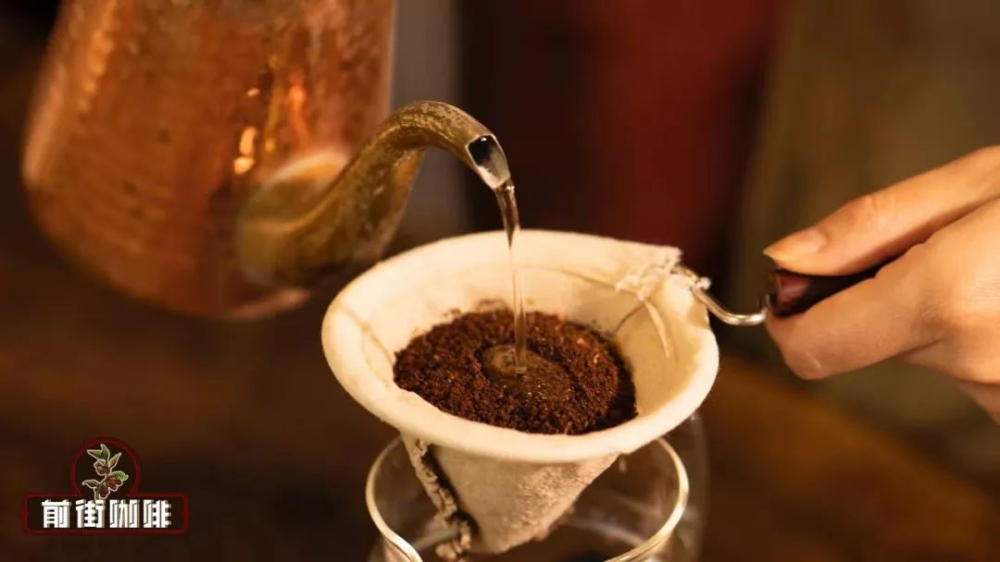
Kono-Style Brewing The Kono drip method was born in 1973, developed by the Kono family, founders of the Japanese coffee equipment brand "Kono." The Kono family had a particular love for rich, mellow dark-roasted coffee. Using the extraction performance of flannel cloth as a reference, they designed the Kono dripper. To further enhance the coffee's richness, they refined the drip method as a brewing approach—clear evidence of their dedication to deep, mellow flavors.
This brewing method is called the drip method, and the key is that during the initial pouring stage, hot water is not poured directly; instead, water droplets fall one after another in a continuous chain. This extends the blooming time, allowing carbon dioxide in the coffee to be fully released, paving the way for the subsequent hot water to extract flavor compounds. When the filter paper is completely saturated with coffee liquid (or when the coffee dripping from the dripper changes from drops to a stream), the bloom is complete. At this point, you can switch pouring methods and use a strong stream to rapidly extract the coffee's aromatic compounds. (For a more detailed introduction to the drip method, see this article → "Drip Method")
Matsuya-Style Brewing Matsuya-style brewing stands out as truly unique among Japanese brewing methods. It has three striking characteristics: an extremely long bloom time, an extremely high pouring height, and an ultra-concentrated coffee liquid that needs to be diluted with water.
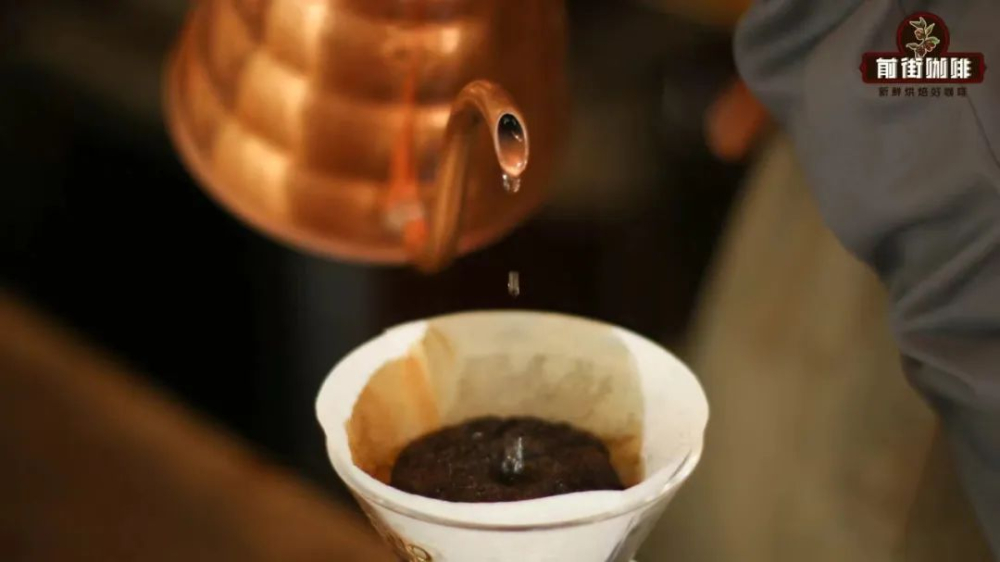
The extended bloom is meant to bring coffee beans of different freshness levels to a consistent extraction efficiency; pouring from an extreme height is a way to give the hot water a precise temperature without a thermometer; and the ultra-concentrated coffee liquid results from the fact that when extraction efficiency is high enough, flavor compounds can be fully extracted without much hot water. So by raising the coffee-to-water ratio, you get a pot of highly concentrated coffee liquid, which you then dilute via bypass to your preferred taste. (If you'd like to learn about Matsuya-style brewing, see this article → "Matsuya-Style Brewing")
Volcano-Style Brewing The volcano pour is the most visually spectacular of the three. During brewing, the coffee bed continuously puffs and steams, creating a scene resembling a volcanic eruption—quite a sight to behold!
The volcano pour also requires blooming and degassing first, followed by flavor compound extraction. The difference is that during the extraction stage, hot water is not poured all at once but divided into several segments. Each segment is poured lightly and in small amounts in a small circle at the center of the dripper, with a 5-second interval before the next pour, until the target water volume is fully poured. During this process, the coffee bed expands as hot water is poured and contracts as the coffee liquid drains through; then hot water is poured again, it expands again, the coffee liquid drains again, it contracts again—and so it repeats. Because the volcano pour has high extraction efficiency, the coffee-to-water ratio used is also relatively high, and the resulting coffee liquid likewise needs to be diluted via bypass. (If you'd like to learn about the volcano pour, see this article → "Volcano Pour")
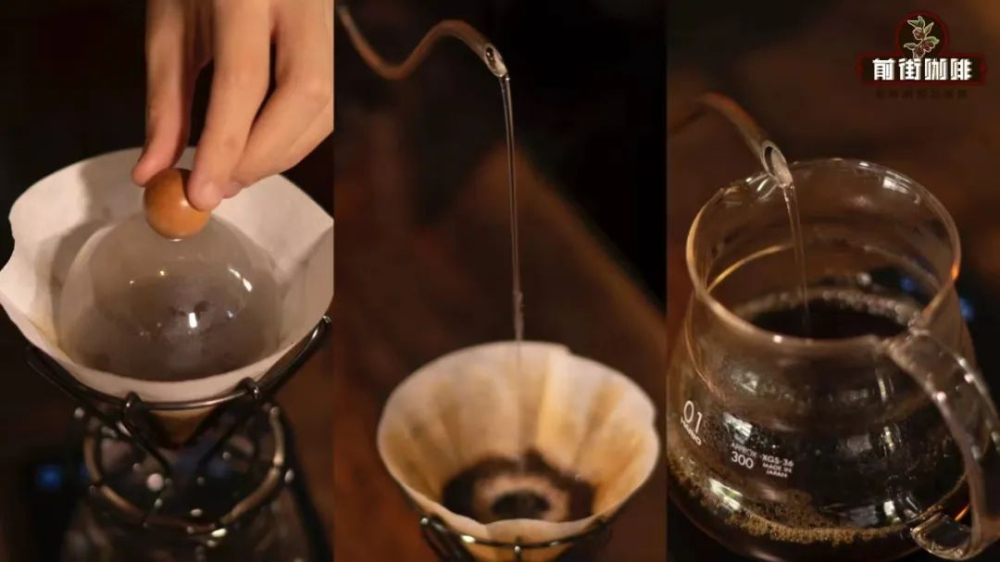
Whichever of the above brewing methods you use, they are all better suited to dark-roasted coffee beans, because they were all developed around how to extract rich, mellow dark-roasted coffee. If you also prefer steady, rich, bitter coffee, why not give these Japanese brewing methods a try? I believe that with these methods—so different from your usual approach—you'll have a uniquely distinctive experience.
- END -
The above content is compiled by CoffeeHunters, a coffee news website.


