







How Coffee Cultivation Thrives in Boquete, Panama
Coffee cultivation in Panama centers on the Boquete region, where estates such as Hacienda La Esmeralda and Abu Estate grow varieties like Geisha and sun-dried Caturra. The area's volcanic ash soils, elevations above 1,900 meters, and cool night air create the conditions that shape the cup profiles buyers seek. Geisha gained global attention after the 2005 reliable of Panama auction.
Panama sits close to the equator with a tropical maritime climate, average temperatures of 23°C to 27°C, and annual rainfall of 1,500 to 2,500 millimeters split into dry and rainy seasons. These growing conditions for coffee, combined with nutrient-rich volcanic soil, support farms across Boquete, Volcan-Candela, and Renacimiento. Abu Estate, on the southern slope of Volcán Barú National Park, produced the sun-dried Caturra noted for liqueur chocolate and black grape flavors.
Panamanian coffee is renowned in the global market, especially famous for the Geisha variety. In the 2005 Best of Panama (BOP) competition and auction, Geisha stood out with its exceptional flavor and became famous overnight. Panama is located in southern Central America and possesses a unique geographical environment and microclimates, with the Boquete region being home to many well-known estates. As a rising star, Abu Estate is located on the southern slope of Volcán Barú National Park, aiming to respect the environment and cultivate high-quality coffee. Front Street Coffee purchased Abu Estate's sun-dried Caturra, which cupped with rich flavors of liqueur chocolate, black grapes, and more. This article will take you deep into the unique charm of Panama's Boquete region and Abu Estate.
Panamanian coffee enjoys very high recognition in the global coffee market, especially the Geisha variety. Because of the 2005 Best of Panama (BOP) competition and auction, Geisha stood out with its excellent flavor and results, and since then the Geisha variety has become famous overnight.
Panama
Panama is located in southern Central America, with an S-shaped territory connecting Costa Rica and Colombia, bordering the Caribbean Sea to the east and facing the Pacific Ocean to the west, as its territory connects North and South America.
Panama's terrain is undulating throughout, with crisscrossing valleys. Apart from the coastal areas which are plains, most of the country is mountainous, and it possesses rich forest and river resources as well as multiple volcanoes, providing ideal growing conditions for coffee trees.
Panama is close to the equator and has a tropical maritime climate, humid during the day and cool at night, with an annual average temperature between 23°C-27°C and an annual average rainfall of 1500-2500 millimeters, mainly divided into dry and rainy seasons. Due to the influence of its geographical environment, Panama has complex and variable microclimates. The east-to-west environment allows cold air currents to flow through the central mountain range and converge above 1900 meters, thereby forming a very unique microclimate in the Boquete and Volcán Candela areas. In addition, the land around this area is nutrient-rich due to volcanic ash. These fertile soils provide perfect cultivation conditions for coffee growth, making it Panama's main coffee-producing area.
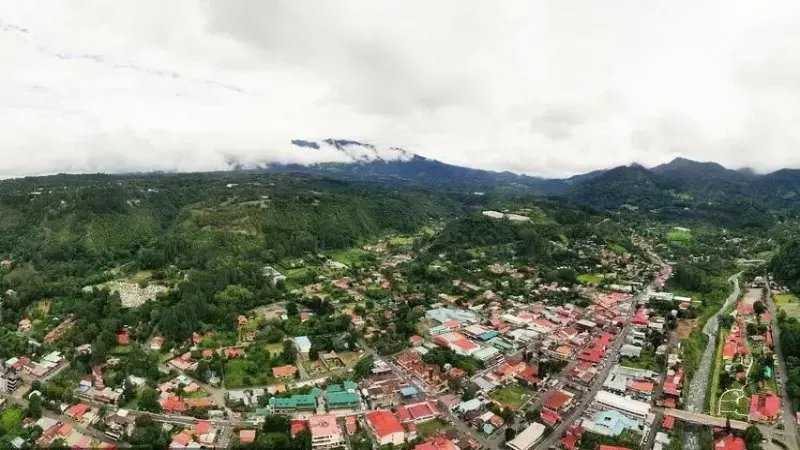
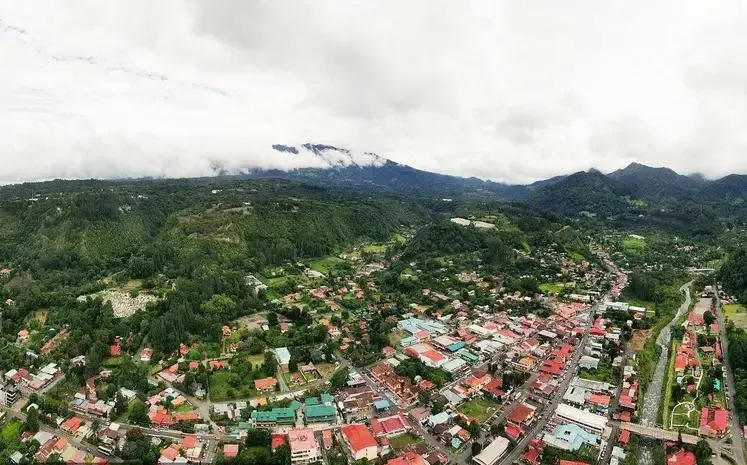
Boquete
The coffee-producing regions are mainly divided into Boquete, Volcan-Candela, and Renacimiento These regions are all located around the country's three volcanoes: Volcán Baru, Volcán Baru, El Valle Volcano El Valle and Le Yeguada Le Yeguada .
Boquete can be said to be Panama's most well-known coffee-producing region, as it is home to many famous estates, such as Hacienda La Esmeralda, Duncan Estate, and Elida Estate, and in recent years there have also been many rising-star estates, such as Abu Estate.
Its main Boquete production area has excellent coffee-growing conditions. Coffee is grown at elevations of 1200-2000 meters, where temperatures range between 11°C-27°C, neither too cold nor too hot. At the same time, the relatively large temperature difference allows coffee cherries to grow slowly and develop flavor. Moderate rainfall, fertile volcanic soil, abundant sunlight, and the local special microclimate enable this region to produce high-quality coffee.
Abu coffee
Abu Estate is located on the southern slope of Volcán Barú National Park, where there is a typical tropical rainforest microclimate, and the soil is fertile and deep, rich in organic matter, with excellent drainage. Abu Estate has an average elevation of 1550 meters, and the coffee is grown under shade trees. The estate owner greatly respects the environment and biodiversity, and Abu Estate has a unique geographical location. Sunlight can often shine over the entire estate, providing ample sunlight. Combined with the local unique climate, this allows the cherries grown here to develop rich flavors during the ripening process.
The name Abu Estate commemorates the estate owner's grandfather, José Guillermo Luttrell Tedman, and "Abu" is short for "grandfather" in Spanish. At present, estate owner José Luttrell continues the family's dream of growing high-quality coffee. The estate first 2017 participated in the BOP competition only in 2017, and won 6th place achieved an excellent result of 6th place. At present, the estate mainly grows Geisha, and also grows varieties such as Caturra and Catuai.
At present, Front Street has purchased Abu Estate's sun-treated Caturra coffee beans and conducted a cupping. When smelling the aroma, there are slight fermented notes, grape, red wine, and spice aromas, and on the palate there are flavors of liqueur chocolate, black grapes, cherries, and nuts.
The above content is compiled by CoffeeHunters, a coffee news website.


