







How long does it take for a moka pot to brew coffee?
A moka pot typically finishes brewing in about four to five minutes on moderate heat, from the moment the water starts to heat until the coffee stops flowing and the upper chamber fills. The result is a strong, concentrated black coffee, but it is not espresso, so it cannot be diluted into a true Americano the way espresso can.
Making a satisfying Americano at home depends on three things: the espresso base, the coffee strength, and the amount of crema. A moka pot can produce similar black coffee for everyday drinking, yet espresso extracted on an espresso machine and then diluted with hot or iced water remains the standard reference point.
Want to make a satisfying cup of Americano at home, but always feel it's hard to replicate the taste from the shop? Actually, everyone's equipment, beans, and taste preferences are different. Rather than copying parameters, it's better to learn to adjust flexibly according to your own conditions. This article will start from Front Street's practical experience and systematically explain the three keys to making a delicious Americano: the selection and extraction of the espresso base, the adjustment of coffee strength (including the ratio of hot Americano and iced Americano, and water temperature control), and the influence of the amount of crema on the mouthfeel. At the same time, it will also answer the essential difference between Americano and moka pot coffee, helping you find the cup that suits you best.
How can you make a satisfying cup of Americano? This is a question that many coffee lovers ponder over and over. Whether imitating the operations of a café or copying parameters circulating online, in the end it often still feels like something is missing. The reason is actually not complicated—everyone's equipment and coffee beans are different, so it is naturally difficult to make a completely identical flavor. To put it another way, even if all conditions were the same, everyone's understanding of "delicious" also differs.
So today we are not talking about replication. Front Street will talk about how to make a cup of Americano that is delicious in your mind, according to your own beans and taste.
To achieve an excellent cup of Americano, there are three core elements that cannot be ignored: the espresso base, the coffee strength, and the amount of crema. Let's look at them one by one.
Coffee base
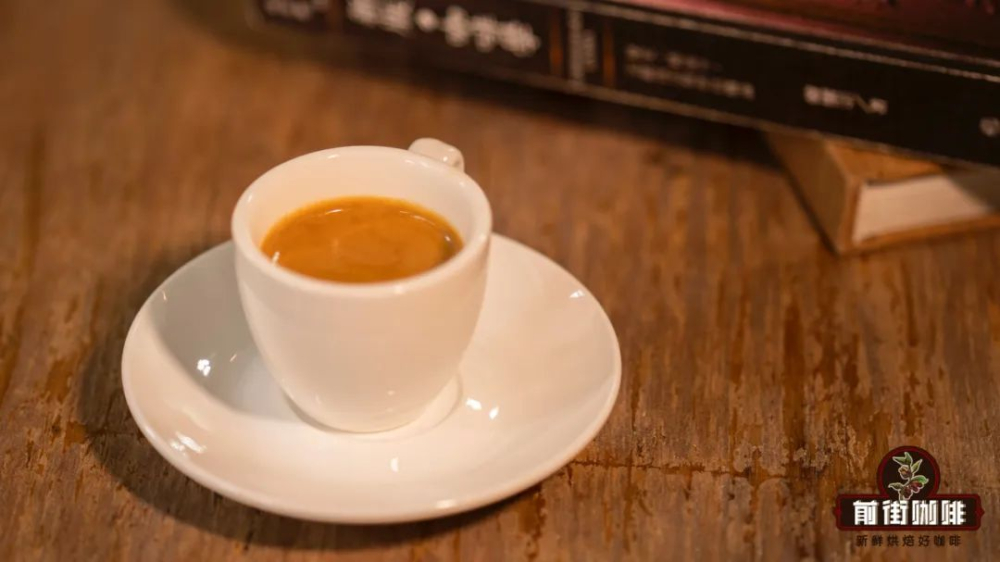
Moka pots and capsule coffee machines can all make similar black coffee, but strictly speaking, only espresso extracted with an espresso machine as the base and then diluted with water can be called Americano. Since it is the base, the quality of the espresso directly determines the upper limit of the Americano. Therefore, the first step in making a good Americano is to extract a delicious espresso.
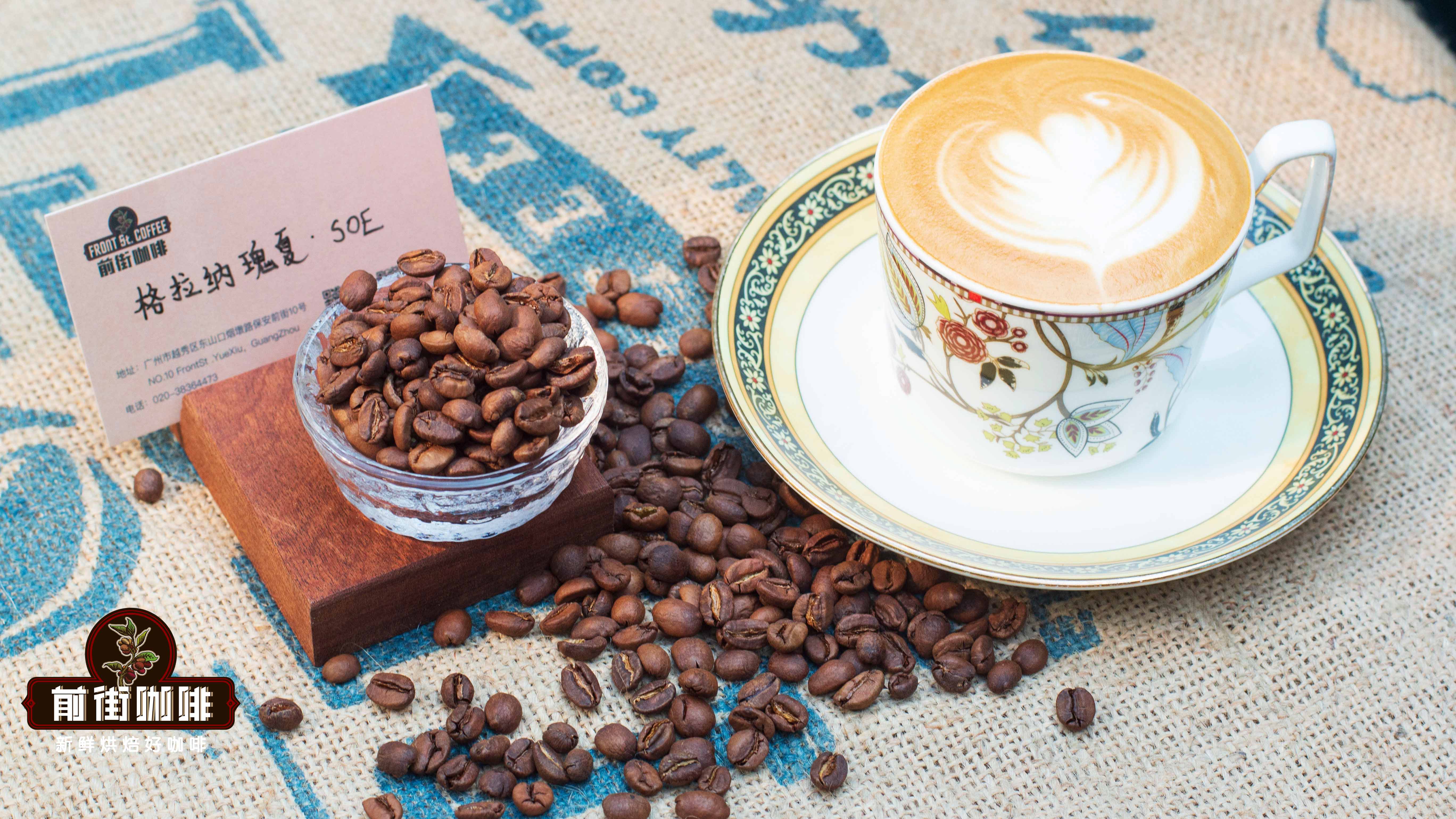
To make good coffee that suits your taste, choosing the right beans is the first step. Acidity and bitterness are the two main directions of current coffee bean flavors, and the degree of roasting is exactly the key factor determining this direction. If you want the Americano to have bright acidity, it is recommended to prioritize medium-light roasted beans, such as Front Street Huakui SOE and Front Street Grana Geisha SOE;

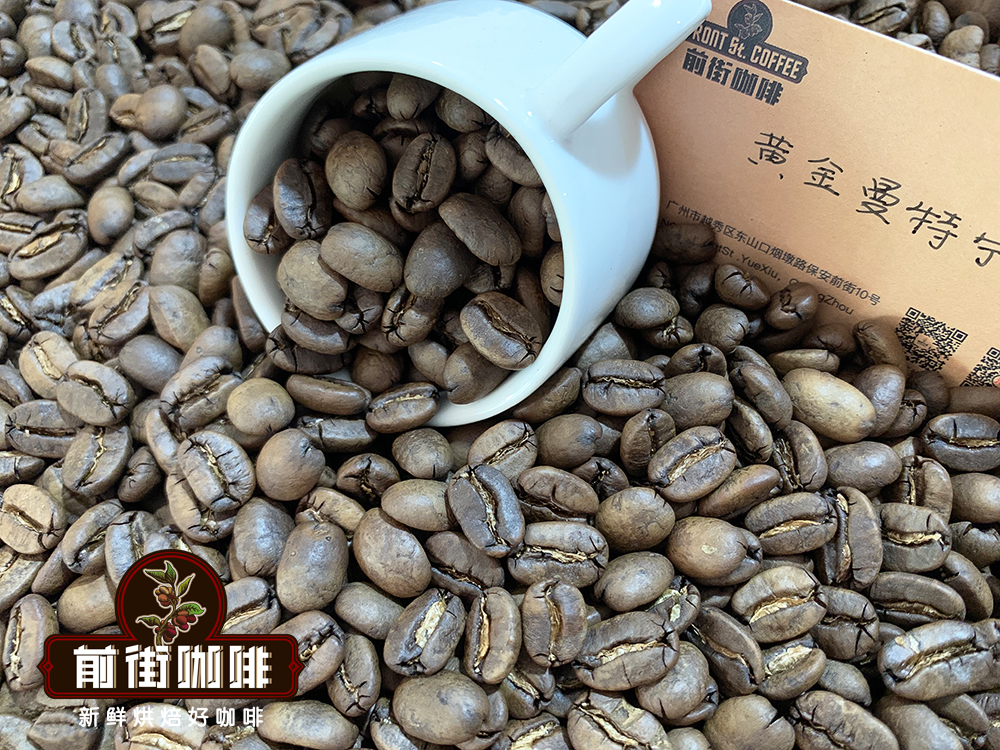
If you prefer an Americano with a full body and steady flavor, you can choose medium-dark roasted Front Street Classic Blend, Front Street Dark Cocoa Blend, or Front Street PWN Golden Mandheling. These beans can present a caramel-like sweet aroma and extract an ideal espresso. Of course, a suitable extraction recipe is also essential.
In the extraction recipe, grind size is the most difficult part to get right. As Front Street often mentions, you can first apply an extraction formula: how much dose, within how much time, to extract how much liquid weight. Using a formula to constrain the extraction process can help us quickly find the grind level suitable for the current beans.
The dose needs to be determined according to the basket capacity. For example, Front Street's basket capacity is 20g. Dark roasted beans can be dosed at 19.5~20.5g, while light roasted beans can be slightly more; for the espresso brew ratio, you can first use the common Italian "golden ratio" of 1:2; in terms of extraction time, based on the above parameters, dark roasted beans are recommended to be controlled at 28~32 seconds, while light roasted beans, due to higher density and greater extraction resistance, can be extended to 28~35 seconds.
Next, fix the time and brew ratio, and adjust the grind size so that the extraction time falls into the target range—if it is too fast, grind finer; if too slow, grind coarser. Once the time is on target, make fine adjustments based on taste: if the flavor is sharp and sour, it may be under-extracted, so you can appropriately increase the liquid weight and raise the extraction yield; if there is a burnt bitter taste, it indicates over-extraction, and you need to reduce the liquid weight or grind coarser.
Once the taste of the espresso is satisfactory, the next thing to solve is how much water to add.
Coffee strength
Diluting the strength of espresso with water to make it easier to drink was exactly the original intention behind the birth of Americano. And how much water to add and to what degree to dilute it has become a major core challenge in making Americano.
Taking hot Americano as an example, the ratio used by Front Street is 1:4, that is, 1 part espresso plus 4 parts water. However, everyone does not need to rush to copy it, because this is an adapted ratio measured based on the beans used by Front Street. Friends familiar with Front Street know that we use the medium-dark roasted Warm Sun Blend, which is balanced in acidity and bitterness and mild in taste. On this basis, adding four times the water can fully display the flavor while leaving some room in strength, making the mouthfeel richer.
But if you use light roasted beans, the coffee strength can be appropriately increased. This is because light roasted beans perform weakly when made into espresso, and the flavor needs to be better presented by amplifying the strength; on the contrary, if dark roasted beans are too strong, the bitterness will be too heavy and the flavor will instead be suppressed, so the ratio can be appropriately reduced to dilute the strength and disperse the bitterness.
Now about temperature, which is also something everyone cares about a lot. Like latte, it is enough to keep the temperature at around 65~70°C. This range will not burn the mouth, and can also maintain a high temperature for a longer time, allowing us to slowly appreciate the layered changes of hot Americano.
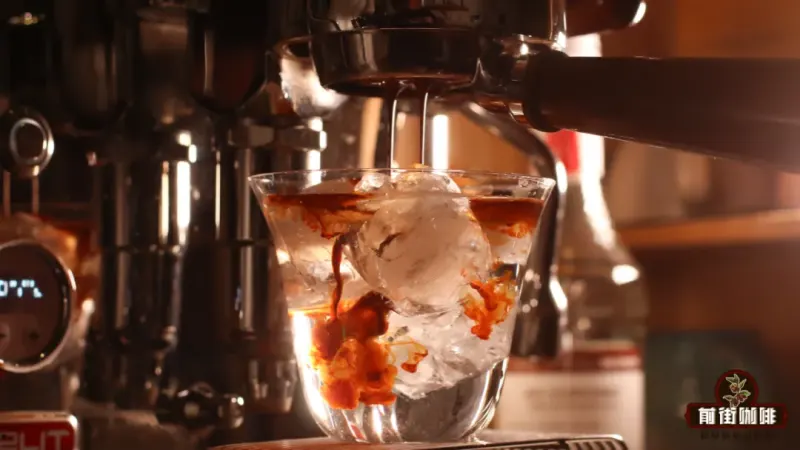
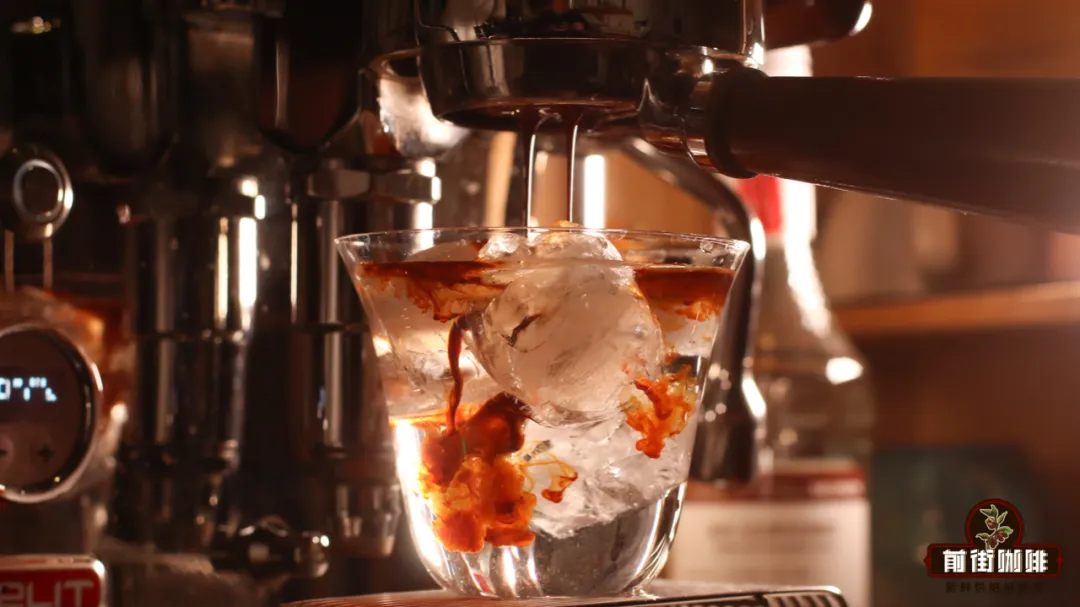
Iced Americano is a bit more particular, because in addition to water it also has ice cubes. Ice cubes not only lower the temperature, but also dilute the strength after melting. So when determining the ratio of ice to water, the melting speed of the ice cubes must also be considered.
Taking Front Street's iced Americano as an example, the ratio of coffee to ice water is 1:6.5, and the ice-to-water ratio is about 1:1.8. That is, 38g coffee liquid with 90g ice cubes and 160g water. The ice cubes use old ice frozen for many days, about 30g each, three cubes in total. Even if left for about 15 minutes after serving, ice cubes can still be seen in the cup. If small ice cubes are used, their surface area is large and density is low, so at the same weight they melt much faster. The faster they melt, the more the coffee strength is diluted, and the taste and mouthfeel will become weaker as well. Therefore, more ice cubes are needed to slow down dissolution and keep the excellent flavor, mouthfeel, and strength for longer.
But accurately calculating the melting speed of ice cubes is obviously too troublesome, and everyone drinks at different speeds. Some down it in one go, while others savor it slowly like hot Americano. Moreover, there is no need for everyone to study the melting patterns of ice cubes. At this time, you might as well try Front Street's little trick: directly take out the cup you usually use for iced Americano, fill it with ice cubes, add water to the eight-tenths full mark, and finally pour in the espresso and stir evenly. Judge by tasting whether the strength is suitable—if it is too strong, reduce the ice cubes and add more water; if it is too weak, do the opposite.
Of course, the same goes for hot Americano. Everyone's taste is different, and Front Street still recommends trying several ratios and recording them, so that you can find the Americano recipe that best suits you and the beans you use.
The amount of crema
Finally, some small details. The crema of espresso is an important factor affecting the mouthfeel of Americano, and this detail cannot be ignored. Front Street often says that the composition of espresso crema includes not only carbon dioxide and coffee bean lipids, but also many very fine particles. These very fine particles can enhance the body of the coffee, but also bring a certain bitterness.
At this point, a trade-off is needed: if you want the Americano to be fuller and more aromatic, add the crema as usual; if you do not want the bitterness to stand out too much, you can choose to remove the crema to get a clean Americano. But the body and aroma will also weaken accordingly—after all, you cannot have your cake and eat it too.
The above content is compiled by CoffeeHunters, a coffee news website.


