








Why does whole fresh milk build better cappuccino foam?
Cafes default to whole fresh milk for lattes and cappuccinos because its protein and fat content steams into more stable, sweeter foam than shelf-stable UHT milk. Whey protein forms a film around injected air, while casein attaches to the bubble surface and adds tension that keeps bubbles from bursting. That structure is what gives cappuccino foam its body and holds latte art in place.
Lactose also matters. Its sweetness is only about 0.16 on a sucrose scale of 1.0, but it shifts with temperature, becoming more noticeable between 60°C and 70°C. Fresh milk is pasteurized at lower temperatures and kept cold, which preserves more of that behavior than UHT treatment. The latte milk to coffee ratio stays a barista choice, but the milk itself sets the ceiling on texture.
Walk into any café and order a latte or cappuccino, and unless you specify otherwise, the milk the barista uses by default is almost always whole fresh milk. Why are cafés so committed to cold-chain fresh milk? What roles do the protein, fat, and lactose in milk each play in milk coffee? And what trade-offs in flavor and shelf life do pasteurization and UHT ultra-high-temperature sterilization bring? Starting from how milk components affect coffee flavor and milk foam structure, this article peels back the layers to analyze the core logic behind whole fresh milk becoming the top choice for cafés, while also comparing the practical differences between low-temperature fresh milk and shelf-stable pure milk, to help you make a more suitable choice when making milk coffee at home.
There are countless types of milk on the market, with concepts like whole, skimmed, and purified emerging one after another. But no matter which city or which café you walk into, as long as the customer hasn't specified otherwise, the milk the barista uses by default to make milk coffee is almost always—whole fresh milk. This leaves many people wondering: why have cafés collectively chosen whole fresh milk?
To figure out this question, we first need to start with how milk affects a cup of coffee.
Milk is rich in various components, with protein, carbohydrates, fat, and ash being its main constituents. These substances each have their own characteristics and can enhance coffee from different dimensions.
In terms of protein, milk protein consists mainly of whey protein and casein. When steaming milk foam, these two proteins are the key players in building a stable foam structure.

After steam is injected into the milk, whey protein forms a thin film that wraps around the gas, creating bubbles of varying sizes; casein then attaches to the outer layer of the bubbles, generating surface tension at the boundary between bubble and liquid, providing the bubbles with a stronger protective layer and reducing the probability of bursting.
In terms of carbohydrates, the carbs in milk are mainly lactose. Lactose's sweetness is not prominent and cannot be easily picked up by the taste buds the way fructose can. If sucrose sweetness is taken as a baseline of 1.0, lactose is only 0.16—a fairly obvious gap. However, lactose's sweetness fluctuates with temperature.
Within the range of 60°C to 70°C, lactose and other sugars are at their most active, and lactose's sweetness is easier to perceive at this point. Milk is usually steamed to this temperature, partly to activate lactose's sweetness, making hot milk coffee taste sweeter and more fragrant on the palate.
In terms of fat, the fat content in milk directly determines the richness of the mouthfeel. This is especially evident in skimmed milk. Anyone who has drunk skimmed milk will know: compared with regular whole milk, skimmed milk has a thinner mouthfeel, even somewhat bland—and this is precisely caused by the absence of fat.
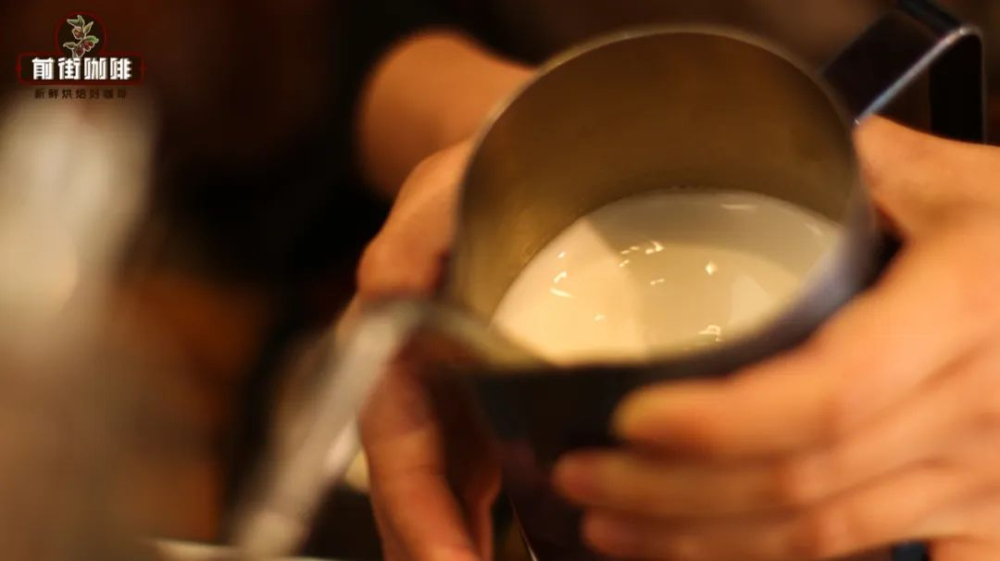
Besides affecting mouthfeel, fat also plays a role in foam formation. When milk is heated above 40°C, the lipids in it begin to melt; the melted lipids have a lower density and easily attach to the surface of the bubbles, further reinforcing the foam shell and slowing down the rate at which the foam dissipates. Skimmed milk, by contrast, has low fat content, and the foam lacks this protective layer, making it more prone to bursting after steaming and noticeably faster to dissipate. This is why coffee shops don't use skimmed milk to make milk coffee.
So, is more of these components in milk always better?
Theoretically, the higher the concentration of substances in milk, the richer the taste, which seems like a good thing. But everything requires moderation. When the concentration of various substances is too high, the heavily flavored milk can easily overpower the coffee's own taste—purified milk is a typical example. Whether lactose, fat, or protein, purified milk's content is noticeably higher than whole milk; although the mouthfeel and taste are heavier, for regular milk coffee production this is not entirely an advantage.
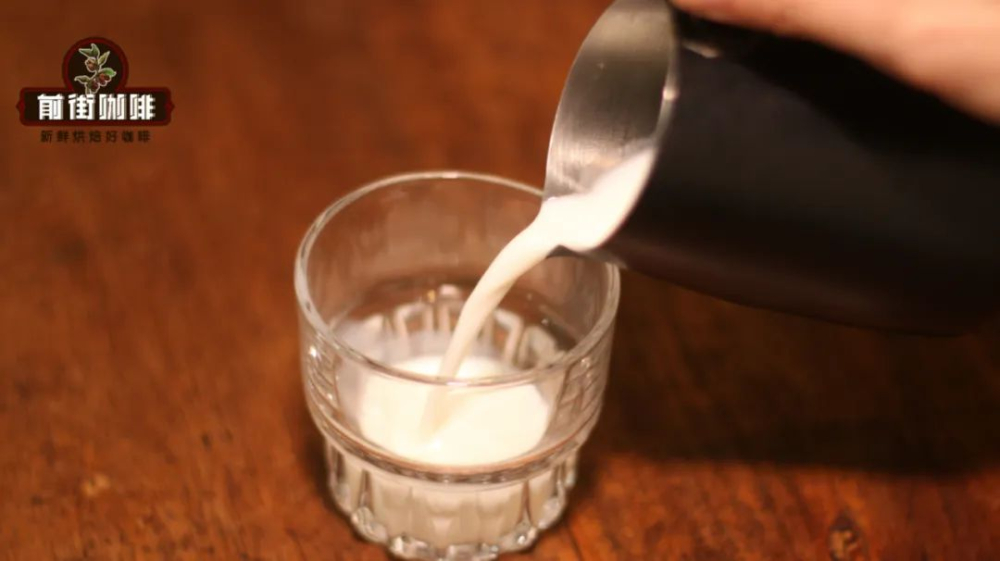
Additionally, an appropriate amount of protein and fat can indeed improve milk's foaming ability and foam stability. But once fat content is too high, although the mouthfeel becomes richer, the weight of the dissolved fat exceeds the load-bearing limit of the light foam; under the heavy pressure of thick fat, the foam quickly collapses.
Even setting foam aside, to bring out the strengths of purified milk, you would have to adjust the original recipe or dilute it. But doing so is expensive and cumbersome—a classic case of more trouble than it's worth. Therefore, unless there are special requirements or specific products that need it, purified milk is almost never chosen for production. Whole milk, by contrast, happens to satisfy exactly what milk coffee requires: it won't let the milk flavor steal the show due to overly high concentration of substances, nor will it seem thin in mouthfeel due to insufficient components.
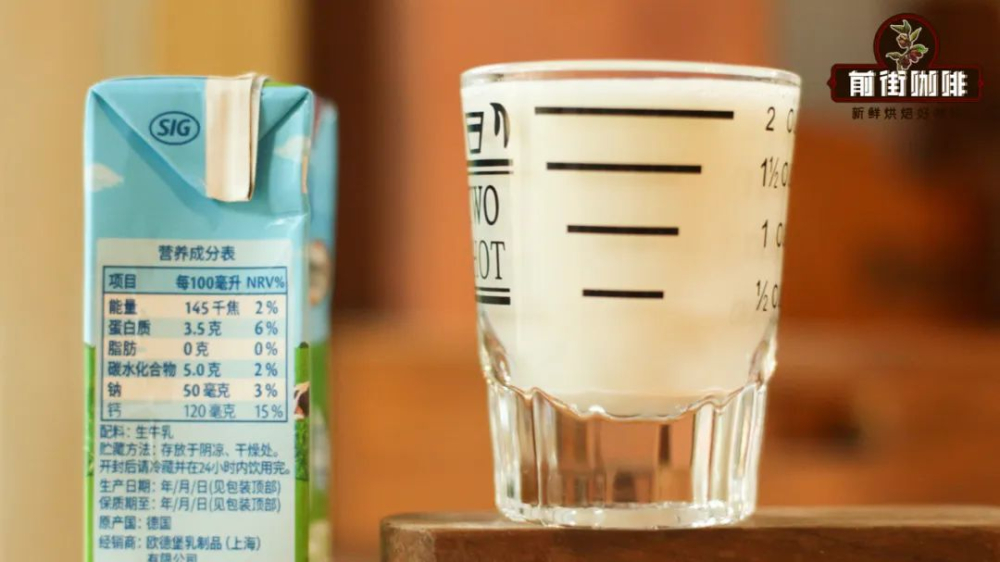
The two types of milk mentioned earlier use pasteurization (fresh milk) and UHT ultra-high-temperature sterilization (shelf-stable milk), respectively. Different sterilization methods lead to different degrees of retention of bacteria and various nutrients.
UHT ultra-high-temperature sterilization uses a temperature range of 135°C to 150°C, with a sterilization time of 2 to 5 seconds. This method can thoroughly eliminate bacteria and greatly extend milk's shelf life, allowing it to be stored at room temperature for 6 months or even longer. The drawback, however, is that the high temperature, while sterilizing, also takes away some substances in the milk, such as fat, so the mouthfeel is not full enough—yet the foam is actually more durable.
Pasteurization, by contrast, uses a lower temperature of 70°C to 75°C for sterilization, which preserves nutrients to the greatest extent, resulting in a better mouthfeel and taste. But this comes at the cost of a shorter shelf life—refrigerated fresh milk can only be kept for about two weeks and must be stored at low temperature throughout. Once past the expiration date, or left in a high-temperature environment for a long time, it spoils easily.
For friends making coffee at home, either type of milk can be used; without a direct comparison, the difference is not obvious. But for coffee shops, mouthfeel and taste are paramount—even a subtle difference is, in their eyes, the gap between 60 points and 90 points. That's why the vast majority of businesses choose cold-stored fresh milk to make milk coffee, with the core aim of presenting their products in a superior state.
- END -
The above content is compiled by CoffeeHunters, a coffee news website.


