







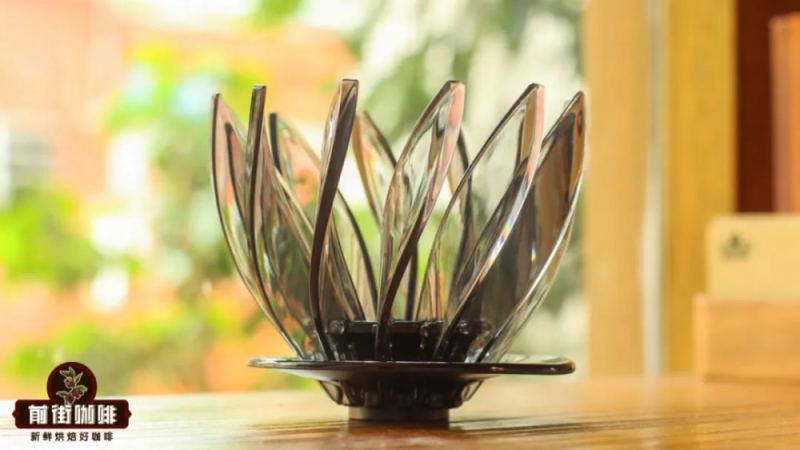
How does the Hario Water Lily dripper compare with a V60 and kono coffee drippers?
The Hario Water Lily Dripper is built from a detachable base and 12 resin blades rather than a one-piece cone. With no cup wall, the filter paper rests entirely on the blades, which act as both skeleton and flow guides. In testing, the average flow rate after filling is about 8 ml/s, faster than the Kono but slower than the V60 at roughly 10 ml/s, putting it in the medium-fast range.
The taller blades raise the pouring height and add impact force, so doses below 20 g tend to over-extract. The dripper works better with 20 g or more and a 02-size filter paper. Removing the blades opens up alternative setups, including single-serve brewing. For anyone weighing a coffee v60 brewing cup against this design, the choice comes down to control at lower doses versus flexibility.
The Hario Lily Dripper is assembled from a detachable set of 12 blades and a base, completely different from the common one-piece drippers. The resin material is heat-resistant and drop-resistant, and the blade colors can be freely mixed and matched. It has no cup wall, so the filter paper is supported entirely by the blades, which serve both as a skeleton and as flow guides. In actual testing, the average flow rate after filling with water is about 8ml/s, faster than the Kono but slower than the V60's 10ml/s, placing it in the medium-fast range. However, the longer blades raise the pouring height and increase the impact force, making doses below 20g prone to over-extraction; it is better suited to 20g or more with a 02-size filter paper. Front Street also found that removing the blades unlocks several alternative brewing methods, including single-serve setups.
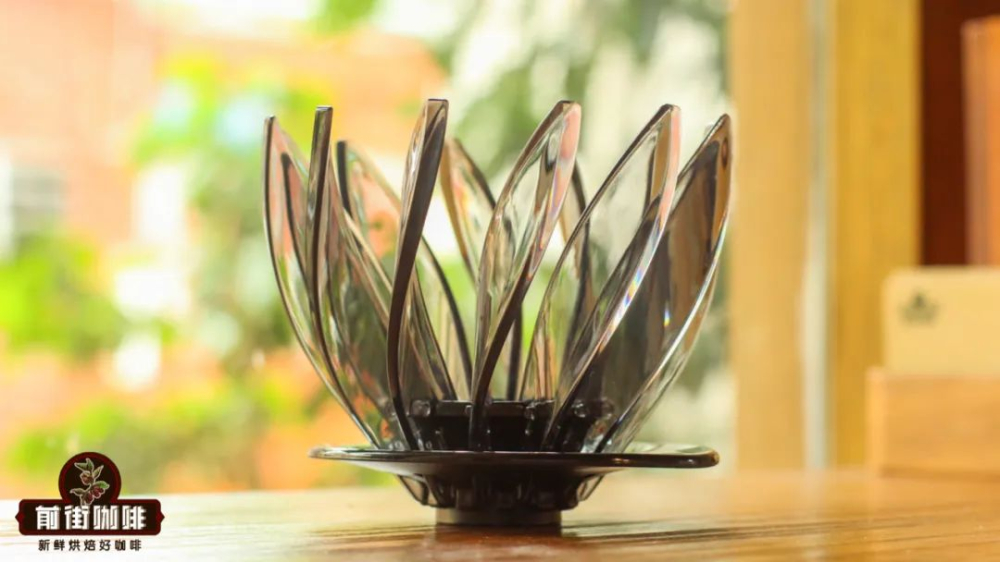
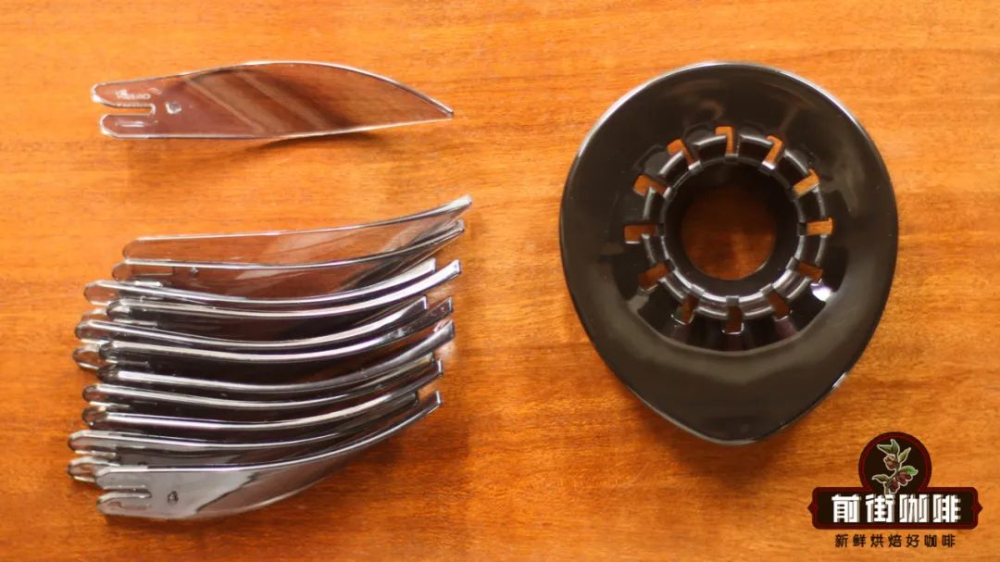
Most drippers on the market use a one-piece molded structure, but the most special thing about the Lily Dripper is that it is assembled from a base plus 12 blades, which can be taken apart at will, and the material used is heat-resistant and drop-resistant resin. Interestingly, the base itself is made up of a ring and a stand, and the blades are available in multiple colors. In other words, just in the assembly alone, you can create quite a few combinations.
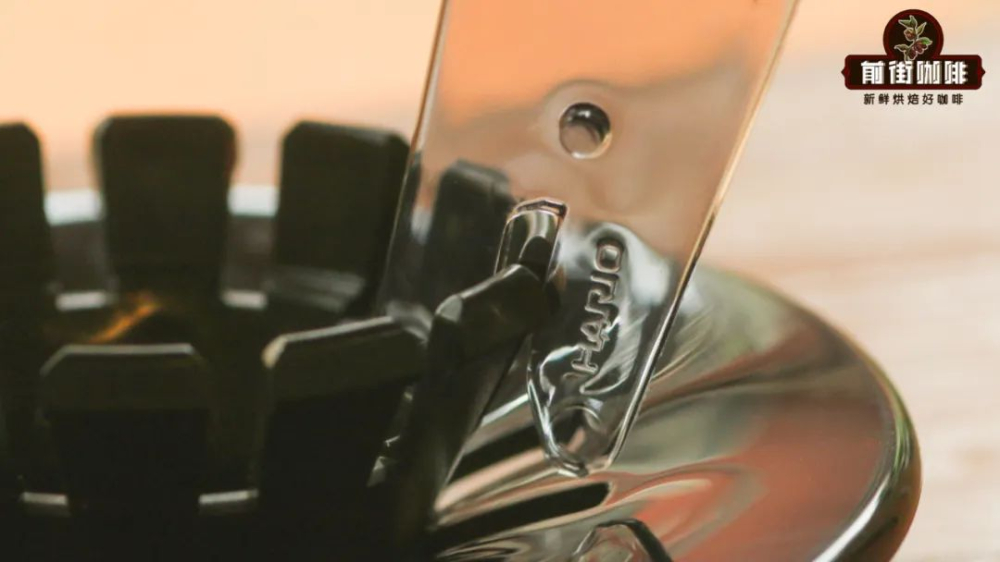
To avoid assembling it incorrectly, Hario placed the slot with lettering on the outer-facing blades. When assembling, you just need to insert it with the slot printed with the Hario name facing outward, which is quite intuitive to do.
There is actually no dedicated locking structure between the blades and the base, so Front Street was initially worried about whether it would be stable enough. After actually putting it together, it turned out to be reassuringly stable. Because the grooves are made relatively deep, and there is a small bump (the little black dot in the picture) that catches the end, the blades will not loosen or fall apart even if you shake it hard, so it will not interfere with brewing. Of course, if you turn the whole thing upside down, the blades will still fall out.
Since this dripper has no cup wall, the filter paper can only be held up by the blades. Besides supporting the filter paper, the blades also play a role similar to the V60's ribs, guiding the water flow. It is worth mentioning that even without a cup wall, the coffee liquid will not leak out in large amounts through the gaps, so there is no need to worry too much about bypass water.
Many bloggers noticed an interesting detail when testing the Lily Dripper: its blade curvature is almost identical to the V60's ribs, and the number is also 12. So it was only natural for people to wonder whether its flow rate would also be as fast as the V60's.
In actual testing, its flow is indeed on the fast side, but still slower than the V60. The V60's average flow rate after filling with water is 10ml/s, the Lily Dripper is about 8ml/s after filling with water, and the Kono dripper is 5ml/s. So the Lily Dripper's flow rate falls into the medium-fast category. However, this data was measured without any coffee grounds in it.
Although the official positioning of this dripper is 1–4 servings, which in theory accommodates both small doses (within 20g) and large doses (20g–40g), in practice, in its normal form it is not suitable for brewing doses below 20g. The reason is that the blades are too long, so the pouring height has to be raised accordingly, and as a result the impact force of the water stream becomes noticeably stronger.
Once the impact force is strong, the extraction efficiency rises along with it, and the fines also sink to the bottom because of the agitation, clogging the filter paper. Front Street's first attempt at a single-serve brew ended in complete over-extraction.
So we need to increase the dose to keep the water flow impact from being so aggressive; 20g or more is fine. Of course, when the dose goes up, the filter paper also has to be switched to a larger 02-size one, otherwise the 01-size filter paper cannot hold that much hot water. (The officially recommended filter paper is 02-size.)
After multiple rounds of testing, the coffee brewed with the Lily Dripper is not much different from a regular V60. Therefore, it can absolutely be treated as a 02-size V60 for normal brewing, with no adjustments needed to the parameters.
Multiple Ways to Play
Of course, what was described above is only the most conventional use. The detachable blades bring not only a unique appearance, but also a lot of versatility. If you really only want to brew a single serving, that is no problem either—we can take a different approach and remove one blade, freeing up space for the kettle spout to be lowered, so that the poured water flow is closer to a conventional state and not so forceful. That way, single-serve coffee can also be brewed well.
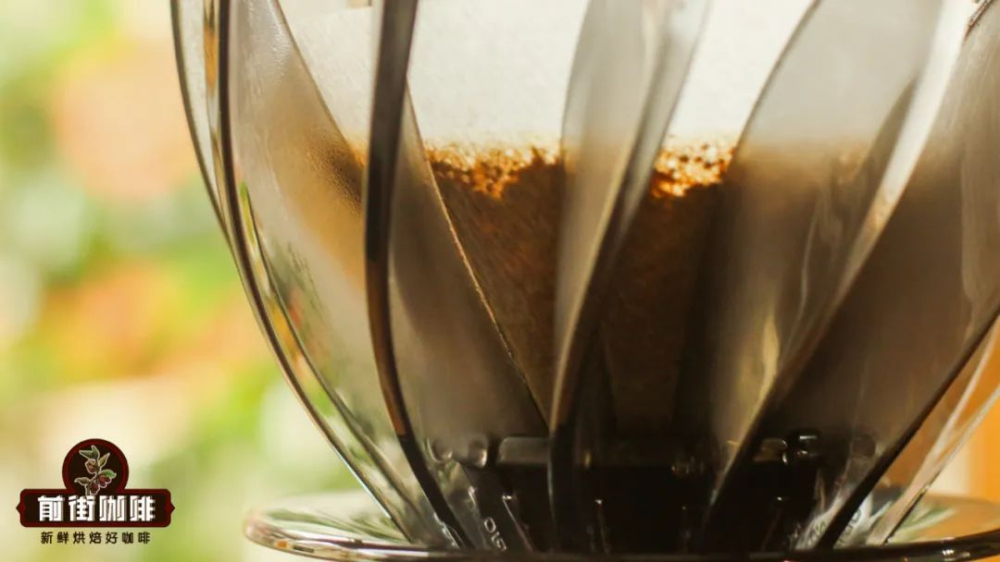
If you think the Lily Dripper with one blade removed does not look good enough, then simply remove five more to keep it symmetrical. With only six blades left, it can still support the filter paper and complete the brew. Although the filter paper will deform because there are fewer ribs, it will not tilt because of that, nor will the flow rate be slowed down.
Finally, Front Street actually prefers this base! Because the base is not fixed, in theory it can be used to support other conical drippers that do not have a base. The Origami dripper verified this for us, even though most conical drippers are one-piece molded!
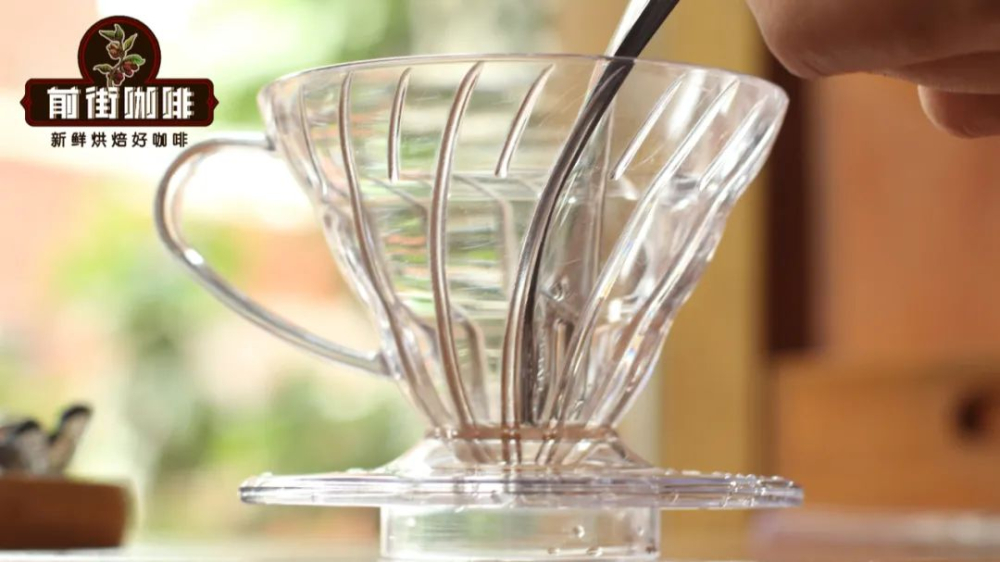
Overall, the experience brought by this new dripper is quite pleasant. It is not just a pretty face; it is very versatile. Those interested can order one themselves from the Hario official website. (Lastly: this is not an ad.)
The above content is compiled by CoffeeHunters, a coffee news website.


