







How Does the Thailand Coffee Industry Grow Arabica and Elephant Dung Coffee?
Thailand grows coffee in two main regions: the highlands of Chiang Mai, Chiang Rai and Lampang in the north, where arabica beans dominate, and the southern provinces of Chumphon and Surat Thani, which are planted mainly with robusta. The country also produces elephant dung coffee, a rare and costly specialty whose price comes from a unique biological fermentation process inside the animal.
The coffee industry in Thailand rests on geography as much as history. Northern plots sit at high altitude, which suits arabica; the warmer, lower south favors robusta. That split shapes what Thai farmers sell, how lots are processed, and why small volumes of elephant dung coffee draw outsized attention from buyers and media alike.
Thailand, as one of Asia's important coffee-producing countries, has developed two major coffee-growing regions in the north and south thanks to its unique geographical environment and climatic conditions. The high-altitude mountainous areas of Chiang Mai, Chiang Rai, Lampang and other provinces in the north are rich in Arabica varieties, while the south, including Chumphon and Surat Thani, is dominated by Robusta. Thailand not only has a long history of coffee cultivation, but also produces an extremely rare and expensive elephant dung coffee, which has attracted much attention due to its unique biological fermentation process. This article will give you a comprehensive understanding of Thailand's coffee-growing regions, cultivated varieties and specialty products.
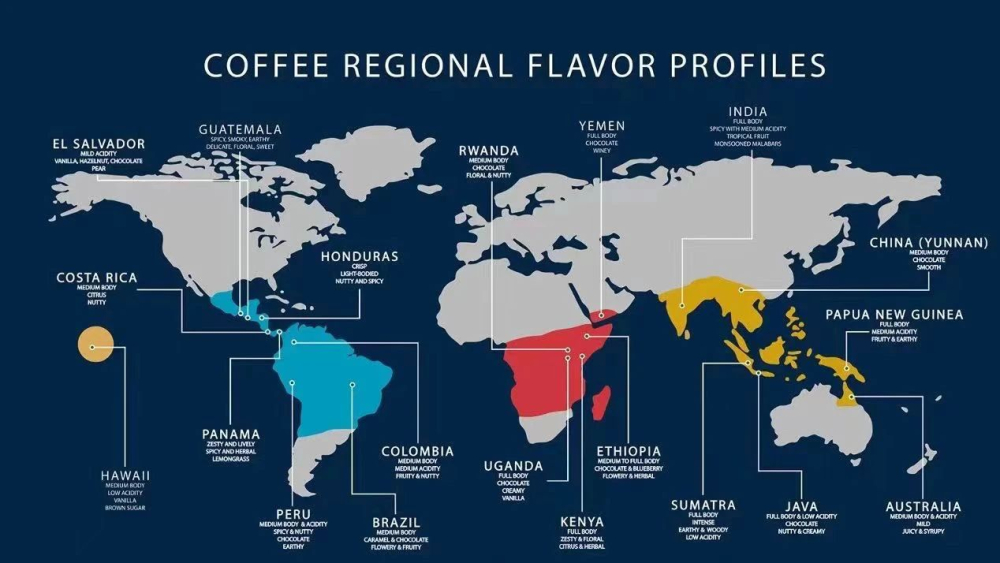
On the map of Asia, coffee cultivation is not limited to China; Laos, Indonesia, East Timor and even Thailand all have their own coffee industries. Today let's talk about coffee cultivation in Thailand.
Thailand
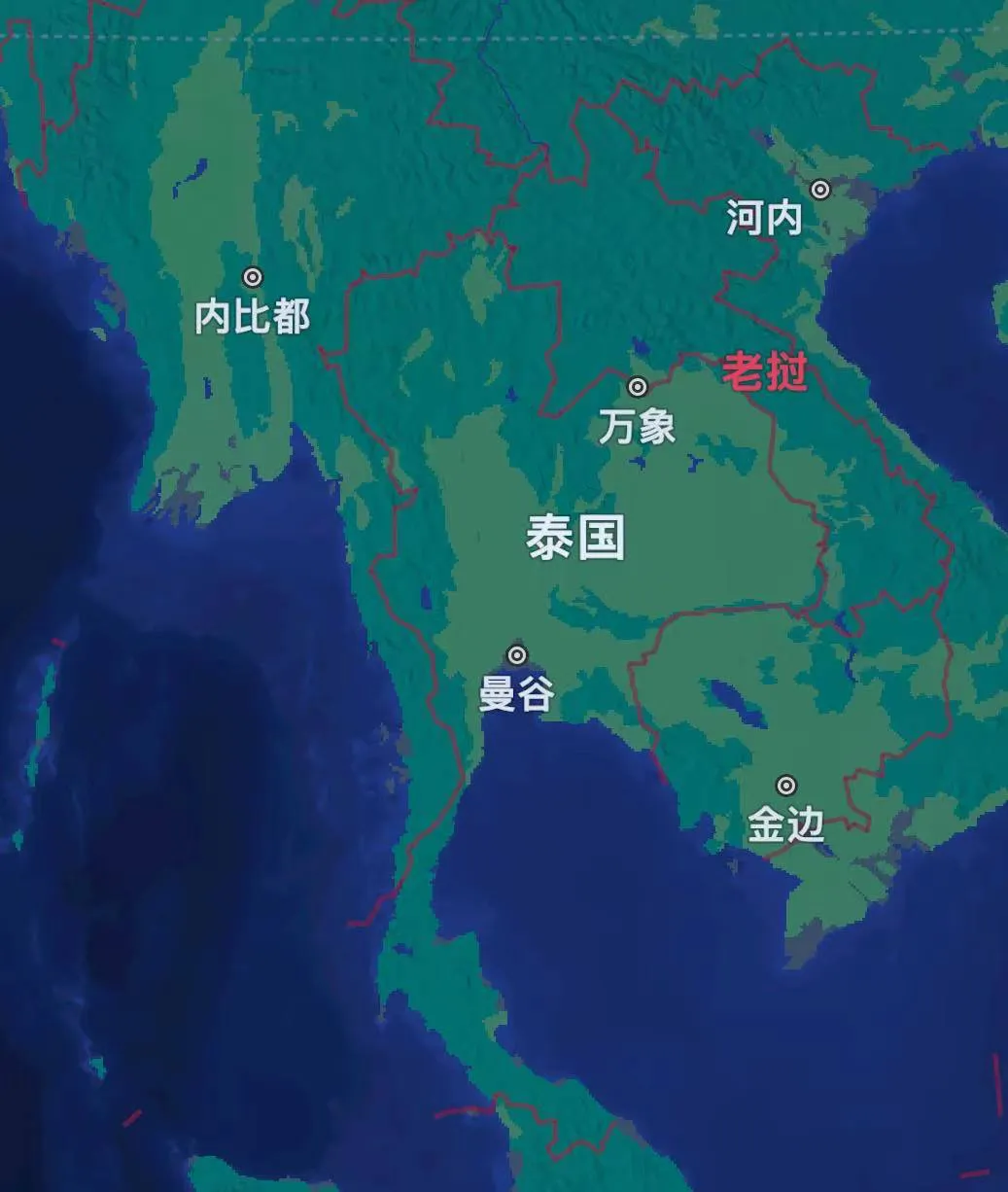
The Kingdom of Thailand is located in the central and southern part of the Indochinese Peninsula, with the Gulf of Thailand of the Pacific Ocean to its southeast and the Andaman Sea of the Indian Ocean to its southwest. In terms of neighboring countries, it borders Myanmar to the northwest, Laos to the northeast, Cambodia to the east, and Malaysia to the south, with a total land area of about 13,000 square kilometers.
The Thai flag is rectangular in design and consists of five horizontal stripes arranged from top to bottom in red, white, blue, white and red, with the width of the blue stripe being twice that of the red and white stripes. In terms of color symbolism, red symbolizes the nation and the strength and dedication of the unity of all ethnic groups; since Buddhism is designated as the state religion, white represents religion and signifies purity; and since Thailand implements a constitutional monarchy, blue symbolizes the royal family, with the wide blue stripe in the center meaning that the monarchy occupies a core position between the people of all ethnic groups and the pure religion.
In terms of topography, Thailand as a whole shows a trend of being high in the north and low in the south, gradually sloping from northwest to southeast, with plains and lowlands accounting for more than half of the country's area. The terrain can be divided into four major natural regions: the mountainous jungle area in the north, the flat and fertile Chao Phraya River plain in the central region, the Khorat Plateau in the northeast, and the extension of the western mountain range in the south, which continues southward and eventually forms the Malay Peninsula.
In terms of climate, most parts of Thailand have a tropical monsoon climate, and the year can be divided into three seasons: the hot season (February to mid-May), the rainy season (June to mid-October) and the cool season (November to February of the following year). The annual average temperature is about 27.7°C, with extreme maximum temperatures exceeding 40°C. The average annual rainfall is about 1,100 millimeters, and the average humidity remains between 66% and 82%.
Thailand is rich in natural resources, including high-altitude mountainous areas, numerous rivers and abundant rainfall. Together with suitable climate and temperature conditions, these factors have jointly made coffee one of the country's important cash crops.
Coffee-growing regions
Based on differences in climate and geological conditions across regions, the Thai government mainly divides coffee-growing areas into two major sections, north and south. In the north, Chiang Mai, Chiang Rai, Lampang and other provinces are the core growing areas for Arabica varieties, while in the south, Chumphon, Surat Thani and other provinces mainly grow Robusta varieties.
Chiang Mai: Located in northern Thailand, it borders Myanmar to the north and lies in the mountainous area of northern Thailand and the Ping River basin, with continuous mountain ranges running north-south. Coffee cultivation is distributed in mountainous areas at elevations of 1,000 to 1,600 meters, with the main cultivated varieties being Caturra, Catuai and Catimor.
Chiang Rai: Located at the northernmost tip of Thailand, it borders Myanmar to the northwest and Laos to the northeast, with an average elevation of about 580 meters. The main stream of the Mekong River flows through the northeastern side of Chiang Rai Province, while its tributaries run through the area within the province. Coffee cultivation is also at elevations between 1,000 and 1,600 meters, and the main varieties are likewise Caturra, Catuai and Catimor.
Lampang: Also located in northern Thailand, it is adjacent to Chiang Rai, Tak, Chiang Mai and other provinces, and lies in the broad valley of the Wang River surrounded by mountain ranges. Coffee cultivation is at elevations ranging from 1,000 to 1,600 meters, mainly growing Caturra, Catuai and Catimor varieties.
In Thailand, there is also a rather special and expensive coffee — elephant dung coffee. It is also called "Black Ivory." The production process of this coffee is quite unique: first, fresh coffee beans are collected by hand-picking, then rice and bananas are mixed evenly with the coffee beans, and elephants are fed the mixture by hand. After the coffee beans enter the elephant's body, they need to undergo about 17 hours of fermentation mixed with gastric acid before being excreted. Afterward, people carefully hand-select the coffee beans from the elephant dung and then carry out the subsequent coffee processing steps.
The enzymes in the elephant's digestive system can break down the proteins in the coffee beans, and protein is one of the factors that causes coffee to taste bitter. Therefore, the lower the protein content, the less obvious the bitterness of the coffee and the smoother the taste. However, because this kind of coffee is extremely difficult to produce, its price is also more expensive.
Front Street Coffee recommendation: If you are interested in Thai coffee, Front Street suggests trying Arabica beans from northern Thailand. They have a balanced taste with nutty and chocolate flavors, making them a good choice for getting started with Thai coffee.
The above content is compiled by CoffeeHunters, a coffee news website.


