







Can baristas adjust ice in iced drinks brewed by the standard recipe?
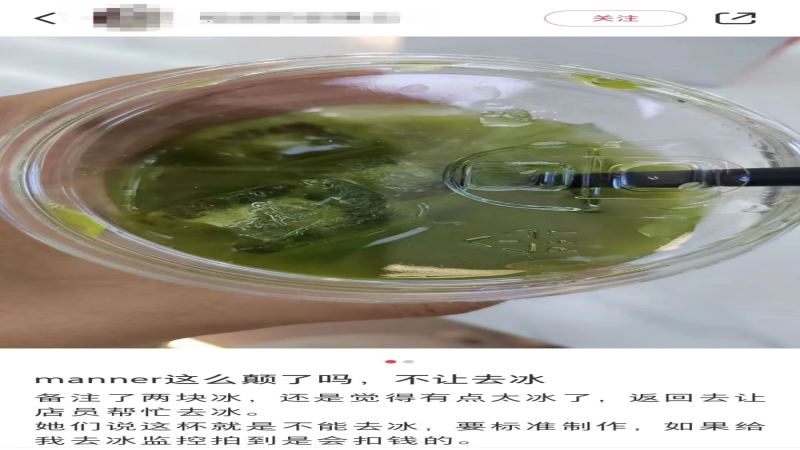
Chain beverage shops require iced drinks to be made to standard ratios, so staff at brands such as Manner and Starbucks have refused customer requests to remove ice. At Manner, a customer who asked for only two ice cubes still found the drink too cold and asked staff to take the ice out, but the request was declined. Employees say removing ice without authorization can lead to a pay deduction if surveillance catches it.
Iced drinks make up a growing share of summer sales, and brands treat the ice ratio as part of the recipe rather than a preference. That puts baristas between customer expectations and company rules, similar to following a fixed process when you brew coffee in a coffee maker or make coffee on a coffee maker at home. Whether chains should offer more flexibility remains the open question behind the recurring summer controversy.
In the scorching summer heat, iced drinks become the sales mainstay of major beverage shops, yet the controversy over "can you remove the ice" never ceases. A customer ordered an iced drink at Manner, noting that they only wanted two ice cubes, but after receiving it, still felt the temperature was too low and asked the staff to help remove the ice, only to be refused. The staff member helplessly explained that iced drinks must be made according to standard ratios, and that removing ice without authorization would result in a pay deduction if caught on surveillance. Similar situations have occurred at Starbucks. Why are chain brands so "particular" about the amount of ice? How should baristas balance customer needs and company regulations? This article will take you through the industry logic behind the ice-removal controversy for iced drinks.
▲
Click to follow | Daily specialty coffee culture magazine Coffee Workshop
As temperatures continue to rise, iced drinks account for an increasingly high proportion of sales in major beverage stores. However, not all consumers can accept the "chilling to the core" sensation of iced drinks. So every summer, whether ice can be removed from iced drinks becomes a topic of particular concern for customers.
Recently, a customer ordered an iced drink at Manner, clearly noting in the remarks that only two ice cubes were needed. But after receiving the drink, she found the entire cup was still too cold, not matching her expectations. So she returned to the counter to ask the staff to remove the ice, but was refused.
The staff explained that this iced drink must be made according to standard ratios and cannot have the ice removed. If ice removal were done without authorization and caught on the counter surveillance, there would be a pay deduction. The customer was very confused by this—it was just removing a few ice cubes, so why was it so difficult?
Similar incidents are not isolated cases. Another customer at Starbucks also had their request to remove ice refused by the staff. The staff repeatedly explained that this drink must use ice during production, and according to company requirements, this product simply cannot have the ice removed, so they could not meet the customer's request.
Regarding "removing ice from iced drinks," many people's view is: it is understandable that the standard preparation of iced drinks indeed requires a large amount of ice, but tastes vary, and some customers simply want less ice. Baristas could be flexible during preparation and add fewer ice cubes according to the customer's request. For example, Luckin employees, upon seeing customer remarks, will provide the service of counting ice cubes, trying their best to meet customer needs.
However, for iced drinks, fewer ice cubes means losing their soul, and removing ice may change the taste of the drink, thereby triggering complaints and negative reviews from some consumers. Therefore, different companies have different approaches to handling ice.
According to Manner employees, they can only make drinks according to the recipe, and the amount of ice can only be increased or decreased within permitted limits. Once there is a violation, a penalty notice will be issued, and "happily receiving" three penalty notices means you can take off your apron and no longer work at Manner. So when receiving an order with the remark "only two ice cubes," Manner employees, faced with the choice between making it as required to keep their income and being caught for unauthorized operations and fined, mostly choose the former.
The same is true for Starbucks: drinks that require ice in the production process cannot have the ice removed or reduced according to customer requests. Employees say that if certain iced drinks have their ice removed or reduced per customer request, on the one hand it affects the overall taste of the drink, and on the other hand it constitutes a violation, and if discovered, employees may at best be scolded, or at worst be fined.
To ensure stable quality control of their products, chain brands usually strictly regulate employee operating procedures and ingredient ratios, and there are also certain requirements for the amount of ice. But as more and more consumers request less ice or no ice, brands will also make slight adjustments based on the original ratios, striving to meet consumer needs while also ensuring the taste of the drink.
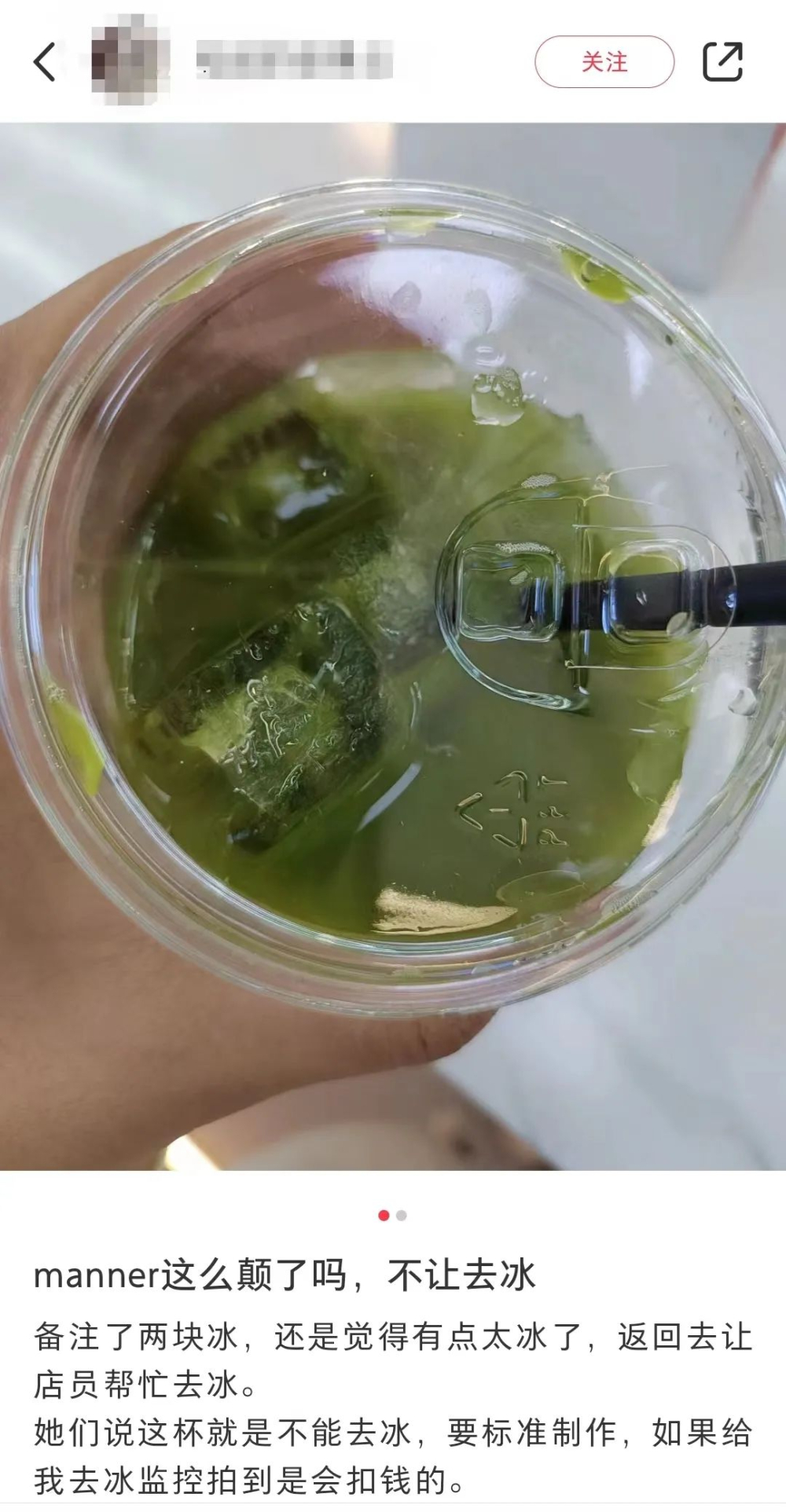
However, for certain products, brands also have their own insistence. And as the makers of various drinks, employees faced with certain hard production requirements can only execute according to the established plan. After all, not following the remarks at most results in customer negative reviews and complaints, but being caught making drinks in violation of regulations might cost them their job.
Image source: Xiaohongshu
Disclaimer: Some images in this article are from the internet. For some content on the website, such as images, we will respect the original author's copyright and indicate the source. However, due to the large quantity, some images and texts may not have been credited in time. Please forgive us. If the original author has any disputes, they can contact the website for handling. Once verified, we will correct it immediately. Compiled and edited by "Coffee Workshop." Please indicate the source when reposting. If there is infringement, please inform us for deletion. Thank you~!
The above content is compiled by CoffeeHunters, a coffee news website.


