







Which Iced Pour-Over Method Suits Green Geisha Coffee Beans?
Three common methods exist for iced pour-over: placing ice in the server before brewing, pouring hot coffee over ice, and ice-bath cooling, where the server sits in an ice bath during extraction. Tested on Hacienda La Esmeralda Green Label Geisha, the methods differ in cooling speed and how much aroma and acidity survive.
Direct ice chills fastest and dilutes the brew, pouring over ice preserves more aromatics but needs a higher concentration, and ice-bath cooling retains the most clarity at the cost of extra time. Because green geisha coffee beans carry delicate floral and citrus notes, gentle, even chilling keeps those top notes intact.
On a scorching summer day, iced pour-over coffee has become a popular choice in cafés thanks to its refreshing and mellow taste. There are many ways to make iced pour-over, with common methods including placing ice cubes in the server first, pouring hot coffee over ice, and the recently popular ice-bath cooling method. Different approaches retain coffee flavors to varying degrees, and their ease of operation differs greatly as well. In this article, we'll use Front Street's Hacienda La Esmeralda Green Label Geisha as an example, extracting the same beans using three methods—direct ice addition, pouring over ice, and ice-bath cooling—and compare them in detail from operation flow and cooling efficiency to final flavor performance, helping you find the iced coffee method that suits you best this summer.
When you walk into a café in midsummer, aside from the perennial iced-drink favorites like iced Americano, cold brew, and iced drip, iced pour-over also enjoys immense popularity. It has a refreshing taste, gentle acidity, and transparent sweetness; with the addition of ice cubes, it's both invigorating and thirst-quenching—a rare summer refreshment.
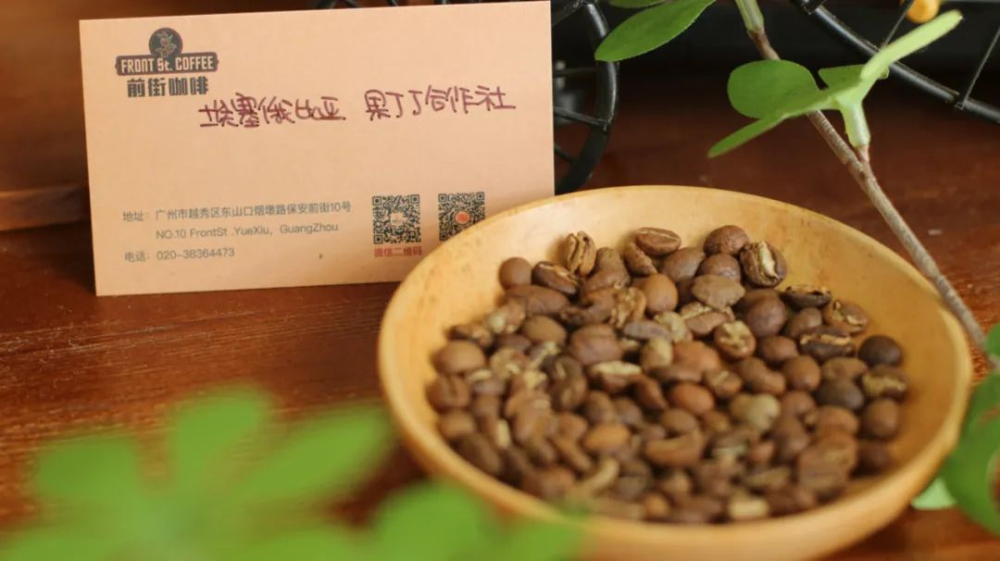
Basically any coffee beans can be used for iced pour-over, so just buy whatever flavor you like. If you haven't been into pour-over for long and are still in the exploratory stage, baristas suggest starting with Front Street's fruit-forward Dingding or Front Street's Boquete Geisha. If you can't quite handle acidity, you can choose the nutty-toned Front Street Queen's Estate or Front Street 2013 Yunnan Arabica—these are all medium roasts with relatively mild acidity.
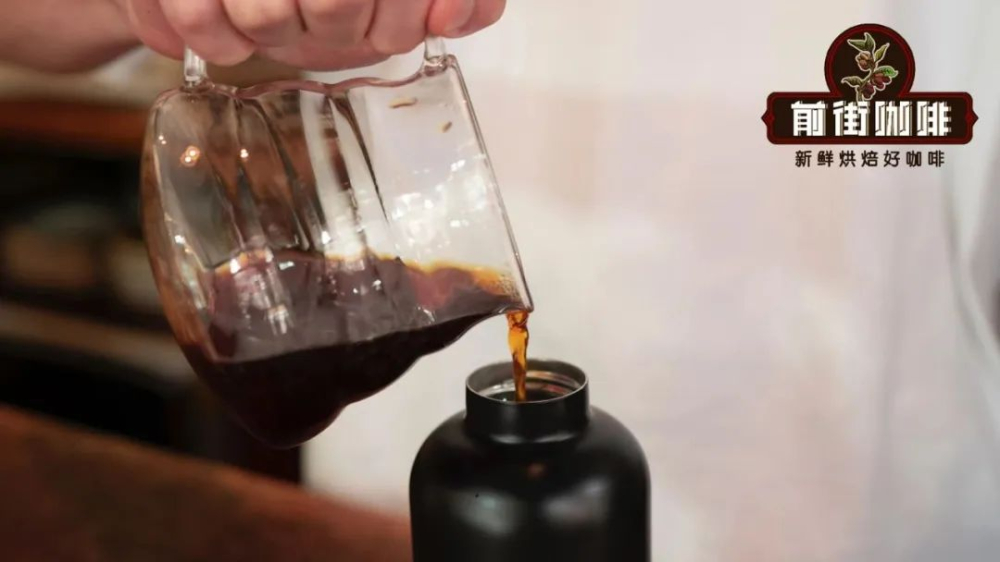
Currently, there are two most common iced pour-over methods. The first is consistent with Front Street's in-store preparation: place ice cubes in the server first, then pour water and extract according to the set ratio, and once done, shake well and pour out to drink. The second is to first brew a pot of higher-concentration hot coffee, then let the coffee liquid repeatedly pass through ice to cool it down, ultimately yielding a cup of ice-cold black coffee—this method is usually called "pouring over ice."
Of course, besides these two standard methods, adaptable folks in daily life have also come up with quite a few self-invented iced pour-over variations. For example, a friend of Front Street's, before heading out on a workday, would put ice cubes into a thermos, then brew a pot of high-concentration coffee and pour it in. By the time they arrive at the office, the ice has just finished cooling and diluting the hot coffee. The thermos also serves as a shaker during the commute, allowing the ice and coffee to blend more thoroughly.
A while ago, Front Street came across a rather interesting ice-bath cooling idea online: without changing parameters like grind size or coffee-to-water ratio, using an "ice bath" to cool the coffee liquid externally, avoiding direct contact between the coffee and ice cubes, with the aim of reducing the watery blandness caused by melted ice diluting the coffee. It sounded intriguing, and Front Street couldn't resist giving it a try—digging out the fruit tray commonly used in the shop and starting to brew.
Since this ice-bath brewing method doesn't add ice directly, the coffee liquid won't be diluted, and the concentration flowing into the server remains constant throughout. So here Front Street extracts using the parameter framework for hot pour-over:
Coffee beans: Front Street Hacienda La Esmeralda · Green Label Geisha
Dose: 15g
Coffee-to-water ratio: 1:15
Grind size: Ek43s setting 10
Water temperature: 92°C
Dripper: Ice Eye B75
Pouring technique: three-stage
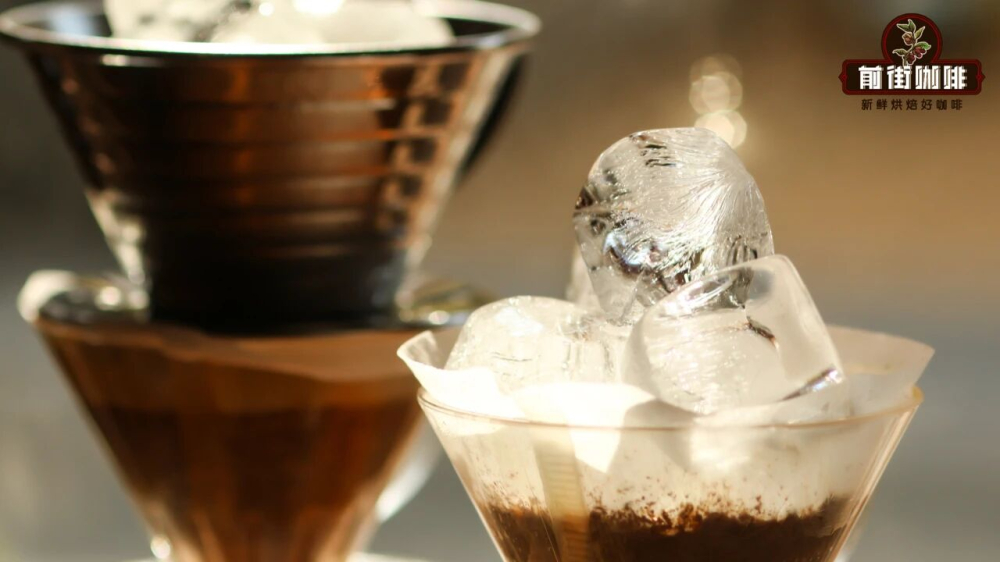
Front Street first prepared a bowl of ice-water mixture and placed it on an electronic scale, then firmly set the glass cup for collecting coffee liquid (pre-chilled) into it, aligned the cup mouth with the dripper's outlet, tared the scale to zero, and then officially began pouring and extracting.
Because the coffee liquid is cooled entirely by external ice water through physical means, the cooling speed is quite slow. Measured with a thermometer, the coffee liquid just falling into the ice cup was about 45–50°C. During the cooling process, Front Street would occasionally shake the cup to help the coffee liquid inside dissipate heat faster. Ultimately, it took nearly 10 minutes for the temperature to drop to 10°C.
For comparison, Front Street also extracted the same beans using two conventional methods: regular iced brewing (ice added first) and pouring over ice.
Coffee beans: Hacienda La Esmeralda · Green Label Washed Geisha
Dose: 15g
Coffee-to-water ratio: 1:10 (100g large ice cubes)
Grind size: Ek43s setting 9.5
Water temperature: 92°C
Dripper: Ice Eye B75
Pouring technique: three-stage
Ice-added-first group: The coffee liquid temperature had already dropped, and the remaining ice cubes melted relatively slowly. On the palate, it presented fresh notes of white florals, citrus, and blueberry, accompanied by a cherry-like sweet-and-tart sensation, with moderate concentration and an overall very light mouthfeel. However, as the ice cubes gradually melted into crushed ice at room temperature, the flavor slowly faded, and toward the end there was a slight watery sensation.
Poured-over-ice group: Front Street used the coffee liquid temperature dropping to 10°C as the endpoint for rinsing over the ice. At this point, some ice cubes still hadn't melted, so the concentration was higher than the previous group. The coffee tasted of Tieguanyin green tea, lemon, and milk candy, with relatively concentrated aroma and a rounder mouthfeel.
Ice-bath group: After tasting, Front Street found that the Front Street Emerald Green Label Geisha iced coffee made with the ice-bath cooling method performed the best among the three groups, with aromas of jasmine, honeydew, black tea, and cream, plus a slight sweet-orange juice-like quality. The sweetness was very clear, drinking like a glass of iced freshly squeezed sugarcane juice.
As the saying goes, you can't have your cake and eat it too. In fact, no matter which method you use for iced pour-over, the pros and cons are quite obvious. The ice-added-first method is the least hassle to operate, but ice dilution plus the lack of late-stage compounds means the flavor performance is somewhat weaker than hot brewing—especially the finish and other tail-end aromas will be compromised. The pouring-over-ice method similarly "sacrifices" the tail end, and requires more ice cubes to sustain the entire cooling process.
As for the ice-bath cooling method that Front Street tried this time, its advantage is that more of the quality flavors can be retained, giving the final iced coffee stronger layering, and it isn't affected by ice dilution. As for the downsides—well, it consumes a large tray of ice cubes and requires patiently waiting through a lengthy cooling process.
The above content is compiled by CoffeeHunters, a coffee news website.


