







How Do Growing Conditions Shape Coffee Cultivation in Mexico?
Mexico ranks third in Latin America for land area, and its volcanic soil and high altitude give it strong conditions for coffee cultivation. More than 500,000 producers grow the crop, mostly smallholders farming under three hectares. Output is concentrated in sixteen southern states, with Chiapas, Oaxaca, Veracruz, and Puebla supplying more than ninety percent of the total.
The main varieties include Typica, Bourbon, Caturra, Pacamara, and Geisha, plus Garnica, developed by the Mexican Coffee Institute. On small coffee farms, altitude, rainfall, and volcanic soil vary sharply between regions, so the same variety can taste different from Chiapas to Puebla. That terroir difference is what defines Mexico's four main producing areas.
When people mention coffee-producing countries in North America, they often think first of Guatemala, Panama, Costa Rica, or Jamaica. Mexico's profile is relatively low, but in recent years its performance has been quite impressive. This third-largest country in Latin America has complex terrain and climate, and its volcanic soil and high altitude provide ideal conditions for coffee cultivation. Of the country's more than 500,000 producers, the vast majority are smallholders with less than three hectares of land. Cultivation is concentrated in sixteen southern states, with Chiapas, Oaxaca, Veracruz, and Puebla contributing more than ninety percent of output. This article will introduce you to Mexico's geography and climate, the terroir characteristics of its four main producing regions, and major varieties such as Typica, Bourbon, Caturra, Pacamara, and Geisha, with a special introduction to Garnica, developed by the Mexican Coffee Institute. Front Street Coffee will also share related bean recommendations in this article.
In North America, Guatemala, Panama, Costa Rica, and Jamaica are all familiar coffee-producing countries, while Mexico is somewhat less prominent by comparison. However, in recent years its performance has been quite impressive.
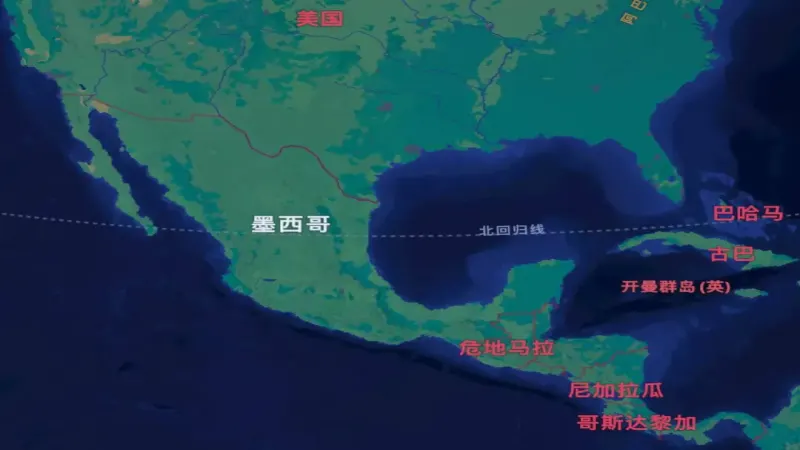
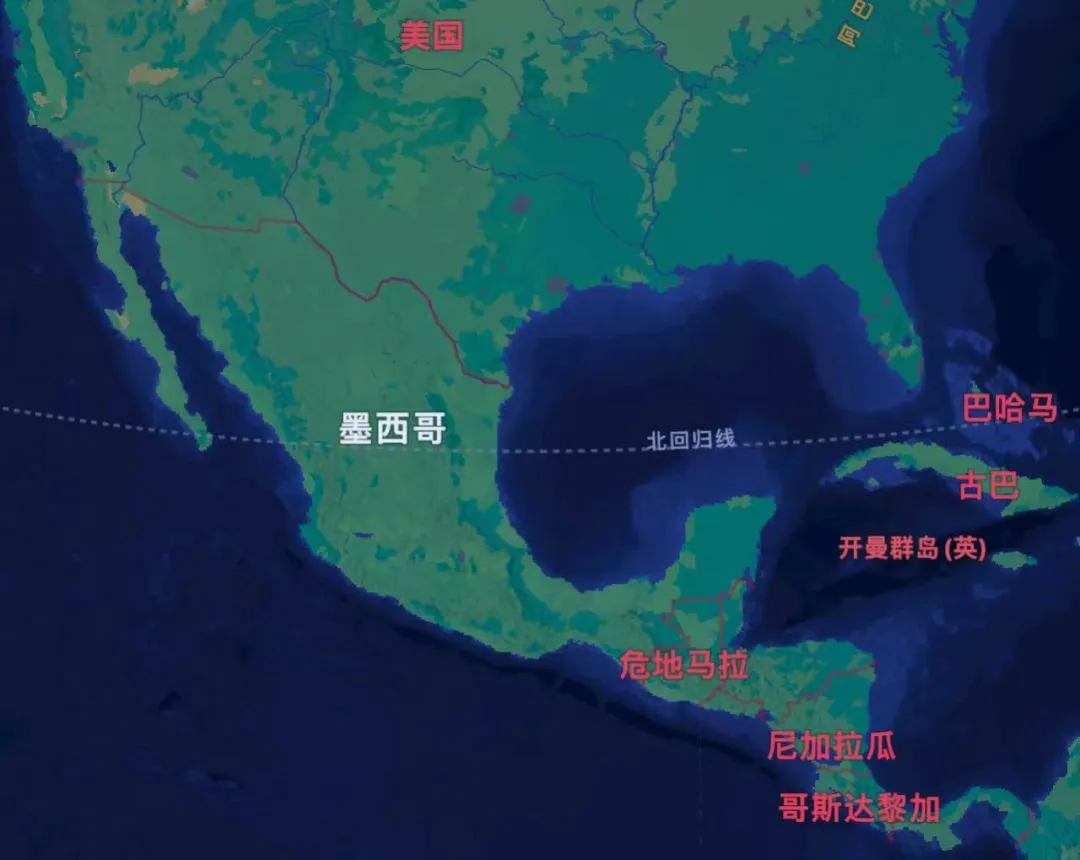
The United Mexican States is located in southern North America, at the northwestern end of Latin America. To its north lies the United States, to its south are Guatemala and Belize, to its east is the Caribbean Sea, and to its west faces the Pacific Ocean. The country covers an area of 1,964,400 square kilometers, ranking third in Latin America.
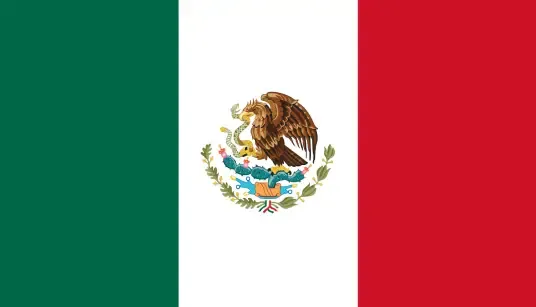
The Mexican flag is rectangular and consists of three parallel vertical bands in green, white, and red. Green represents independence and hope, white symbolizes peace and religious faith, and red signifies national unity.
In the central white area of the flag is the national emblem: a spreading-winged golden eagle holding a snake in its beak, gripping the snake's body with one talon and standing with the other on a cactus growing from a rock in a lake. This image comes from Mexican historical legend. The cactus, as the national flower, symbolizes the Mexican nation's indomitable spirit of struggle. Below the image are oak and laurel branches, representing strength, loyalty, and peace.
Mexico's terrain is surrounded on three sides by the Sierra Madre mountains, with the Mexican Plateau in the center, the flat Yucatán Peninsula in the southeast, and mostly narrow plains along the coast. The famous Isthmus of Tehuantepec connects this area with Central America.
In terms of climate, Mexico is complex and diverse. There are many plateaus and mountains, and the plateau regions are mild year-round, with average temperatures between 10-26°C; the northwestern interior has a continental climate, the coastal and southeastern plains have a tropical climate, and the south has a tropical rainforest climate. Most areas have a dry season (October to April of the following year) and a rainy season (May to September). The diverse climate, fertile volcanic soil, suitable temperatures, and high altitude together create Mexico's uniquely advantageous coffee-growing conditions.
Coffee-producing regions
There are more than 500,000 producers nationwide, over 95% of whom are smallholders with less than 2.83 hectares of land. Coffee cultivation is distributed across 16 states, but more than 90% is concentrated in four main producing regions in the south: Chiapas, Oaxaca, Veracruz, and Puebla.
Chiapas: Located at the southernmost tip of Mexico, bordering Guatemala. Specialty coffee is grown at altitudes between 1,300 and 1,700 meters. It has 178,000 coffee farmers, mostly family smallholders, and is Mexico's largest producing state. Nine areas in the state grow coffee, among which the Selva Region in the northeast is the largest, and the Soconusco Region at the southernmost tip is the most famous.
Oaxaca: Located northwest of Chiapas, with its western side near the Pacific Ocean. Coffee farms are usually located at altitudes of 900-1,650 meters, but the state's coffee production technology is relatively backward.
Veracruz: Also located north of Oaxaca, bordering the Caribbean Sea, with coffee grown in the inland mountains at altitudes of 1,100-1,600 meters. At present, Veracruz has the most advanced technology, and many disease-resistant varieties are grown locally.
Puebla: Located southeast of the capital, Mexico City, this producing region is home to the famous active volcano Popocatépetl. The coffee produced there is influenced by altitude and volcanic soil, giving it a relatively complex flavor.
Coffee varieties
The main coffee varieties grown in Mexico include: Typica, Bourbon, Caturra, Maragogype, Pacamara, Garnica, Mundo Novo, Geisha, and others. Among them, Garnica is particularly notable.
Garnica: This variety was created by crossing Mundo Novo and Caturra. It was developed by the Mexican Coffee Institute (INMECAFÉ) in the 1960s and has similarities to Catuai.
Front Street Coffee also pays attention to Mexican beans when selecting products, such as beans from the Chiapas or Oaxaca producing regions, which often have flavors of nuts, chocolate, and soft fruit acidity, suitable for pour-over or espresso blends. Friends who are interested can keep an eye on Front Street's related product information.
The above content is compiled by CoffeeHunters, a coffee news website.


