







What Coffee Beans for Hand Brew Tell You During Blooming
A blooming bed that fails to puff into a dome usually means the coffee beans for hand brew have released little carbon dioxide, not that the brewer did something wrong. Freshness, roast level, and extraction parameters all govern how much gas escapes when hot water hits the grounds, so a flat or sunken bed is a normal outcome rather than a defect.
Carbon dioxide is the core variable. Oils on the bean surface wrap the escaping gas into tiny bubbles, and those bubbles lift the coffee bed into the shape known as a hamburger. Light roasts and dark roasts differ in oil content and gas retention, which is why the same pour-over technique can produce a tall dome one day and a collapsed bed the next.
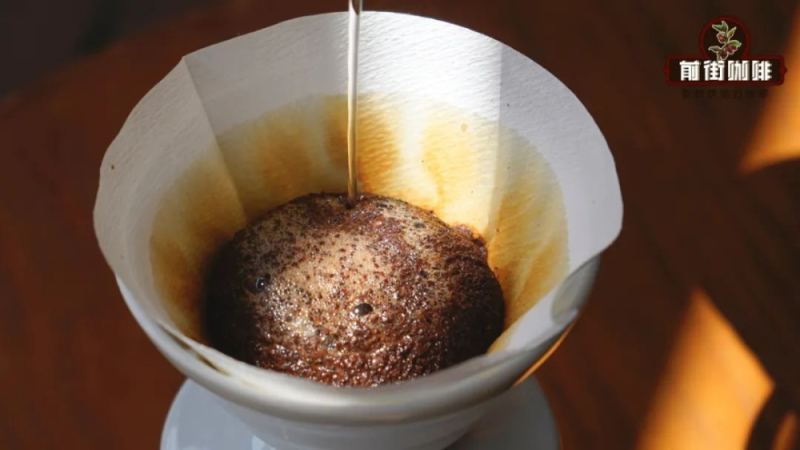
During the pour-over coffee blooming stage, whether the coffee bed can puff up into a full "hamburger" is a phenomenon many enthusiasts pay attention to. Some people get a towering hamburger when brewing, while others end up with a flat or even sunken "steamed bun." The key behind this lies in the amount of carbon dioxide stored in the coffee beans and how efficiently it is released. The freshness of the coffee beans, the extraction parameters, and the roast level all directly affect how much the bed expands during blooming. At the same time, the amount of oil on the surface of the coffee beans is also closely related to the roast level. This article will start from the principles of blooming, break down the factors that affect hamburger formation one by one, and explain the differences in brewing performance between light-roast and dark-roast beans, helping readers take a more rational view of the blooming puff-up phenomenon.
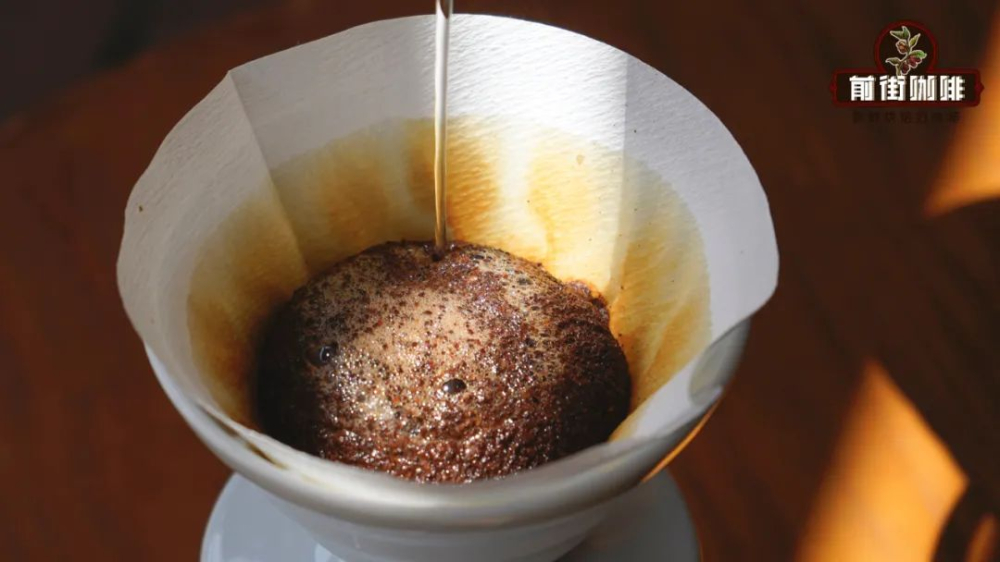
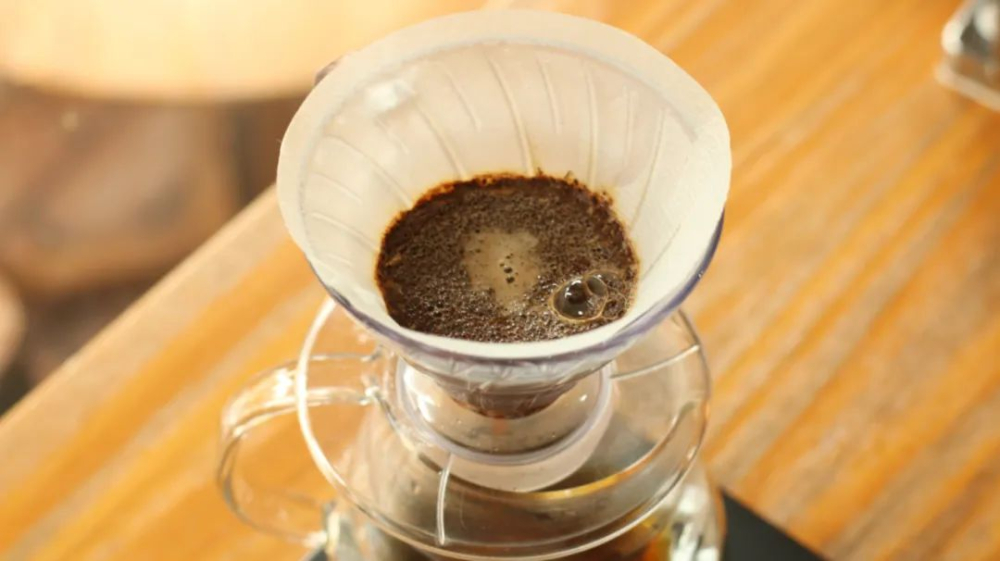
In practice, however, it is very common for the blooming stage to fail to form an ideal "hamburger." Sometimes the rise is limited, sometimes the coffee bed stays flat as a mirror, and sometimes the center even collapses. When faced with these coffee beds that refuse to puff up, the coffee community often jokingly calls them "steamed buns."
So what exactly causes the blooming to lose its proper expansion? To figure this out, we first need to go back to what blooming actually does.
The Purpose of Blooming
The core task of this stage is to release the carbon dioxide accumulated inside the coffee beans. Once the carbon dioxide is expelled, the resistance encountered during subsequent pouring and extraction decreases, allowing hot water to carry out aromatic compounds more smoothly.
When hot water contacts the coffee grounds, the carbon dioxide is activated and escapes in large amounts, but the oils on the surface of the coffee beans form a wrapping layer. Constrained by these oils, the gas turns into countless tiny bubbles. The so-called puff or "hamburger" is exactly the shape formed when these bubbles lift up the layer of coffee grounds.
From this we can infer that carbon dioxide is the core factor determining whether a hamburger can form. The more gas there is, the fuller the "hamburger" formed during blooming; when there is not enough gas, the rise is naturally smaller. So take a moment to think: what factors could cause carbon dioxide to decrease, making it impossible for an ideal "hamburger" to puff up during blooming?
What Are the Reasons the Coffee Bed Fails to Puff Up into a "Hamburger"?
1. The coffee beans are not fresh enough
Even if the coffee beans have not been ground into powder, the carbon dioxide inside them is still continuously escaping. The longer they are stored, the less carbon dioxide remains in the beans.
When carbon dioxide has escaped to a certain extent, the remaining bubbles are no longer enough to support a full "hamburger," so the coffee bed appears flat or the puff collapses.
In addition, carbon dioxide originally has a certain sealing effect on flavor compounds. Once the gas escapes in large amounts, the aromatic components in the coffee also dissipate more quickly. This is exactly why drinking freshly roasted coffee beans is encouraged—not only is the blooming stage more visually appealing, but the flavor layers on the palate are also richer.
2. Extraction efficiency is too low
The extraction efficiency that Front Street often mentions refers to how easily water extracts substances from coffee. The higher the extraction efficiency, the easier it is for water to carry out the components in the coffee (including carbon dioxide).
In pour-over coffee, the key parameters affecting extraction efficiency are water temperature and grind size. When the water temperature is low, hot water cannot quickly carry out flavor compounds and gas, so the "hamburger" formed during blooming tends to be smaller. At the same time, low temperature can easily cause under-extraction, which is even more worth noting.
The same logic applies to grinding. If the coffee is ground too coarsely, the total surface area shrinks significantly, and hot water needs more time to penetrate into the particles and extract the substances within. This also makes the puff during blooming smaller.
(The degree of expansion is noticeably weakened)
Not only that, larger gaps between particles allow hot water to flow away faster, which also easily leads to under-extraction.
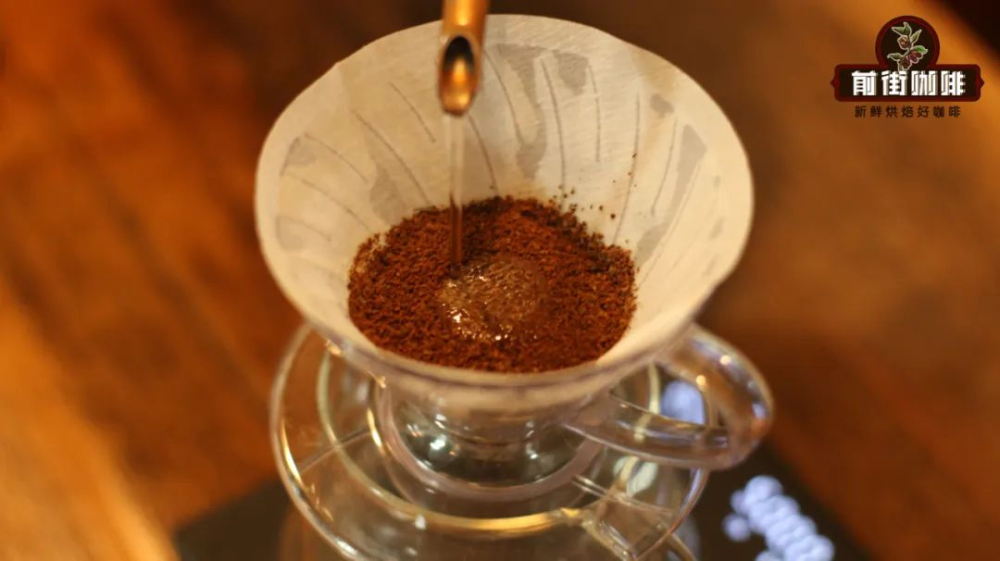
(The coffee bed quickly dries out and collapses)
The Influence of Roast Level
Of course, not all coffee will puff up into a large "hamburger" during blooming. The carbon dioxide reserve depends on the roast level of the coffee beans. The darker the roast, the looser the bean structure, and the more carbon dioxide it can hold
(and the more oil there is as well)
. The lighter the roast, the less carbon dioxide there is
(and the less oil migrates to the bean surface)
.
So even if the coffee beans are fresh enough and the extraction efficiency is ideal, a lighter roast alone is enough to make the puff less obvious.
Having said all this, Front Street still wants to remind you: the puff during blooming can only serve as a reference for judging the freshness and roast level of coffee beans. It is not that the bigger and fuller the puff, the better. How it ultimately tastes is what matters most.
Front Street Coffee (FrontStreet Coffee)
No. 10, Baoqian Street, Yandun Road, Dongshankou, Yuexiu District, Guangzhou, Guangdong Province
The above content is compiled by CoffeeHunters, a coffee news website.


