







Why are Vietnam coffee prices and robusta futures climbing?
Robusta coffee futures surged to a record $4,339 per tonne, with July and September contracts quoted at $4,239 and $4,246. The rally stems from drought in Vietnam's Central Highlands, where water levels dropped and flowering coffee trees wilted. Vietnam's coffee output may fall about 20 percent, and export volume is expected to drop by a similar margin in the second half of 2024.
Behind the price move are several forces: reduced production forecasts in Vietnam, Brazil, Indonesia, and Uganda, Vietnamese farmers holding back beans and defaulting on contracts, spillover from the cocoa market, and capital flowing into soft commodities. Demand from emerging markets such as South Korea keeps growing, adding pressure. Industry practitioners now watch whether next season's supply can recover.
Recently, the international coffee futures market has been turbulent, with robusta coffee futures once surging to a historic high of $4,339 per tonne, while July and September forward contracts were also quoted at $4,239 and $4,246 per tonne respectively. Behind this rally are not only concerns over reduced production in major producing countries such as Vietnam, Brazil, Indonesia, and Uganda, but also Vietnamese coffee farmers hoarding beans and defaulting on contracts, knock-on effects from the cocoa market, and capital speculation by large investment institutions in the soft commodities sector. At the same time, demand for Vietnamese coffee from emerging markets such as South Korea continues to grow, injecting new variables into exports. This article will sort out the complete chain of events behind this round of coffee price surges, helping coffee enthusiasts and industry practitioners understand the supply-demand dynamics and market sentiment behind the market movements.
Recently, robusta coffee futures prices have been climbing steadily, even refreshing a record high of $4,339 per tonne. Currently, the July forward price for London robusta futures stands at $4,239 per tonne, and the forward price for the end of September has also reached $4,246 per tonne. At the same time, this rally has also spread to the arabica futures market.
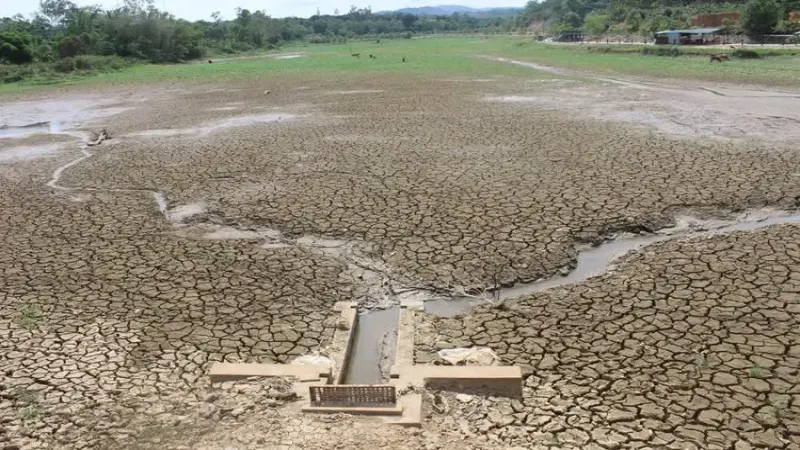
The core reason for coffee prices continuing to rise is market concerns over the production outlook for several major producing countries, including Brazil, Vietnam, Indonesia, and Uganda. Vietnam is currently in its dry season, and the drought is more severe than in previous years. Water levels in many lakes in the Central Highlands have dropped significantly, and groundwater sources are also becoming depleted. Coffee trees that are in the flowering stage have therefore wilted, with leaves turning yellow, and Vietnam's coffee output has shrunk sharply as a result.
A report released by the Vietnam Coffee and Cocoa Association pointed out that even though export data has performed well, coffee production may still decline by 20%, which will drag down export performance in the second half of 2024. Against the backdrop of tightening supply, export volume is also expected to decrease by 20% compared with the same period last year.
Because next season's production is expected to decline and prices are still on an upward trajectory, Vietnamese coffee farmers have begun hoarding coffee beans, with a strong reluctance to sell and unwillingness to let go of their beans easily. Even previously signed forward contracts have seen many cases of default.
According to Bloomberg, in the 2023/24 season, Vietnamese coffee farmers or traders failed to deliver about 150,000 to 200,000 tonnes of coffee beans as agreed, equivalent to 10% to 13% of the annual output. Many traders admitted that they had no beans left to deliver and suffered serious losses due to defaults. In order to obtain coffee beans, some traders resorted to buying at higher prices, pushing Vietnam's domestic coffee purchase price up to 120 million to 125 million Vietnamese dong per tonne.
At present, coffee prices have not yet shown signs of peaking, and the subsequent purchase price may continue to rise. Market forecasts suggest prices could climb further to 150 million Vietnamese dong per tonne.
The chain reaction of inventory shortages has also begun to affect coffee companies. Nestlé said it needs to purchase more coffee beans in Brazil, India, Indonesia, and other places to maintain supply to its global factories.
In addition, South Korea's coffee market is expanding. Due to its geographical proximity, South Korea will increase imports of Vietnamese coffee. In 2023, South Korea already imported about 41,450 tonnes of Vietnamese coffee, with an export value of $93.35 million, an increase of 17.9% compared with 2022. It is expected that in 2024, Vietnamese coffee's share of the South Korean market will continue to grow, and export value is expected to reach $2.2 billion, further strengthening Vietnamese coffee's competitiveness in the international market.
On the arabica futures side, although coffee production in Brazil and Colombia is relatively stable, rising cocoa futures prices will also push up coffee futures prices. Previously, Côte d'Ivoire, the world's largest cocoa producer, experienced severe cocoa price fluctuations due to issues such as political instability and supply chain disruptions, which in turn drove up global cocoa prices.
Cocoa futures prices in New York and London rose by 166% and 189% respectively. Combined with robusta futures rising due to reduced production in Vietnam, the resulting chain effect ultimately pushed up arabica futures prices.
The simultaneous rise in cocoa and robusta futures attracted the attention of some investors and large investment firms to the entire soft commodities sector (cocoa, coffee, and sugar), prompting buyers to pay higher premiums for coffee futures.
In other words, behind the rise in coffee futures prices is the push from automated trading programs and large investment firms. These market participants react quickly to all kinds of news in the coffee market, buying large amounts of coffee contracts and engaging in capital speculation, thereby further driving prices higher.
At the same time, many European and American buyers have turned to arabica coffee beans from Central and South America, which has also caused arabica coffee bean prices to rise. Some green coffee traders revealed that overall green coffee quotes are currently up 20% year on year, and robusta coffee bean prices are up by more than 30% year on year.
The above content is compiled by CoffeeHunters, a coffee news website.


