







Which coffee producing regions define Rwanda's specialty crop?
Rwanda, a landlocked highland known as the Land of a Thousand Hills, sits on the East African plateau at roughly 1,600 meters. Its tropical highland climate and steady rainfall support coffee cultivation. The main coffee producing regions are grouped by province into Muhazi, the Lake Kivu area, Huye, and Virunga, with harvest mostly running from March to August.
Bourbon and Mibirizi, Rwanda's oldest variety, dominate plantings, with a small amount of Jackson also grown. The country covers 26,338 square kilometers and is divided into Eastern, Southern, Western, and Northern provinces plus Kigali. While Ethiopia and Kenya often draw the spotlight in African specialty coffee, Rwanda's terroir and varieties give its beans a distinct character worth exploring.
In the landscape of African specialty coffee, Ethiopia and Kenya often hold the spotlight, yet Rwanda, this landlocked highland known as the "Land of a Thousand Hills," also produces coffee that is full of surprises. Rwanda lies on the East African plateau at an elevation of about 1,600 meters, with a tropical highland climate and abundant rainfall that provide ideal conditions for coffee cultivation. Its producing regions can be divided by province into Muhazi, the Lake Kivu area, Huye, and Virunga, among others, with the harvest period mostly concentrated from March to August. In terms of varieties, Bourbon and Rwanda's oldest variety, Mibirizi, dominate, with a small amount of Jackson also planted. This article will give you a systematic understanding of Rwanda's national character and landscape, the distribution of its coffee regions, and the characteristics of its main varieties, so you can experience the unique charm of this country's coffee.
African coffee beans have always been known for their rich aroma and alluring fruity acidity, among which Ethiopia and Kenya are especially famous. However, there is another country that also produces high-quality coffee and deserves attention: Rwanda.
Rwanda
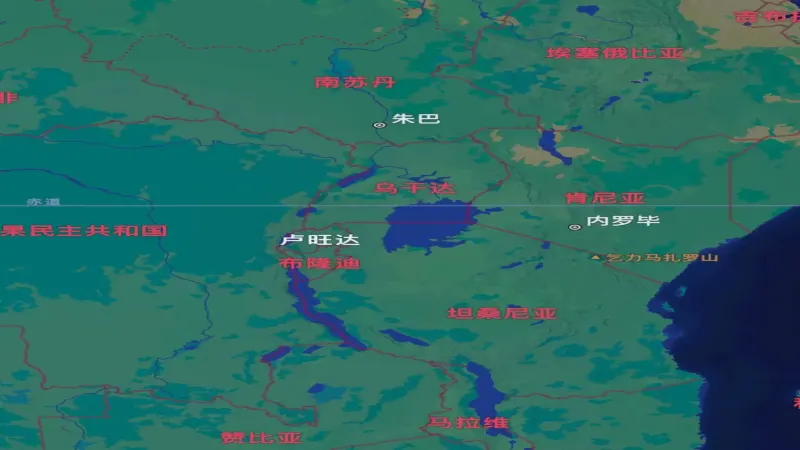
Rwanda's official name is the Republic of Rwanda. It is located in the central-eastern part of Africa on the East African plateau and is a landlocked country. It borders Tanzania to the east, Burundi to the south, the Democratic Republic of the Congo to the west, and Uganda to the north. The country covers a total area of 26,338 square kilometers and is administratively divided into four provinces—Eastern, Southern, Western, and Northern—as well as the city of Kigali.
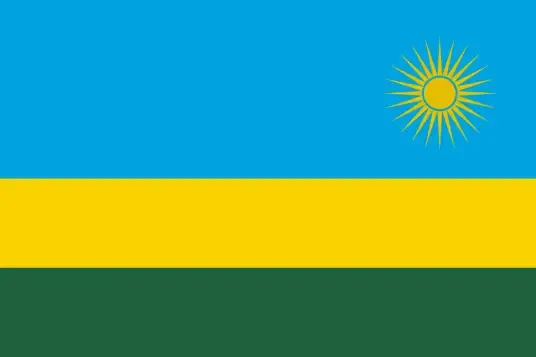
The Rwandan flag was created by an artist and is composed of three colors: blue, yellow, and green. Blue occupies the largest proportion of the flag and symbolizes the people's struggle for peace, as well as the hope for sustained economic growth and a happy life; yellow represents the people living and working in contentment and the desire to promote permanent economic development; green symbolizes the people's hope to rationally develop resources and move toward prosperity, while also representing the country's natural resources. In the upper right corner of the flag is a sun emblem radiating twenty-four rays. These twenty-four rays guide the people of the whole nation and signify unity, innocence and transparency, and the determination to fight ignorance.
Rwanda has beautiful natural scenery and rich biodiversity. Volcanoes, montane rainforests, and vast plains are home to many wild animals. The country has an average elevation of about 1,600 meters and is dominated by mountainous terrain, which is why it is known as the "Land of a Thousand Hills." Within its territory are 5 volcanoes, 23 lakes, and numerous rivers, and the source of the Nile River forms here.
Rwanda is close to the equator and has a tropical highland climate, but temperatures are lower than in typical equatorial countries, with average temperatures between 25 and 28°C. The rainy seasons are from February to June and from September to October each year, while the rest of the year is the dry season. The average annual rainfall is about 1,200 to 1,600 millimeters. These natural conditions are very suitable for coffee cultivation.
Coffee Producing Regions
If divided by province, Rwanda's main coffee-producing regions are Muhazi, the Lake Kivu area, and the Virunga region, with the harvest period usually lasting from March to August.
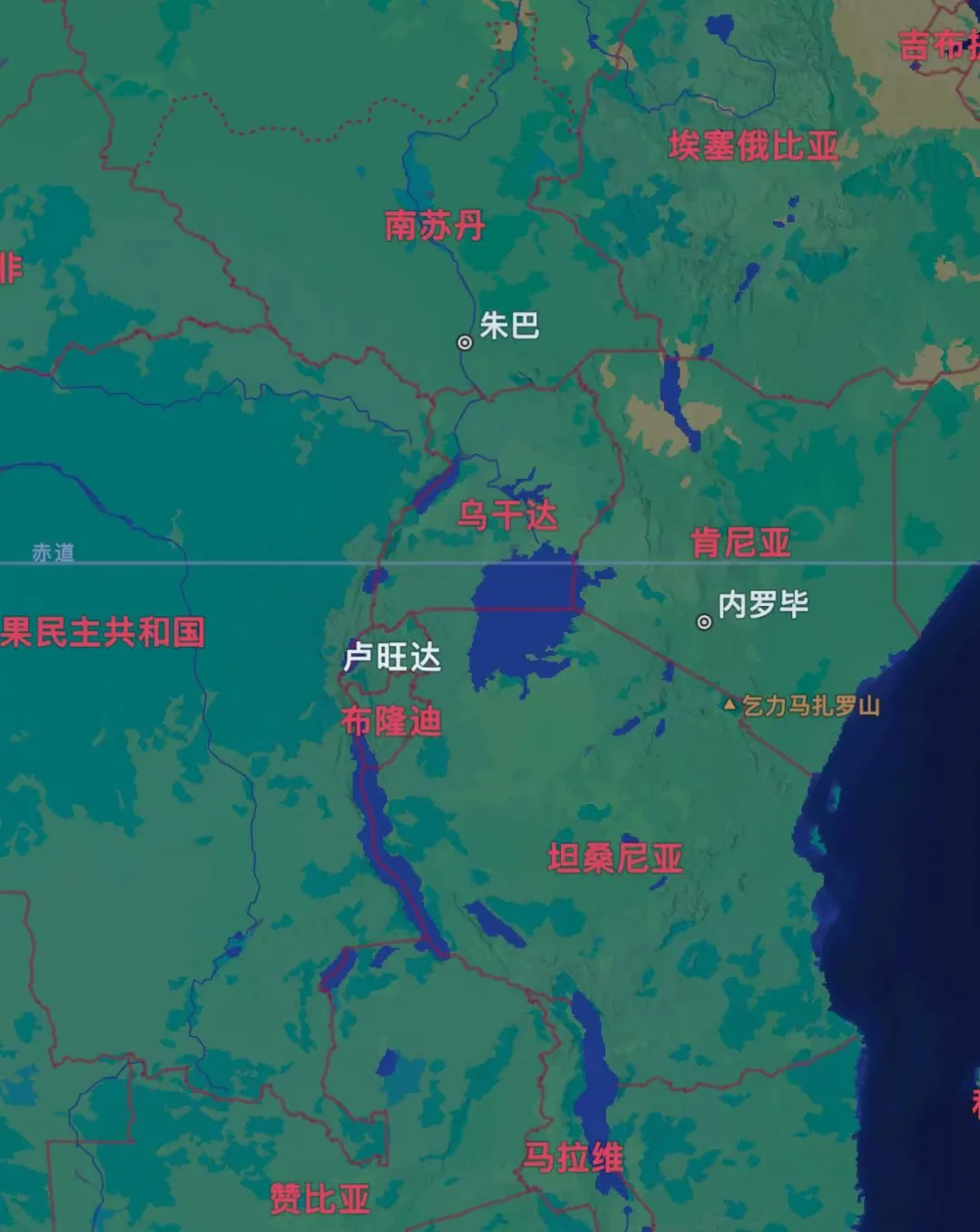
Muhazi is located around the Muhazi Lake resort area in eastern Rwanda. The coffee produced there has a rich profile, with chocolate flavors and a smooth mouthfeel reminiscent of strong black tea.
The Lake Kivu area is located in the west and geologically forms part of the East African Rift Valley. Lake Kivu is a volcanic lake, and the lake area sits at an elevation of about 1,500 meters. It consistently produces coffee of excellent quality, with a full body, rich aroma, and juicy character.
Better-known producing areas in the south include Huye, with an average elevation between 1,700 and 2,200 meters. The coffee produced there has floral and citrus flavors.
Virunga is located in the mountainous region of northwestern Rwanda, at an elevation between 1,900 and 2,200 meters. This is the habitat of the famous mountain gorillas. The coffee from this region is sweet and lively, with a silky mouthfeel, and walnut and nutty notes are especially prominent.
Coffee Varieties
The coffee varieties mainly grown in the above regions are Bourbon and Mibirizi. In addition, some farmers grow the Jackson variety.
Mibirizi is Rwanda's oldest variety and a natural mutation of Bourbon. It is currently an important variety widely planted by coffee farmers in both Rwanda and Burundi. It was first introduced to Rwanda from Guatemala by the German government and was mistakenly thought at the time to have Typica lineage, because Guatemala was then planted 100% with Typica; later genetic testing also confirmed that it is genetically related to Typica. This variety has excellent quality and strong drought tolerance, but it is extremely susceptible to major diseases.
The above content is compiled by CoffeeHunters, a coffee news website.


